
Membrane Filtration System
Precision Separation & High Purification Efficiency
Gentle Operation & Target Component Protection
Energy Saving & Cost Reduction
Eco-Friendly & Compliant Production
Wide Adaptability & Stable Performance
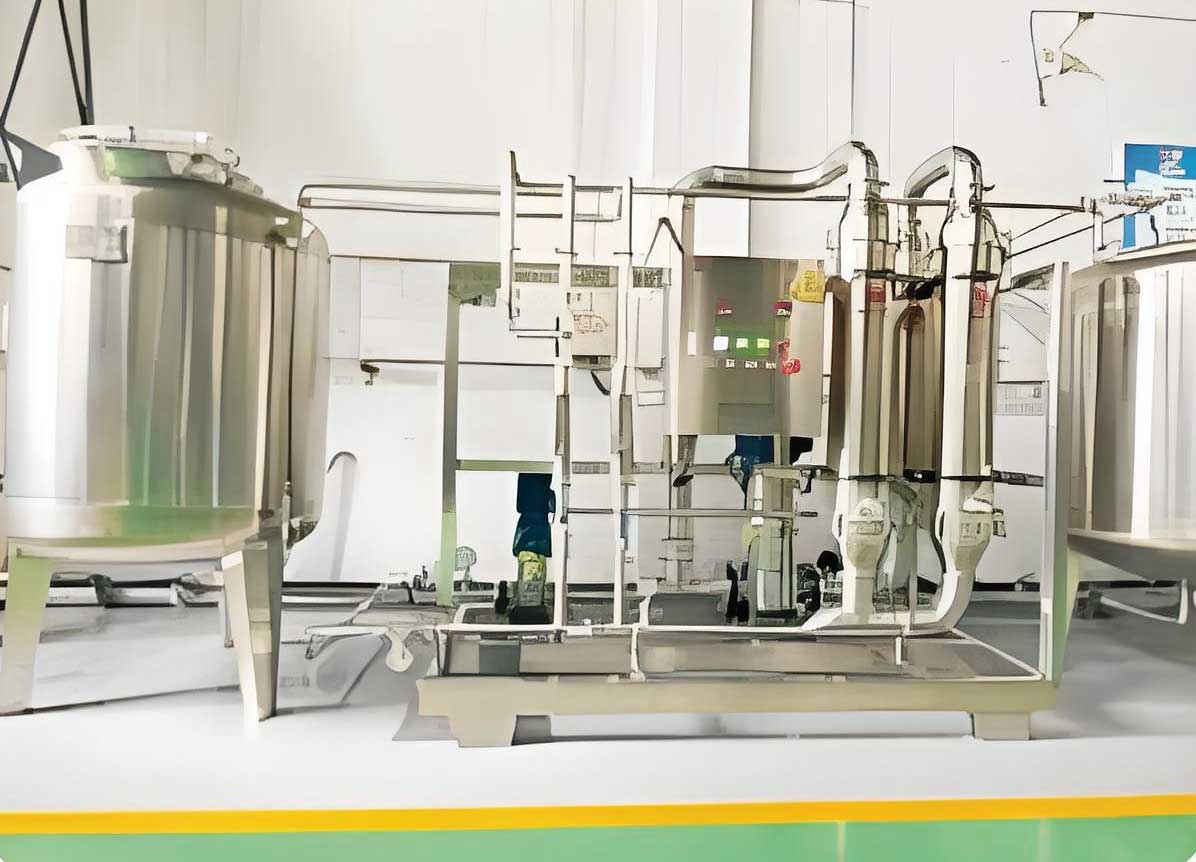
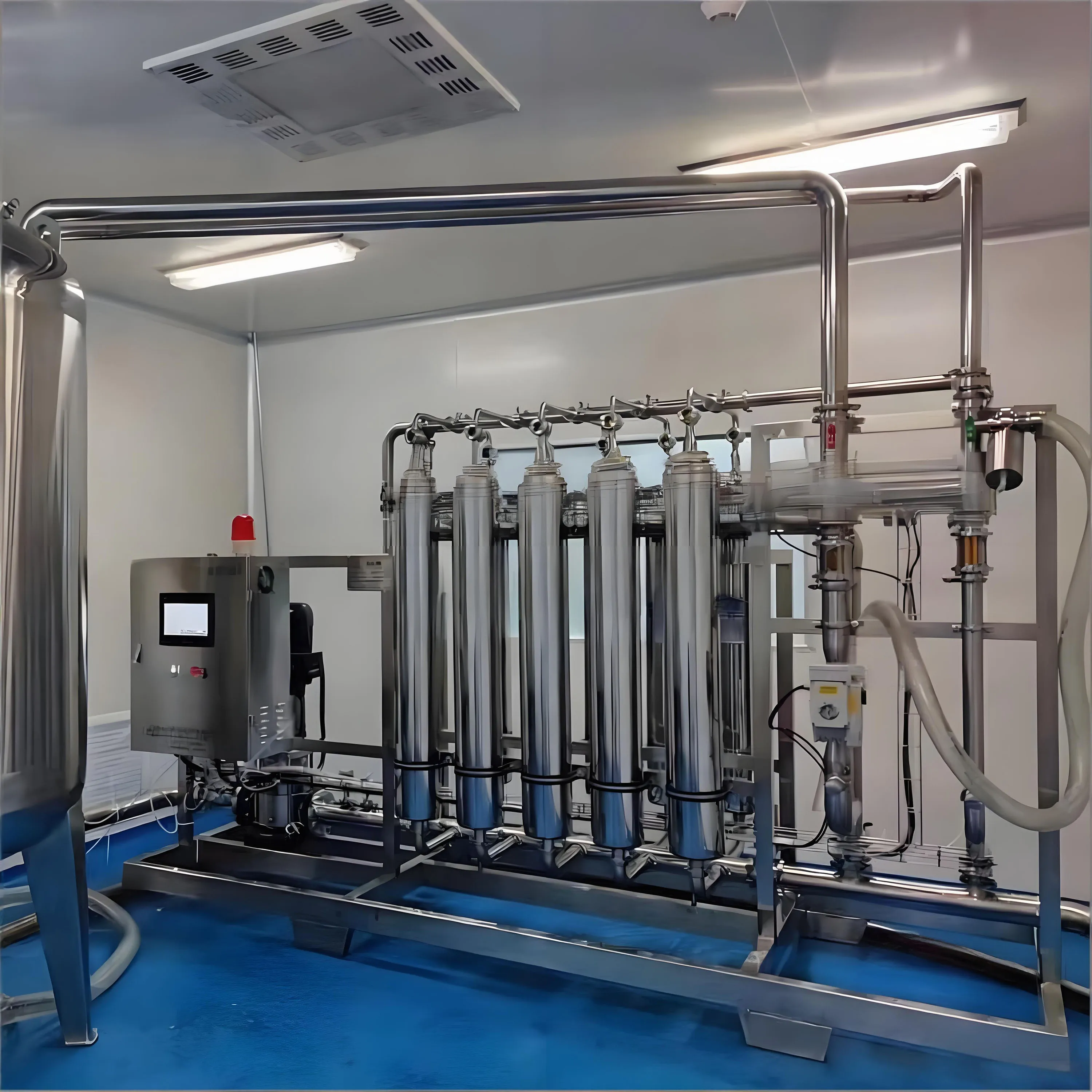
The Membrane Filtration System is a high-performance integrated separation equipment based on advanced selective membrane technology, designed to meet precision filtration needs across multiple industries. It leverages the "molecular-level sieving" effect of membranes (Microfiltration - MF, Ultrafiltration - UF, Nanofiltration - NF, Reverse Osmosis - RO) to efficiently separate suspended solids, colloids, microorganisms, dissolved salts, and macromolecular impurities from feed liquids, while maximizing the retention of target components (e.g., active ingredients, beneficial substances, soluble solids).
Replacing traditional filtration processes (centrifugation, chemical precipitation, diatomite filtration), it solves industry pain points such as low purification efficiency, high chemical reagent consumption, and target component loss. Fully compliant with international standards (GMP, FDA, ISO, WHO), the system is widely applied in water treatment, food & beverage, biopharmaceuticals, chemical engineering, and environmental protection. It adapts to diverse feed liquid properties (water-soluble, alcohol-soluble, high-viscosity, high-salt) and production scales, from laboratory-scale R&D to large-scale industrial mass production.
Core Advantages
Precision Separation & High Purification Efficiency
Customizable membrane types (MF/UF/NF/RO) enable targeted separation based on particle size or molecular weight: removes ≥99.9% of suspended solids, colloids, and bacteria (MF/UF); achieves 60%–99% desalination or macromolecular impurity removal (NF/RO); and retains ≥90% of target components, ensuring consistent product quality.
Gentle Operation & Target Component Protection
Operates at room temperature (25–40℃) and low-to-medium pressure (0.1–2.5 MPa), avoiding thermal denaturation of heat-sensitive components (proteins, vitamins, active ingredients) and chemical contamination from additives. Ideal for high-value products requiring intact activity and natural properties.
Energy Saving & Cost Reduction
Pure physical separation reduces energy consumption by 30%–60% compared to traditional thermal or chemical processes. No need for coagulants, precipitants, or regeneration reagents, lowering chemical costs and secondary pollution treatment expenses. Membrane service life of 2–3 years (under standard maintenance) further reduces long-term operating costs.
Eco-Friendly & Compliant Production
Closed-loop process design minimizes wastewater discharge; permeate (pure water or purified liquid) can be recycled for production, aligning with green manufacturing trends. All wetted parts are made of pharmaceutical-grade 304/316L stainless steel, food-grade PVDF/PES, or TFC materials, meeting strict hygiene and regulatory requirements.
Wide Adaptability & Stable Performance
Handles diverse feed liquids and raw material qualities (brackish water, industrial wastewater, fermentation broth, fruit juice). The clarified/purified liquid maintains consistent quality (turbidity ≤0.1 NTU, impurity removal rate ≥95%) with no stratification or precipitation during storage, ensuring stable subsequent processes.
Main Features
1. Modular Design & Flexible Configuration
Supports customized combination of membrane modules (MF/UF/NF/RO) based on application scenarios (clarification, sterilization, desalination, concentration) and production scale. Processing capacity ranges from 50 L/h (laboratory) to 100 m³/h (industrial), enabling seamless expansion or retrofitting of existing production lines.
2. Intelligent Automatic Control
Equipped with a PLC control system and touchscreen interface, it realizes real-time monitoring and automatic adjustment of key parameters (pressure, flow rate, temperature, turbidity, TDS). Supports unattended operation, automatic backwashing, and abnormal alarm functions, reducing manual intervention and human error.
3. Integrated CIP Cleaning System
Built-in online Clean-in-Place (CIP) system with acid, alkali, and enzyme cleaning programs. Automatically cleans membrane surfaces to remove organic/inorganic fouling (protein, colloids, scaling) without disassembly, restoring membrane flux and extending service life to 2–3 years.
4. Durable & High-Compatible Membranes
Membrane materials include PVDF, PES, TFC, and ceramic, featuring excellent chemical resistance (pH 1–14), anti-fouling performance, and biocompatibility. Avoids material leaching and adapts to harsh feed liquid conditions (high temperature, strong acid/alkali, organic solvents).
5. Compact Structure & Easy Maintenance
Skid-mounted integrated design reduces floor space by 40% compared to separate equipment, suitable for sites with limited space. Key components (membranes, pumps, filters) are standardized and modular, enabling quick disassembly, replacement, and low maintenance difficulty.
Technical Parameters
| Parameter Category | Specification Range |
|---|---|
| Processing Capacity | 50 L/h – 100 m³/h (customizable based on demand) |
| Membrane Configuration | MF: 0.1–1 μm; UF: 1–100 kDa; NF: 200–1,000 Da; RO: <0.001 nm (selectable) |
| Operating Pressure | MF/UF: 0.1–0.5 MPa; NF: 0.8–1.5 MPa; RO: 1.5–2.5 MPa |
| Operating Temperature | 5–45℃ (optimal: 25–35℃) |
| Purification Effect | Turbidity ≤0.1 NTU; Bacteria removal rate ≥99.99%; Impurity removal rate ≥95%; Target component retention rate ≥90% |
| Feed Liquid Adaptability | TDS: 500–30,000 mg/L; Viscosity: ≤50 mPa·s (adjustable for high-viscosity feed) |
| Material in Contact with Product | 304/316L stainless steel, PVDF/PES/TFC/ceramic membranes, FDA-compliant seals |
| Control System | PLC automatic control + touchscreen; Real-time monitoring & alarm for pressure/flow/quality |
| Power Consumption | 0.3–1.2 kW·h/m³ of treated liquid (varies by membrane type and capacity) |
| Membrane Service Life | 2–3 years (under normal operation and maintenance) |
Core Components
| Component Unit | Core Equipment | Function Description |
|---|---|---|
| Pretreatment Unit | 5–10 μm precision filter, buffer tank, variable-frequency feed pump | Remove large-particle impurities (sediment, residues) to protect membrane elements from clogging; stabilize feed flow and pressure |
| Membrane Separation Unit | MF/UF/NF/RO membrane modules (anti-fouling coating), circulation pump | Core separation unit: Realize clarification, sterilization, desalination, or concentration based on membrane type; cross-flow design reduces fouling |
| Control Unit | PLC controller, pressure/flow/temperature sensors, quality analyzers (turbidity/TDS/HPLC) | Automatically adjust process parameters; monitor filtration effect in real time; trigger alarms for abnormalities (high pressure, low flux) |
| CIP Cleaning Unit | CIP tank, cleaning pump, acid-base reagent tanks, spray nozzles | Online cleaning of membrane modules and pipelines; remove fouling and restore membrane performance |
| Auxiliary Unit | Heat exchanger, intermediate/treated liquid storage tanks, sampling valve | Control feed liquid temperature; store intermediate and final products; facilitate quality inspection and sampling |
Application Scenarios
Water Treatment Industry
- Municipal water supply: Clarification and sterilization of surface water/groundwater to produce drinking water.
- Industrial wastewater recycling: Treatment of printing & dyeing, electroplating, or power plant wastewater for reuse.
- Brackish/seawater desalination: Production of freshwater for coastal/arid regions or islands.
Food & Beverage Industry
- Fruit juice processing: Clarification, sterilization, and concentration of juice to retain flavor and nutrients.
- Dairy processing: Removal of bacteria and impurities from milk; concentration of whey protein.
- Instant coffee/tea production: Purification and concentration of extracts to reduce bitterness.
Biopharmaceutical Industry
- Fermentation broth pretreatment: Removal of bacteria, cell debris, and colloids from mAb, recombinant protein, or herbal extract fermentation broth.
- Sterile filtration: Final sterilization of injectables, vaccines, and oral liquids.
- Peptide/antibiotic purification: Desalination and concentration of target products via UF/NF.
Chemical & Environmental Protection Industry
- Chemical product purification: Separation and recovery of catalysts, solvents, and macromolecular intermediates.
- Wastewater treatment: Removal of organic pollutants and heavy metals from industrial effluent to meet discharge standards.
- Resource recovery: Extraction of valuable components from waste liquids (dyes, precious metals).
About The Manufacturer
With over 20 years of expertise in membrane separation technology, we are a leading provider of low-consumption, high-efficiency filtration solutions. Our product range covers laboratory-scale to industrial-scale membrane systems, supported by over 40 patents and cooperation with renowned enterprises worldwide. We offer one-stop services including technical consultation, pilot-scale verification, turnkey project implementation, and after-sales maintenance, ensuring seamless integration with your production line and long-term reliable operation.
For customized solutions based on your specific feed liquid properties, production capacity, and purification requirements, please contact our professional technical team.


Product Category
News of Product
- Membrane separation technology is driving the milk industry towards a future of high efficiency and high quality
- Application of Membrane Separation Technology in the Biopharmaceutical Industry
- What role does membrane filtration technology play in the sterilization and clarification of alcoholic beverages?
- Precise Separation, Empowering the Future: How Membrane Separation Technology is Reshaping the Modern Pharmaceutical Industry
- Membrane Separation Technology: Driving Innovation and Efficient Production in the Biopharmaceutical Industry