Membrane Separation Technology: Driving Innovation and Efficient Production in the Biopharmaceutical Industry
In the modern biopharmaceutical field, production efficiency and product quality are core factors determining a company's competitiveness. With the rapid expansion of the biopharmaceutical market, traditional separation and purification processes are no longer sufficient to meet the demands of large-scale, high-purity production. Membrane separation technology, as a highly efficient and energy-saving separation method, is driving innovation in the biopharmaceutical industry with its unique advantages, becoming a key driver of efficient production.
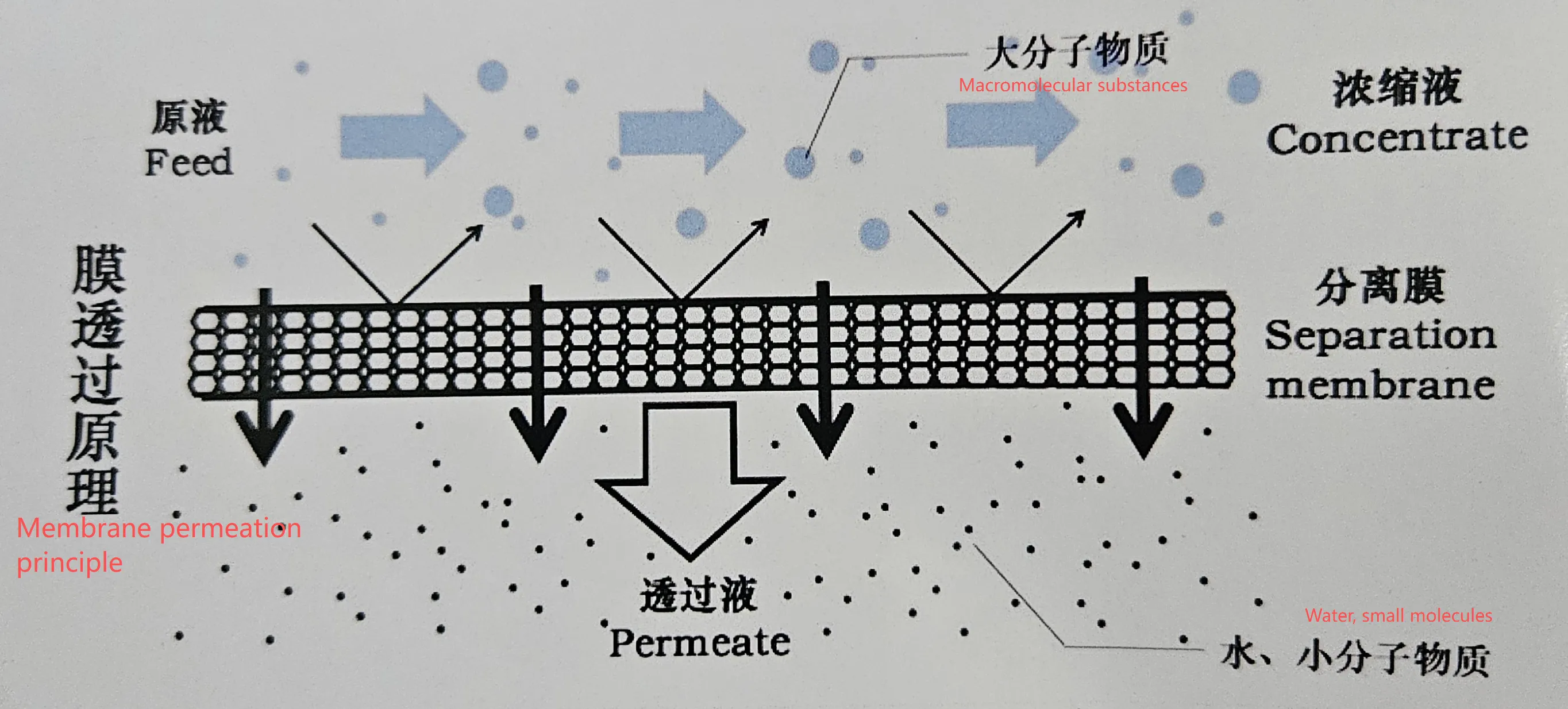
Membrane Separation Technology: Principles and Advantages
Membrane separation technology utilizes membranes with selective separation capabilities, driven by pressure, concentration, or potential difference, to achieve the separation, purification, and concentration of different components in a mixture. Based on different membrane pore sizes and separation mechanisms, it can be divided into various types such as microfiltration, ultrafiltration, nanofiltration, and reverse osmosis. In biopharmaceuticals, ultrafiltration and microfiltration are particularly widely used, mainly in cell harvesting, protein concentration, desalting, and virus removal.
Compared to traditional techniques such as centrifugation, precipitation, and chromatography, membrane separation technology offers the following significant advantages:
1. Highly Precise Separation Capability
Membrane separation technology leverages the physicochemical properties of molecules, such as size and charge, to achieve precise separation of complex mixtures in biopharmaceutical processes. This not only significantly improves the purity of target products but also effectively removes impurities such as host cell debris, DNA, and endotoxins, meeting high standards for drug purity.
2. Gentle Processing
Compared to traditional centrifugation, precipitation, and chromatography, membrane separation uses physical separation methods, avoiding high temperatures, high pressures, and the use of chemical reagents. It offers stronger protection for the structure of biological macromolecules, making it particularly suitable for processing heat-sensitive proteins and antibodies, ensuring bioactivity and stability.
3. Continuous Production and Highly Efficient Processing
The continuous operation mode of membrane separation systems significantly improves production efficiency, shortens production cycles, reduces batch-to-batch variation, and enables large-scale industrial production. This feature is crucial for rapidly responding to market demands and reducing production costs.
4. Resource Conservation and Environmental Friendliness
Compared to traditional processes, membrane separation technology is more economical in terms of water and energy consumption, while reducing wastewater discharge. This aligns with the trend of green pharmaceutical development and contributes to the sustainable development of biopharmaceutical companies.
Technology Applications: Integrated into the Entire Biopharmaceutical Production Process
Membrane separation technology has been deeply integrated into several key stages of biopharmaceutical production, demonstrating strong applicability:
- Cell Separation and Harvesting: In the fermentation broth of monoclonal antibodies, vaccines, and other products, microfiltration technology can efficiently remove cell debris and harvest target proteins, replacing traditional centrifugation methods, improving recovery rates, and shortening processing time.
- Protein Concentration and Buffer Replacement: Ultrafiltration technology achieves rapid concentration and desalting of protein solutions through tangential flow filtration, significantly improving downstream purification efficiency.
- Virus and Impurity Removal: Nanofiltration and specific ultrafiltration membranes can effectively remove impurities such as viruses and endotoxins, ensuring drug safety and meeting regulatory requirements.
- Continuous Biomanufacturing: Membrane separation systems can be combined with technologies such as continuous fermentation and perfusion chromatography to achieve continuous production from upstream to downstream, breaking through the bottlenecks of traditional batch processing models and improving equipment utilization and production flexibility.
Driving Industrial Innovation: From Efficiency Improvement to Model Transformation
The application of membrane separation technology not only optimizes individual processes but also fundamentally reshapes the production model of biopharmaceuticals:
- Accelerating Process Development: High-throughput screening and simulation technologies rapidly determine optimal membrane materials and operating parameters, shortening the new drug development cycle.
- Reducing Production Costs: Higher product yields and purification efficiencies reduce raw material waste, while automated control lowers labor costs.
- Improving Product Quality: Membrane technology's precise removal of impurities improves drug purity and consistency, helping companies pass stringent regulatory reviews by the FDA, EMA, and other regulatory bodies.
- Empowering Emerging Therapies: In cutting-edge fields such as gene therapy and cell therapy, membrane technology is used in key steps such as plasmid DNA purification and viral vector concentration, driving the implementation of innovative therapies.
With advancements in materials science and continuous process optimization, future membrane separation technologies will become more intelligent and integrated, optimizing separation conditions through big data analysis and machine learning to achieve higher separation efficiency and lower energy consumption.
In conclusion, membrane separation technology, with its unique technological advantages, plays an increasingly important role in the biopharmaceutical industry, serving as a key force driving technological innovation and enhancing industrial competitiveness in this field. With continuous technological advancements and deeper applications, the biopharmaceutical industry will usher in a new chapter of greater efficiency, environmental friendliness, and sustainable development.