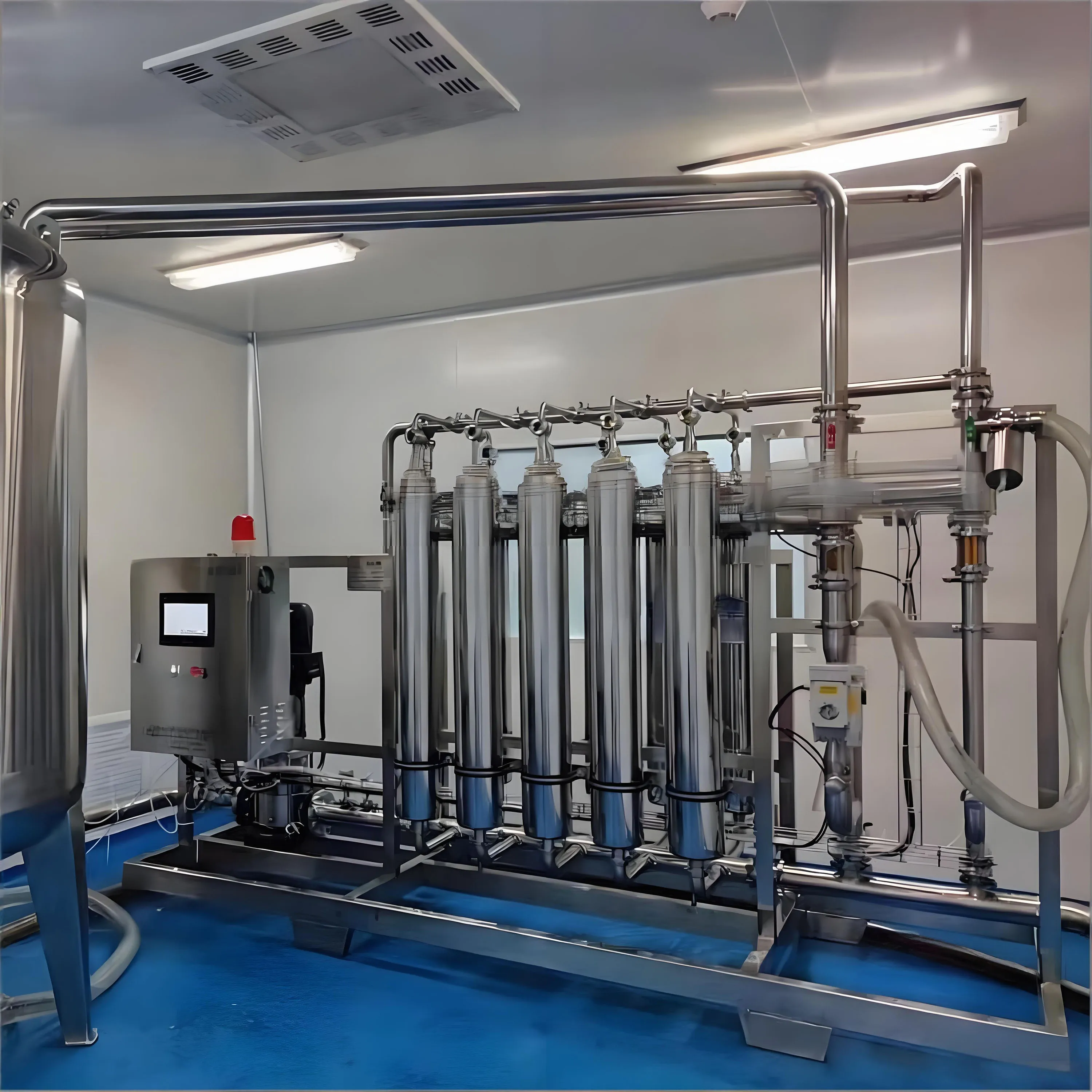
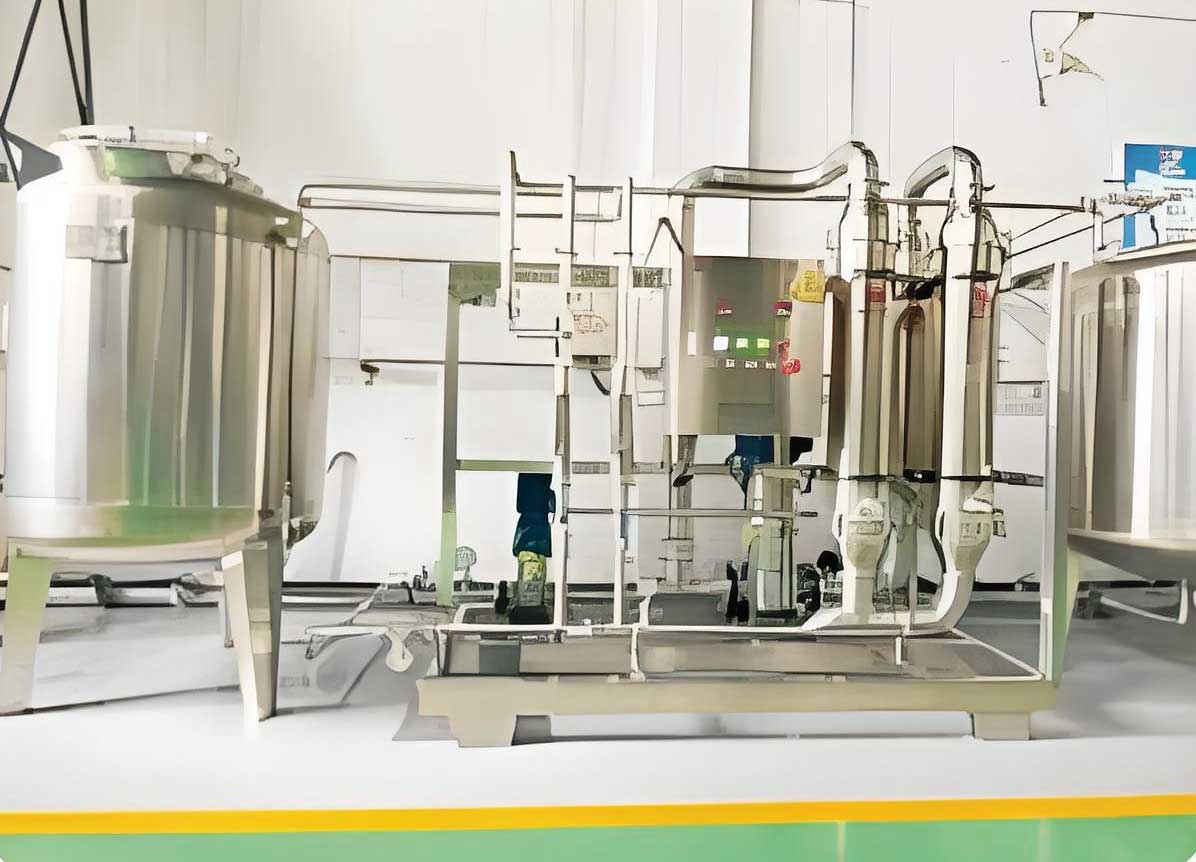
Wine Production Line Membrane Separation Filtration and Clarification Equipment
1. Full-Cycle Integration, Hassle-Free Procurement
2. Customized Process Design, Quality Assurance
3. Intelligent Equipment Integration, Efficiency Enhancement
4. Cost Reduction & Energy Saving, High ROI
5. Compliant & Standardized, Risk Mitigation
The wine production line Upgrade membrane separation filtration and clarification equipment, launched by BluewavBio Technology Co., Ltd.—a National High-tech Enterprise with over 20 years of membrane separation and industrial engineering expertise—is a one-stop integrated solution tailored for the full-cycle production of wine products (rice wine, fruit wine, compound wine, etc.). Targeting core industry pain points such as fragmented equipment procurement, incompatible production processes, high energy consumption, unstable product quality, and cumbersome compliance procedures in traditional wine production, this project integrates professional services covering factory layout design, process customization, equipment integration, installation and commissioning, personnel training, and qualification certification.
Leveraging advanced membrane separation technologies (microfiltration, ultrafiltration, nanofiltration) and intelligent equipment, the project realizes standardized production from raw material pretreatment, fermentation, clarification, purification, blending to filling and packaging. Fully compliant with national food safety standards (GMP, GB 2758) and international quality requirements, it has been successfully applied in numerous wine production enterprises, delivering production lines that meet design capacity and product quality standards. Xihe Flow's turnkey service ensures "one-stop handover, immediate production," helping clients shorten project cycles, reduce investment risks, and achieve efficient, compliant, and high-quality wine production.
Core Advantages
1. Full-Cycle Integration, Hassle-Free Procurement
Covers the entire wine production chain from raw material processing to finished product packaging. Eliminates the need for clients to coordinate multiple suppliers, resolving issues such as equipment incompatibility and process disconnection. Provides a unified technical solution and after-sales service, reducing communication costs and project risks by 40%+.
2. Customized Process Design, Quality Assurance
Tailors fermentation parameters, clarification processes, and purification schemes based on wine types (rice wine, fruit wine, compound wine) and client demands (taste, alcohol content, shelf life). Adopts membrane separation technology for low-temperature sterilization and clarification, retaining natural flavors and active ingredients while ensuring product stability (no turbidity or precipitation during storage).
3. Intelligent Equipment Integration, Efficiency Enhancement
Integrates advanced intelligent equipment such as automatic fermentation tanks, membrane filtration systems, precision blending equipment, and automatic filling lines. Realizes automated control of key processes (temperature, pressure, flow rate), reducing manual intervention by 60% and improving production efficiency by 30% compared to traditional manual operations.
4. Cost Reduction & Energy Saving, High ROI
Optimizes process flow and selects energy-efficient equipment (membrane systems with 30-40% lower energy consumption than traditional processes). Centralized equipment procurement and standardized construction reduce overall investment costs by 10-20%. Shortens the project cycle from design to commissioning to 3-6 months, accelerating investment return.
5. Compliant & Standardized, Risk Mitigation
Designs production lines in strict accordance with food safety regulations and environmental protection requirements, including clean produc-tion areas, wastewater treatment systems, and raw material traceability systems. Assists clients in obtaining food production licenses and other qualifications, ensuring compliance with industrial policies and reducing regulatory risks.
Main Features
1. Modular & Scalable Design
Supports flexible configuration based on production scale (pilot-scale, small-batch, large-scale industrial production) and product types. Modular equipment can be expanded or upgraded as business grows, adapting to long-term development needs of clients.
2. Advanced Process Integration
Integrates core technologies such as membrane-based clarification and sterilization, low-temperature fermentation control, and precision blending. Solves traditional pain points such as low fermentation efficiency, poor clarity, and unstable taste, improving product qualification rate to ≥99%.
3. Intelligent Operation & Monitoring
Equips the production line with a PLC control system and centralized monitoring platform, enabling real-time tracking of production data (fermentation progress, filtration efficiency, product quality indicators). Supports remote operation, fault early warning, and data analysis, laying a foundation for production optimization.
4. Durable & Food-Grade Equipment
All contact materials adopt food-grade 304/316L stainless steel, food-safe membranes, and FDA-compliant seals. Resists corrosion from acidic/alkaline wine matrices, avoids material leaching, and ensures product safety and hygiene.
5. Comprehensive After-Sales Support
Provides a full range of services including technical training (equipment operation, process control, fault troubleshooting), 1-year free equipment maintenance, and long-term technical consultation. Offers process upgrading and equipment renovation services to adapt to market changes and policy updates.
Technical Parameters
|
Parameter Category
|
Specification Range
|
|
Production Capacity
|
500–50,000 L/day (customizable based on client needs)
|
|
Applicable Wine Types
|
Rice wine, fruit wine, compound wine, and other fermented/distilled wines
|
|
Core Process Technologies
|
Membrane clarification (MF/UF), low-temperature fermentation, precision blending, automatic filling
|
|
Operating Temperature
|
Fermentation: 15–35℃; Filtration/Purification: 5–45℃; Sterilization: 85–121℃ (adjustable)
|
|
Product Quality Indicators
|
Microbial count ≤100 CFU/mL; Turbidity ≤0.5 NTU; Alcohol content tolerance ±0.5% vol
|
|
Equipment Automation Level
|
≥80% (key processes fully automated)
|
|
Floor Space Requirement
|
500–5,000 m2 (varies by production capacity)
|
|
Project Cycle
|
3–6 months (from design to commissioning)
|
|
Service Life of Core Equipment
|
8–10 years (membrane components: 2–3 years with regular maintenance)
|
|
Energy Consumption
|
0.8–1.5 kW·h/L (varies by wine type and production scale)
|
Core Components
|
System Module
|
Core Equipment/Technology
|
Function Description
|
|
Raw Material Pretreatment System
|
Automatic cleaning and sorting machine, crusher, steamer, mixer
|
Realize efficient cleaning, crushing, and cooking of raw materials (glutinous rice, fruits), ensuring stable fermentation substrates
|
|
Fermentation System
|
Intelligent fermentation tank (temperature/pH control), aeration system, mixing equipment
|
Precise control of fermentation parameters, promoting microbial activity and improving fermentation efficiency and alcohol yield
|
|
Clarification & Purification System
|
Membrane filtration system (MF/UF), centrifugal separator, decolorization equipment
|
Remove impurities (bacteria, colloids, suspended solids) and clarify wine liquid; retain natural flavors and reduce turbidity
|
|
Blending & Stabilization System
|
Precision blending tank, homogenizer, cold storage unit
|
Adjust taste, alcohol content, and sweetness; enhance product stability and extend shelf life
|
|
Filling & Packaging System
|
Automatic bottle washer, filling machine, capping machine, labeling machine, coding equipment
|
Realize automated filling, sealing, labeling, and coding; ensure packaging hygiene and efficiency
|
|
Auxiliary System
|
CIP cleaning system, wastewater treatment equipment, energy recovery system
|
Maintain equipment cleanliness; meet environmental discharge standards; reduce energy consumption
|
Core Configuration
|
System Module
|
Core Equipment/Technology
|
Function Description
|
|
Raw Material Pretreatment System
|
Automatic cleaning and sorting machine, crusher, steamer, mixer
|
Realize efficient cleaning, crushing, and cooking of raw materials (glutinous rice, fruits), ensuring stable fermentation substrates
|
|
Fermentation System
|
Intelligent fermentation tank (temperature/pH control), aeration system, mixing equipment
|
Precise control of fermentation parameters, promoting microbial activity and improving fermentation efficiency and alcohol yield
|
|
Clarification & Purification System
|
Membrane filtration system (MF/UF), centrifugal separator, decolorization equipment
|
Remove impurities (bacteria, colloids, suspended solids) and clarify wine liquid; retain natural flavors and reduce turbidity
|
|
Blending & Stabilization System
|
Precision blending tank, homogenizer, cold storage unit
|
Adjust taste, alcohol content, and sweetness; enhance product stability and extend shelf life
|
|
Filling & Packaging System
|
Automatic bottle washer, filling machine, capping machine, labeling machine, coding equipment
|
Realize automated filling, sealing, labeling, and coding; ensure packaging hygiene and efficiency
|
|
Auxiliary System
|
CIP cleaning system, wastewater treatment equipment, energy recovery system
|
Maintain equipment cleanliness; meet environmental discharge standards; reduce energy consumption
|
Product Category
News of Product
- Membrane separation technology is driving the milk industry towards a future of high efficiency and high quality
- Application of Membrane Separation Technology in the Biopharmaceutical Industry
- What role does membrane filtration technology play in the sterilization and clarification of alcoholic beverages?
- Precise Separation, Empowering the Future: How Membrane Separation Technology is Reshaping the Modern Pharmaceutical Industry
- Membrane Separation Technology: Driving Innovation and Efficient Production in the Biopharmaceutical Industry