Ultrafiltration & Nanofiltration Membrane System for Peptide Extraction Desalination Purification
Background Introduction
Peptides are compounds formed by linking α-amino acids via peptide bonds, serving as intermediate products of protein hydrolysis. Peptides generally contain 2 to 9 amino acid residues and are classified according to the number of amino acids: dipeptides, tripeptides, tetrapeptides, pentapeptides, etc. Peptides composed of three or more amino acid molecules are defined as polypeptides, with molecular weights below 10,000 Da. They can pass through semipermeable membranes and will not be precipitated by trichloroacetic acid or ammonium sulfate. Some literatures classify peptides containing 2~10 amino acids as oligopeptides (small-molecule peptides), peptides containing 10~50 amino acids as polypeptides, and substances with more than 50 amino acids as proteins. In other words, proteins are sometimes also referred to as polypeptides. Polypeptides, abbreviated as peptides, were discovered in the 20th century.
In recent years, the rapid expansion of the amino acid and peptide pharmaceutical market has brought promising development prospects. Biological enzymatic hydrolysis is the core production process for polypeptides, applicable to marine biological peptides, soybean peptides, corn peptides and other raw materials. After enzymatic hydrolysis, traditional processes such as centrifugation are adopted for filtration. However, biological enzymatic hydrolysis paired with conventional filtration fails to deliver expected clarification effect and product yield, generates large volumes of wastewater, and involves cumbersome operation procedures.
Existing desalination devices for soluble polypeptides mostly adopt gel chromatography columns for desalination. A single gel chromatography column often leads to incomplete desalination of soluble polypeptides. If gel columns with smaller pore sizes are used, the desalination rate will become extremely slow.
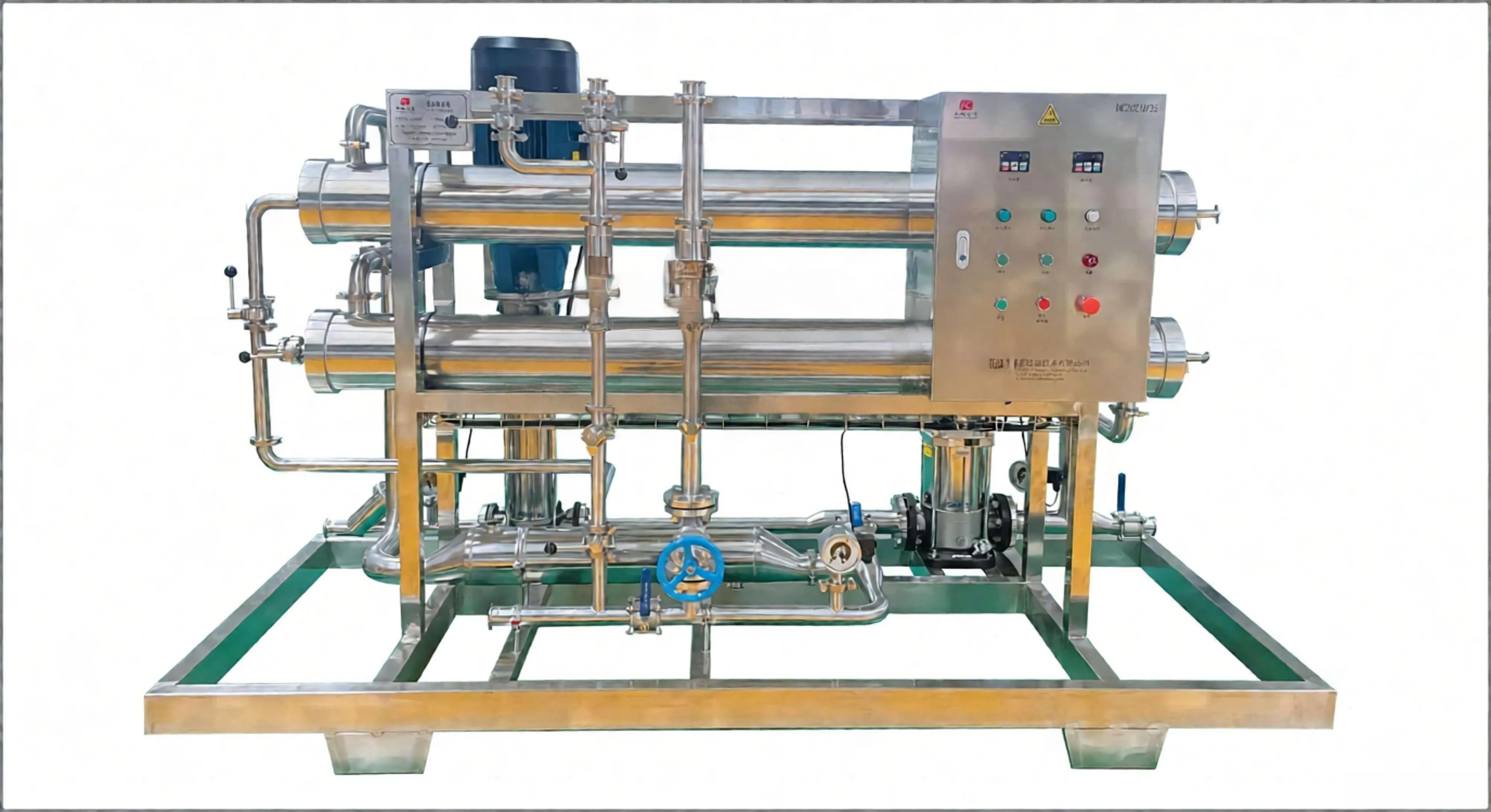
Application of Membrane Separation Technology in Polypeptide Extraction Process
Leveraging proprietary advantages in membrane separation technology, BluewavBio has successfully applied membrane separation technology to polypeptide extraction and developed an integrated system for polypeptide ultrafiltration purification, filtration decolorization and concentration desalination. Inorganic ceramic membranes are deployed at the front end to achieve efficient impurity removal and filtration; ultrafiltration separation membranes are used in the middle section for decolorization, separation and purification; nanofiltration concentration membranes are applied at the rear end for concentration under ambient temperature.
Membrane Process Flow for Polypeptide Extraction
Polypeptide Raw Material Pretreatment → Multi-step Enzymatic Hydrolysis → Centrifugal Filtration → Ultrafiltration Separation & Purification → Ultrafiltration Separation & Decolorization → Membrane Desalination & Concentration → Follow-up Procedures
Advantages of Membrane Process for Polypeptide Extraction
- Ultrafiltration separates polypeptides from polysaccharides to realize polysaccharide recovery, which improves economic benefits and reduces pollutant concentration in wastewater discharge;
- Nanofiltration concentration of polypeptides can replace thermal evaporation concentration to cut energy consumption, while effectively removing free amino acids, inorganic salts and other impurities to enhance the purity of polypeptide finished products;
- Pure physical operation at room temperature without chemical reactions, avoiding damage to heat-sensitive components. The feed liquid operates in cross-flow mode to eliminate membrane fouling and clogging without adding filter aids;
- Advanced modular design enables convenient filter media replacement and simple operation;
- Equipped with online regeneration cleaning and sewage discharge devices to reduce labor intensity and production costs while improving overall production efficiency;
- Imported foreign membrane elements with complete qualification certificates feature long service life and high safety performance;
- The whole set of equipment adopts sanitary-grade materials and complies with GMP certification standards.