Membrane Separation & Concentration System for Enzymatic Gelatin Production
Background Introduction
Gelatin is water-soluble protein derived from partial hydrolysis of animal collagen. Widely used as thickener, stabilizer and other additives, its molecular weight ranges from tens of thousands to over one hundred thousand Daltons. It is extensively applied in pharmaceuticals, health care, food processing, cosmetics, chemical industry, photographic materials and many other fields.
At present, gelatin is mainly manufactured by alkaline process, acid process and enzymatic process. Alkaline and acid methods are traditional production routes with long production cycles (normally 15 days), and the discharged waste liquid causes severe environmental pollution. Thanks to low production cost and high product safety, enzymatically produced gelatin is gradually replacing acid and alkaline-processed gelatin in pharmaceutical and food industries.
Compared with traditional alkaline gelatin production, collagen degradation via enzymatic catalysis greatly shortens production cycles, so global gelatin researchers have long attached great importance to enzyme research. Studies on enzymatic gelatin extraction began in 1962 with a history of more than 50 years. It has been proven that collagen can be degraded by enzymes to prepare gelatin, yet gelatin made by this method suffers drawbacks including broad molecular weight distribution, excessive high-molecular-weight fractions and difficult process control, which severely degrade gelatin quality.
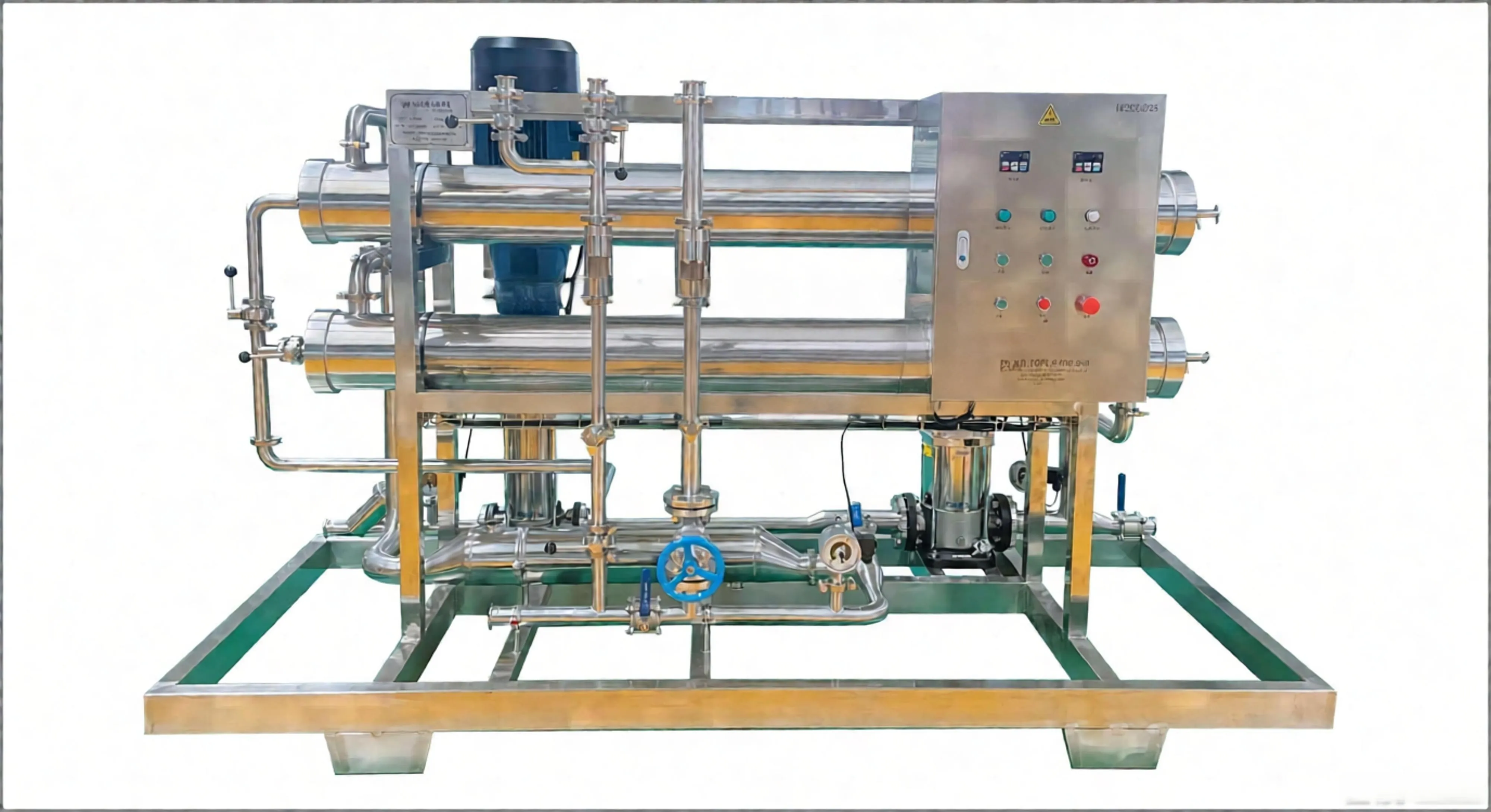
Application of Membrane Separation Technology in Gelatin Production
Leveraging proprietary membrane separation expertise, BluewavBio has successfully integrated membrane separation technology into gelatin manufacturing workflows. The membrane separation system efficiently removes high-molecular-weight impurities to purify gelatin. The membrane concentration unit operates at ambient temperature; while removing water, it eliminates partial low-molecular-weight inorganic salts to cut ash content within the finished product and shorten overall concentration time. Concentrated gelatin features remarkably improved transparency, gel strength (Bloom value) and viscosity compared with traditional processing.
Conventional thermal concentration systems consume massive heat and electricity, and require supporting vacuum and cooling units with complicated operation. By contrast, membrane concentration equipment features simple operation and low energy consumption.
Gelatin Membrane Separation & Concentration Process Flow
Raw Hides & Bones → Pretreatment → Enzymatic Hydrolysis → Enzyme Deactivation → Gel Extraction → Coarse Filtration → Membrane Separation → Membrane Concentration → Spray Drying → Finished Gelatin
Advantages of Gelatin Membrane Separation & Concentration Technology
- Reduce product ash content (ash content can drop by 40-45%);
- Improve gelatin gel strength (Bloom value) and viscosity;
- Save energy and drastically cut coal consumption. For example, one set of gelatin membrane concentration equipment consumes only about 3 kWh of electricity per ton of water removed with no extra energy input, and 75-80% of water in dilute gelatin can be rapidly removed by membranes. In contrast, conventional triple-effect evaporators consume approximately 120 kg coal plus extra electricity to evaporate one ton of water, making membrane concentration extremely energy-efficient;
- Simple equipment operation: only one operator per shift is required to switch valves for stable equipment running;
- Excellent on-site sanitation, simple installation requirements and small floor space occupation;
- Strong continuous operation capacity and stable water permeate output;
- Easy cleaning: only one round of online cleaning per day is needed;
- Excellent membrane regeneration performance; membrane service life can exceed two years in industrial production.
BluewavBio is a professional manufacturer of membrane separation equipment with a team of senior engineers specializing in membrane engineering applications. After years of technical research and industrial practice, we have mastered advanced ultrafiltration, nanofiltration, reverse osmosis and ceramic membrane technologies. We focus on custom-designing and manufacturing lab-scale, pilot-scale and industrial membrane separation equipment for global clients. If you encounter any technical obstacles in membrane filtration, please feel free to contact us, and our professional technical team will provide dedicated technical support and solutions.