Background Introduction
Heparin sodium is the sodium salt of sulfated glycosaminoglycan extracted from porcine or bovine intestinal mucosa, belonging to glycosaminoglycans. It can prolong blood clotting time.
In the heparin sodium extraction process, raw materials such as pig intestines (or pig lungs) are cleaned and minced into slurry. An equal volume of water is added under full stirring, followed by a small amount of preservative with a concentration of 0.1% and fully mixed. Under appropriate pH conditions, a proper amount of fresh pancreatic slurry is added as enzymolysis agent for enzymatic hydrolysis and extraction. Fine filtration is carried out after extraction. The filtrate is sent to ion exchange resin for adsorption and purification. The resin is rinsed repeatedly, and the supernatant of eluate is collected. An appropriate amount of 95% ethanol is added for overnight precipitation. The next day, the supernatant is carefully siphoned off, and the lower sediment is collected and suction-filtered to dryness (the mother liquor can be recycled for eluent before pH adjustment). Vacuum drying is then performed to obtain crude heparin sodium. The crude product is further refined to produce high-purity refined heparin sodium.
Traditional Heparin Sodium Process Flow
Raw Material Pretreatment → Enzymatic Hydrolysis Extraction → Coarse Filtration → Ion Exchange Adsorption → Ethanol Precipitation → Follow-up Refining Processes
Drawbacks of Traditional Heparin Sodium Process
① Large volume of extracting solution, resulting in long production cycles;
② Incomplete impurity removal of enzymatic hydrolysate, reducing ion exchange adsorption efficiency and product quality;
③ Massive wastewater generated after salt elution, causing huge material loss during direct discharge. The high protein content in wastewater leads to severe environmental pollution;
④ Complicated refining procedures with limited improvement of product purity.
Application of Ultrafiltration Technology in Heparin Sodium Production
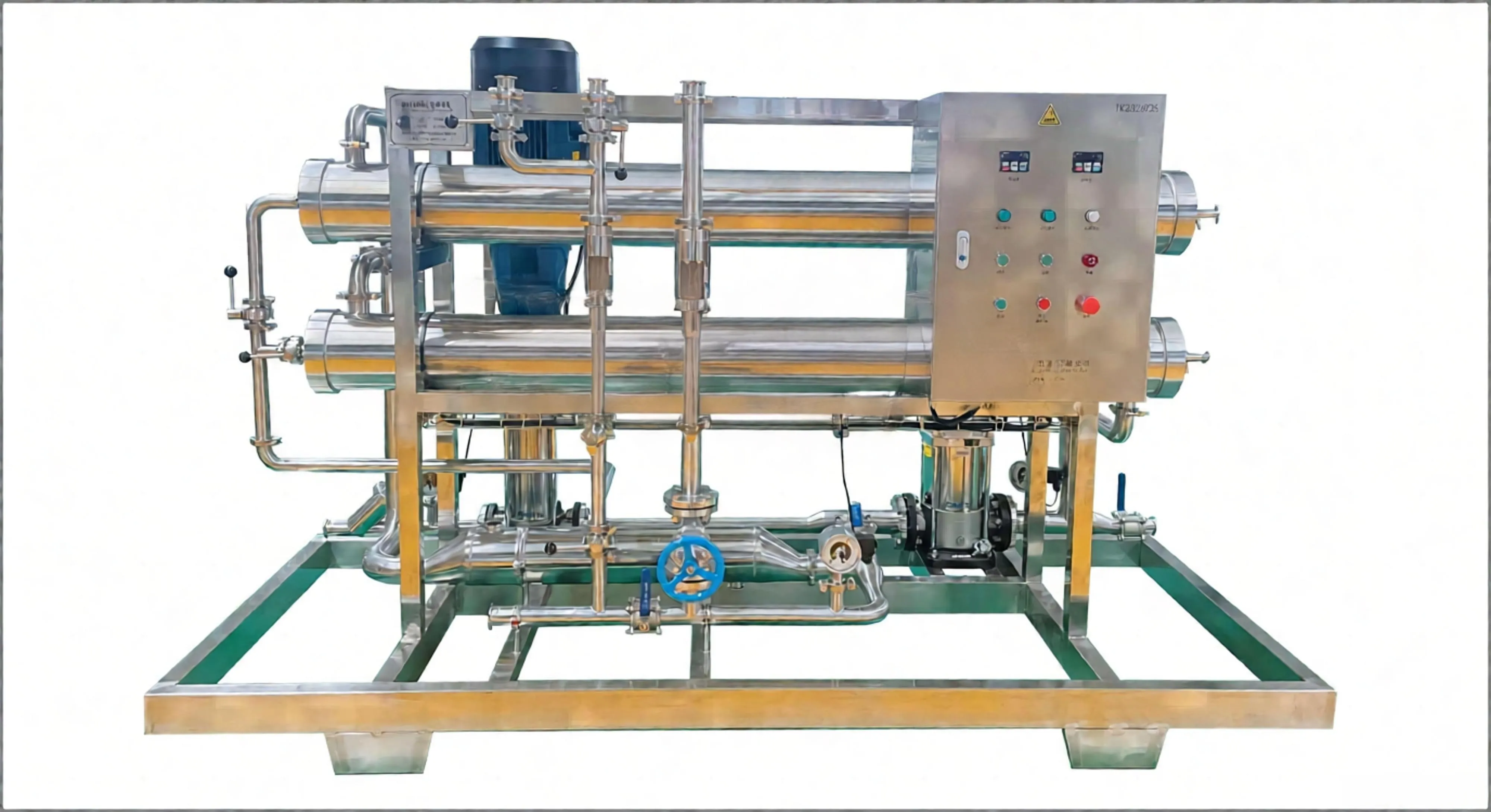
Leveraging unique advantages of membrane separation technology including cross-flow operation, molecular-level filtration and stable material activity retention at ambient temperature, BluewavBio has successfully applied membrane separation technology to heparin sodium production. This technology shortens production cycles, upgrades product quality, reduces production costs via wastewater recycling, and realizes value-added utilization of recovered protein as a new profit growth point.
Membrane Filtration & Concentration Process for Heparin Sodium
Raw Material Pretreatment → Enzymatic Hydrolysis Extraction → Flocculation Precipitation → Ultrafiltration Impurity Removal → Nanofiltration Concentration → Follow-up Processes
Eluate Wastewater → Membrane Concentration for Protein Recovery → Pure Water Recycling
Advantages of Membrane Filtration & Concentration Process for Heparin Sodium
① Front-end impurity removal improves resin adsorption efficiency and reduces resin consumption;
② Recover protein from wastewater, and the treated water can be discharged or recycled;
③ Shorten production cycles and boost overall production efficiency;
④ Membrane equipment features simple operation, small floor space, automatic running and convenient maintenance;
⑤ Good scalability, easy to meet industrial capacity expansion demands;
⑥ Low energy consumption; membrane separation is a phase-change-free technology that only consumes electric power for material pumping;
⑦ Improve finished product quality and enhance corporate brand image.
Membrane Filtration Process Flow for Refined Heparin Sodium
Crude Heparin Sodium → Dissolution in Brine → Protease Hydrolysis → Thermal Alkali Deproteinization → Decolorization → Ethanol Precipitation → Ultrafiltration Impurity Removal → Chromatographic Purification → Alcohol Precipitation → Membrane Concentration → Freeze Drying → Injection-Grade Refined Heparin Sodium
Advantages of Membrane Process for Refined Heparin Sodium
The refined heparin sodium process first decomposes most proteins with protease, then removes acidic proteins via chromatographic purification. This replaces the traditional process of strong acid precipitation followed by low-temperature centrifugation, avoiding heparin sodium deactivation under strong acid conditions. Ultrafiltration removes small molecular impurities and salts to achieve further purification. Refined heparin sodium produced by this process is sterile, low in pyrogen value, white and loose in texture.
BluewavBio is a professional manufacturer of membrane separation equipment with a team of senior engineers specializing in membrane engineering applications. After years of technical research and industrial practice, we have mastered advanced ultrafiltration, nanofiltration, reverse osmosis and ceramic membrane technologies. We focus on custom-designing and manufacturing lab-scale, pilot-scale and industrial membrane separation equipment for global clients. If you encounter any technical obstacles in membrane filtration, please feel free to contact us, and our professional technical team will provide dedicated technical support and solutions.