Membrane Separation Technology for Fish Collagen Extraction & Purification
Background Introduction
Collagen is an extracellular protein, a fibrous protein twisted into a spiral structure by three peptide chains. As the most abundant protein in the human body, collagen accounts for more than 30% of the total body protein. Collagen is rich in amino acids required by the human body, such as glycine, proline and hydroxyproline. It is the most critical component of the extracellular matrix.
In the traditional collagen extraction process, raw materials including fish scales, fish skin and fish bones are mixed with an appropriate amount of water, followed by high-temperature steaming. Under suitable pH conditions, a proper amount of enzymolysis agent is added for enzymatic hydrolysis and extraction. Fine filtration is carried out after extraction. The filtrate is sent to an evaporative concentration system for dehydration. When the concentrated liquid reaches a specific concentration, it is transferred to a spray drying unit, and the powder obtained after drying is finished collagen.
Disadvantages of Traditional Collagen Extraction Process
① Large volume of extracting solution, leading to long production cycles;
② Insufficient impurity removal of enzymatic hydrolysate, deteriorating collagen quality;
③ Excessively long evaporation concentration and spray drying time causing thermal denaturation of collagen;
④ The finished product usually carries fishy bitter taste with poor mouthfeel;
⑤ Coarse filtration grade resulting in poor water solubility of finished products.
Application of Membrane Separation Technology in Collagen Extraction
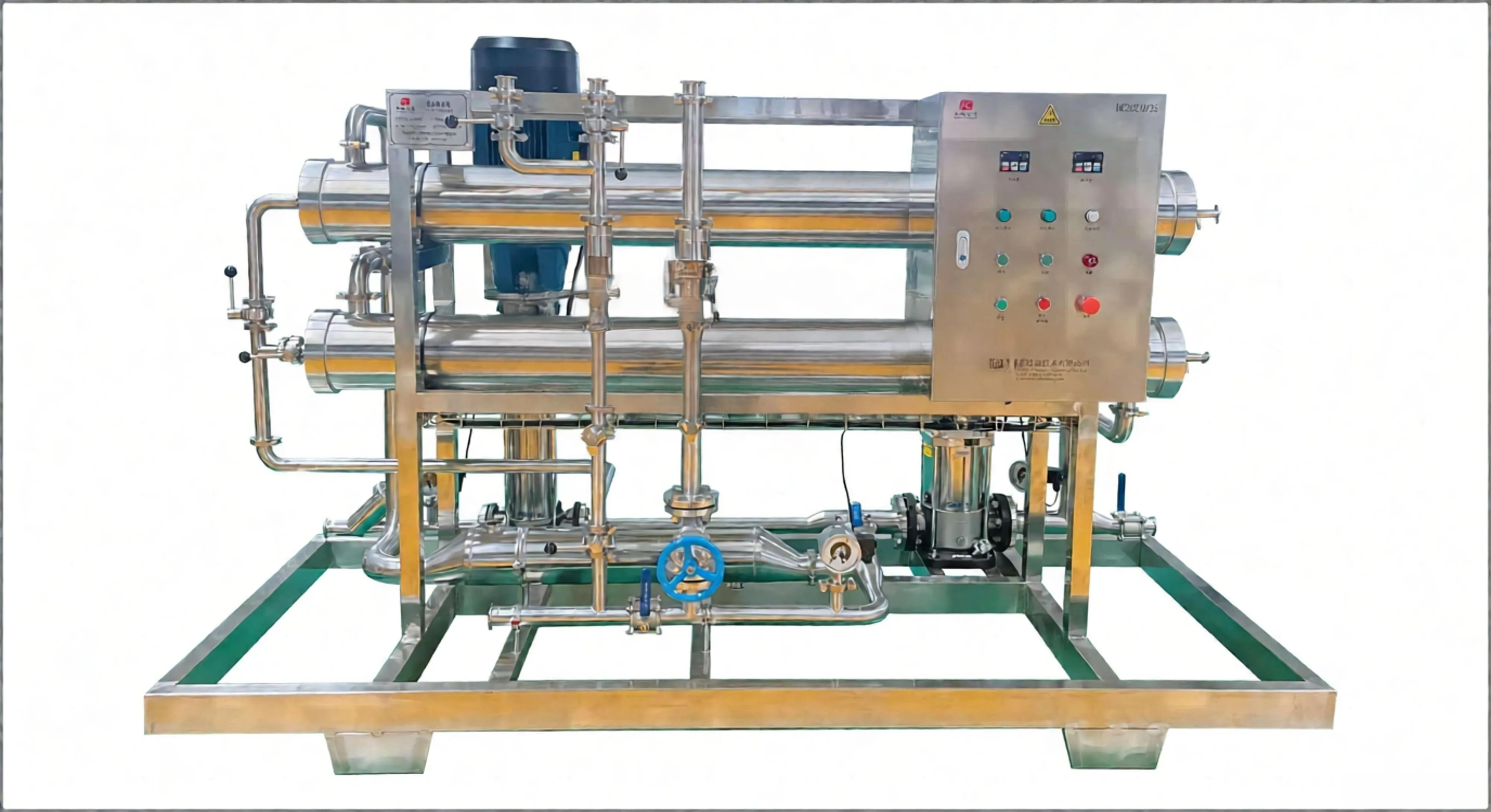
With years of practical experience serving animal protein extraction enterprises and proprietary advantages in membrane separation technology, BluewavBio has successfully applied membrane separation technology to collagen extraction processes. Relying on the precise separation performance of membrane elements, efficient impurity removal and filtration can be realized in the front-end stage to upgrade collagen quality. By selecting membranes with different molecular weight cut-offs in the middle stage, protein products of distinct molecular weights can be separated to achieve product segmentation. In the back-end stage, collagen solution is concentrated at ambient temperature to remove around 70% of moisture, while eliminating small molecular impurities in proteins. This shortens the subsequent spray drying duration and further improves finished product quality.
Membrane Separation Process for Collagen
Enzymatic Hydrolysate → Membrane Clarification Filtration → Membrane Separation Refining → Nanofiltration Membrane Concentration → Spray Drying
Advantages of Membrane Separation Technology for Collagen Production
① High-precision membrane filtration effectively removes impurities and improves collagen quality;
② Membranes with different molecular weight cut-offs separate protein products of various molecular weights to realize segmented product development;
③ Good expandability, easy to meet industrial capacity expansion demands;
④ Room-temperature concentration largely preserves the biological activity of proteins;
⑤ Membrane concentration removes inorganic salts from enzymatic hydrolysate while dehydrating, reducing bitter fishy odor and pesticide residues to further boost finished product quality;
⑥ Low energy consumption for membrane concentration, only 30% of thermal evaporation concentration, cutting production costs for manufacturers;
⑦ Reduced volume of collagen solution after membrane concentration lowers energy consumption of downstream drying procedures;
⑧ Automated and modular design reduces labor intensity, easy integration into existing production lines and suitable for large-scale production;
⑨ The whole system is constructed with sanitary-grade materials and complies with GMP standards.
BluewavBio is a professional manufacturer of membrane separation equipment with a team of senior engineers specializing in membrane engineering applications. After years of technical research and industrial practice, we have mastered advanced ultrafiltration, nanofiltration, reverse osmosis and ceramic membrane technologies. We focus on custom-designing and manufacturing lab-scale, pilot-scale and industrial membrane separation equipment for global clients. If you encounter any technical obstacles in membrane filtration, please feel free to contact us, and our professional technical team will provide dedicated technical support and solutions.