Nanofiltration Membrane Concentration Technology for Skim Milk Production
Background Introduction
Studies have found that milk contains at least more than 100 chemical components, mainly including water, protein, lactose, vitamins and other substances. Skim milk is produced by removing part of the fat from regular milk, lowering the fat content to less than 0.5%, less than 1/7 of the fat content in whole milk. This type of milk satisfies modern people’s nutritional demand for "high protein and low fat". People with cardiovascular diseases, middle-aged and elderly groups, as well as women pursuing weight loss, all regard skim milk as an "ideal food" that guarantees nutrition while effectively controlling fat intake.
Traditional concentration processes for skim milk adopt evaporative concentration technologies such as triple-effect (four-effect) evaporators and centrifugal evaporators. Although these methods feature high evaporation efficiency, high temperature processing causes massive loss of milk aroma substances, deterioration of taste and color, and loss of active nutritional ingredients, making it hard to retain the original flavor and mouthfeel of dairy products. In addition, such processes come with long production cycles and high energy consumption.
Particle Size Distribution Diagram of Main Components in Milk
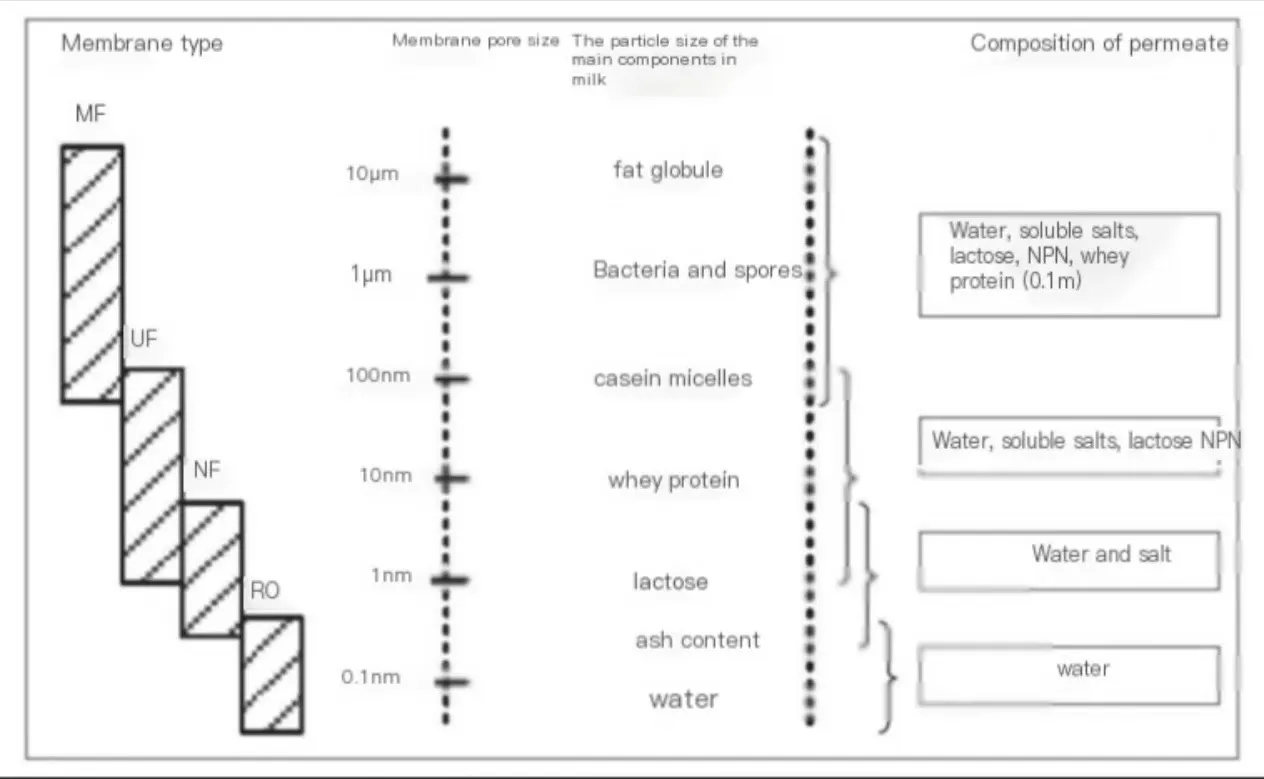
Various substances in milk have different particle sizes, making milk an ideal liquid medium for membrane separation treatment.
Application of Membrane Separation Technology in Milk Concentration
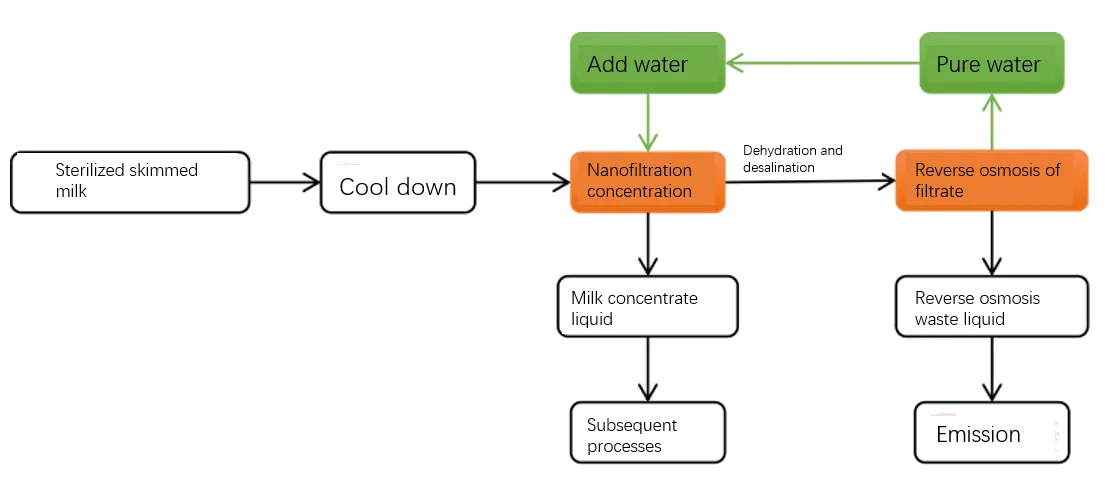
With years of practical experience serving dairy processing enterprises and proprietary advantages in membrane separation technology, Hecheng Filtration has successfully applied membrane separation technology to the milk concentration process. Nanofiltration membrane technology is adopted for room-temperature concentration, dehydration, desalination and lactose removal, achieving a water removal rate of 60%-80% while perfectly preserving the rich aroma and taste of skim milk. Combined with reverse osmosis technology, the waste liquid generated from nanofiltration can be recycled for lactose recovery to reduce waste discharge.
Room-temperature Membrane Concentration Production Process for Skim Milk
Advantages of Membrane Separation Technology in Milk Concentration
① Concentration and dehydration are carried out at room temperature with a milk water removal rate of 60%-80%, greatly increasing milk solid content and perfectly retaining the rich aroma and taste of skim milk;
② Reverse osmosis technology recycles nanofiltration waste liquid to cut waste discharge. The pure water obtained after treatment can be reused in the nanofiltration section for washing inorganic salts;
③ The concentrated milk has reduced volume, shortening the duration of subsequent production procedures;
④ Advanced modular design enables convenient filter media replacement and simple operation;
⑤ Equipped with online regeneration cleaning and sewage discharge devices to reduce labor intensity and production costs and boost production efficiency;
⑥ The complete set of equipment is made of sanitary-grade materials and complies with GMP certification standards.
BluewavBio is a professional manufacturer of membrane separation equipment with a team of senior engineers specializing in membrane engineering applications. After years of technical research and industrial practice, we have mastered advanced ultrafiltration, nanofiltration, reverse osmosis and ceramic membrane technologies. We focus on custom-designing and manufacturing lab-scale, pilot-scale and industrial membrane equipment for global clients. If you encounter any difficulties in membrane filtration, feel free to contact us, and our professional technical team will provide full technical support and solutions.