Microfiltration Membrane Separation Technology for Fresh Pasteurized Milk Production
Background Introduction
Liquid milk sold on the market is mainly divided into two categories: ultra-high temperature long-life milk and low-temperature fresh milk (also known as raw fresh milk). Long-life milk generally has a long shelf life, while fresh milk has a short shelf life. Since fresh milk contains no stabilizers, thickeners, emulsifiers or other additives, consumers consider it more beneficial to human health.
Low-temperature fresh milk generally refers to milk produced by pasteurization and homogenization of raw milk, also called pasteurized milk. This sterilization process usually adopts low-temperature sterilization technology at about 72~85°C, which can kill harmful bacteria in milk while preserving nutrients and authentic taste of milk. However, pasteurized milk still has a short storage life. The most common quality deterioration is protein precipitation and spoilage caused by reproduction of residual spore microorganisms. Fresh milk has strict restrictions on transportation time, which restricts market expansion of fresh milk.
Particle Size Distribution Diagram of Main Components in Milk
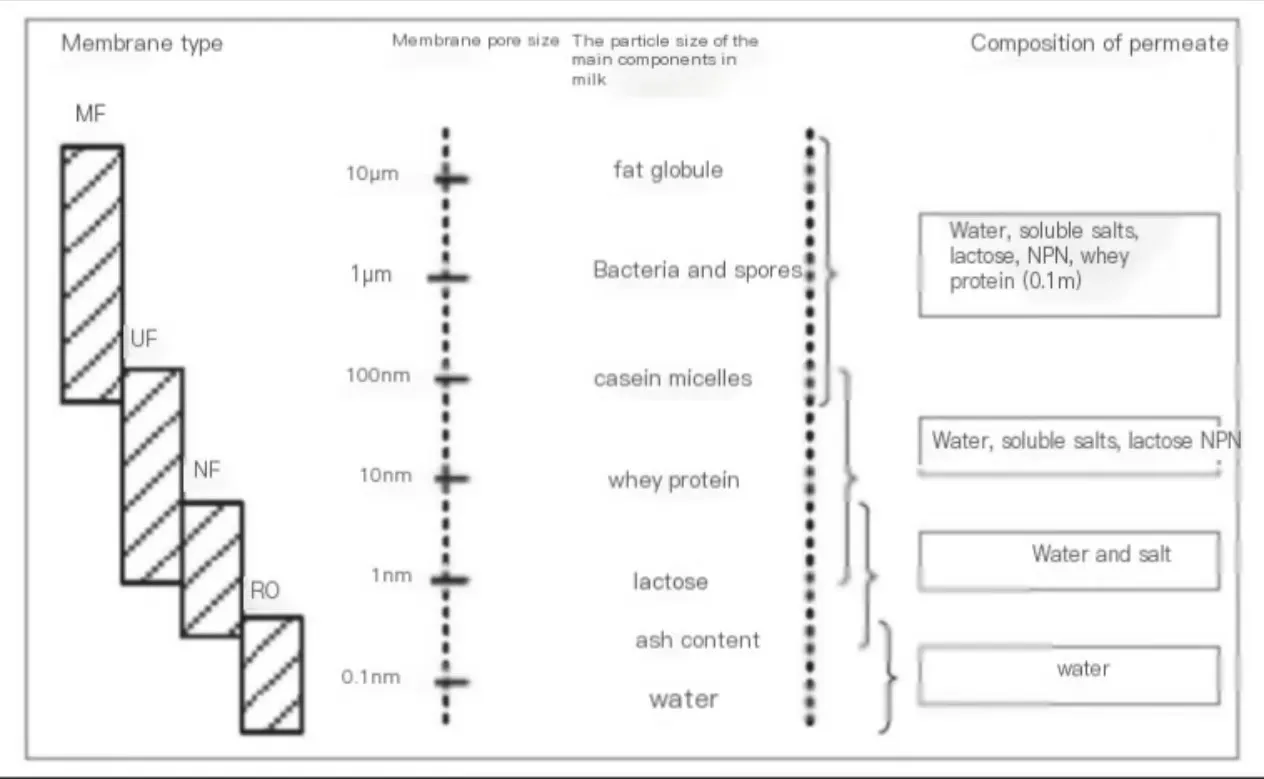
Substances in milk feature different particle sizes, making milk an ideal liquid for membrane separation treatment.
Application of Membrane Separation Technology in Fresh Milk Production Process
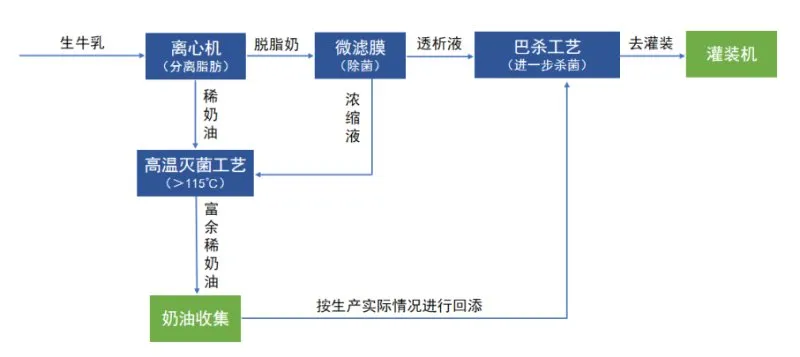
To solve the prominent problems existing in the above traditional processes, membrane separation technology demonstrates its unique advantages again. Microfiltration membranes intercept bacteria and other microorganisms in milk, while nutrients and water pass through the membrane. This technology can produce ESL (Extended Shelf Life) milk without high-temperature processing, with a shelf life of up to 21 days under 4°C refrigeration.
In addition to intercepting bacteria in milk, microfiltration membranes also trap somatic cells, significantly improving milk quality. In the microfiltration sterilization process, membrane separation technology is often combined with pasteurization for production, which reduces the microbial count in milk far below the detection limit.
Fresh Milk Sterilization Membrane Filtration Process Flow Chart
Advantages of Membrane Separation Technology in Fresh Milk Production
① Microfiltration membranes remove 99.99% of miscellaneous bacteria and microorganisms in raw milk, effectively extending shelf life;
② Low-temperature sterile filtration avoids thermal denaturation of proteins, completely retaining immunoglobulin, lactoferrin, vitamins, minerals and other nutrients in fresh milk;
③ Advanced modular design allows convenient filter media replacement with simple operation;
④ Equipped with online regeneration cleaning and sewage discharge devices to cut labor intensity and production costs and improve production efficiency;
⑤ The whole set of equipment is manufactured with sanitary-grade materials and complies with QS and GMP certification standards.
Related Dairy Industry Applications
Raw milk bacteria removal, milk component separation, milk concentration, whey desalination, protein recovery, cheese production, etc.
BluewavBio is a professional membrane separation equipment manufacturer with a team of senior engineers specializing in membrane engineering applications. After years of technical research and engineering practice, we master advanced ultrafiltration, nanofiltration, reverse osmosis and ceramic membrane technologies. We focus on designing and manufacturing lab-scale, pilot-scale and industrial membrane equipment for customers. If you encounter any challenges in membrane filtration, please feel free to contact us, and our professional technical team will provide technical support and solutions.