Cross-flow Membrane Concentration System for Nano Silica Sol Solution
Background Introduction
Silica solution, also known as silica sol, is an odorless and non-toxic colloidal solution. It is a dispersion of nano-scale silicon dioxide particles in water or organic solvents, featuring large specific surface area and strong adsorption capacity. It also possesses outstanding properties including high dispersion degree, excellent fire resistance and thermal insulation performance.
The particle size of silica sol is generally around 10–20 nanometers. During production, silica sol feed liquid with an initial concentration of approximately 5% needs to be concentrated to 25%. Traditional silica sol concentration adopts vacuum decompression evaporation for water removal, which is a high-energy-consuming and long-cycle process. Therefore, improving silica sol concentration efficiency and cutting energy consumption has become an urgent technical problem to solve.
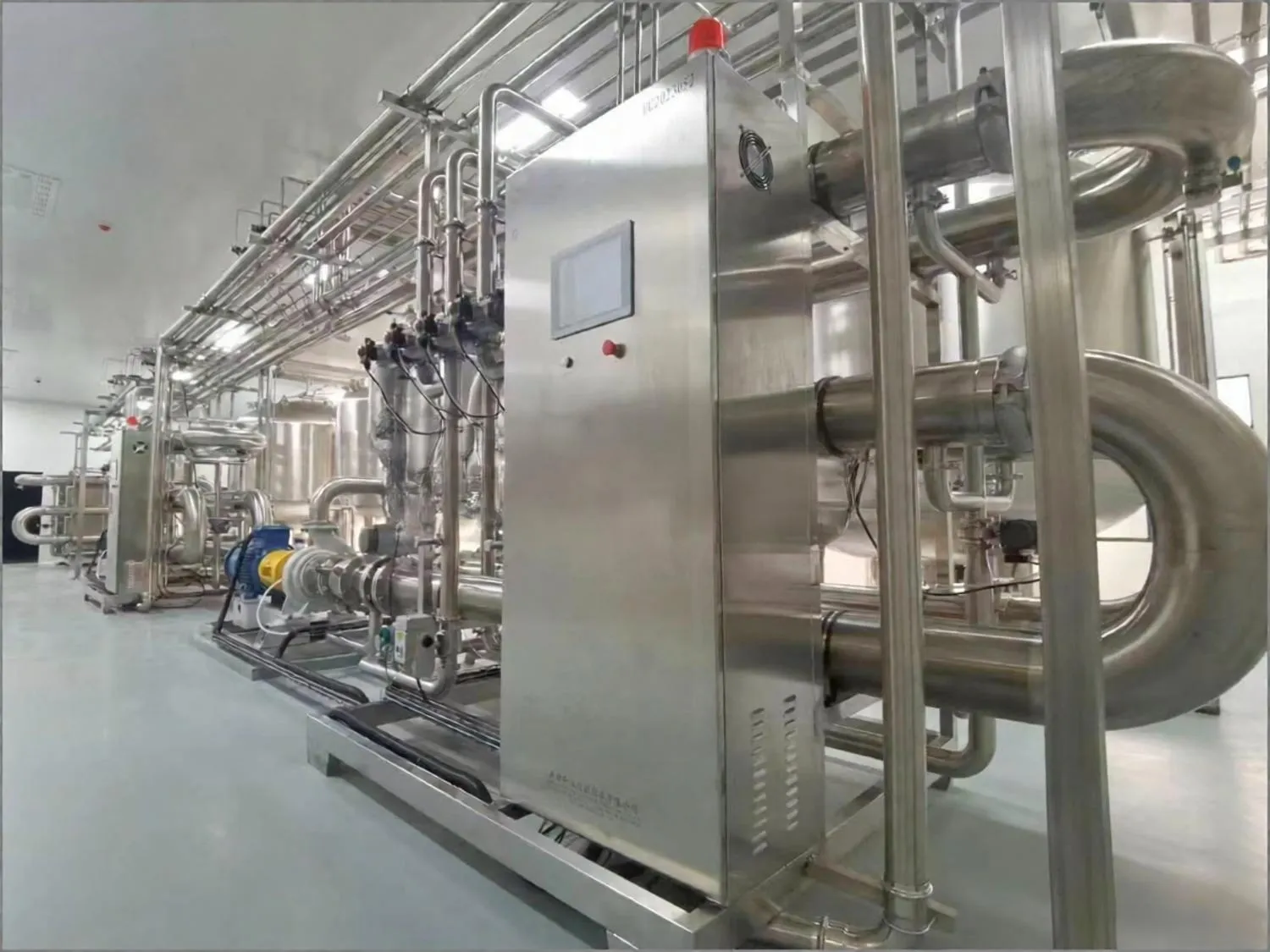
Application of Membrane Separation Technology in Silica Sol Concentration
BluewavBio has long specialized in material filtration, separation and concentration. To address the above pain points, Hecheng Filtration applies membrane separation technology to silica sol concentration processes. Membranes perform selective separation at the molecular level to achieve efficient concentration. The cross-flow membrane operation eliminates fouling and clogging. Meanwhile, full automatic equipment control shortens production cycles and greatly reduces labor intensity and manufacturing costs.
Advantages of Membrane Separation Technology for Silica Sol Concentration
① High membrane separation precision completely intercepts silica sol particles while removing solvents, with nearly zero loss of silica sol products;
② While removing solvents, membrane concentration eliminates small-molecule impurities inside the solution to further upgrade finished product quality;
③ Cross-flow running mode of the membrane system effectively prevents membrane surface fouling and blockage;
④ The membrane system supports automatic operation control and online regeneration cleaning, delivering simple operation, shorter production cycles, lower labor input and reduced overall production costs.