Starch Sugar Ultrafiltration Membrane Separation & Syrup Purification Equipment
Background Introduction
Starch sugars refer to sugars produced from starch-rich grains, tubers and other raw materials via acid hydrolysis, acid-enzyme hydrolysis or enzymatic hydrolysis processes, collectively covering maltose, glucose, high fructose syrup and other products. As core pillar products of starch deep processing, starch sugars feature wide consumption fields and large market demand, and have long been extensively applied in food, pharmaceutical, papermaking and many other industries.
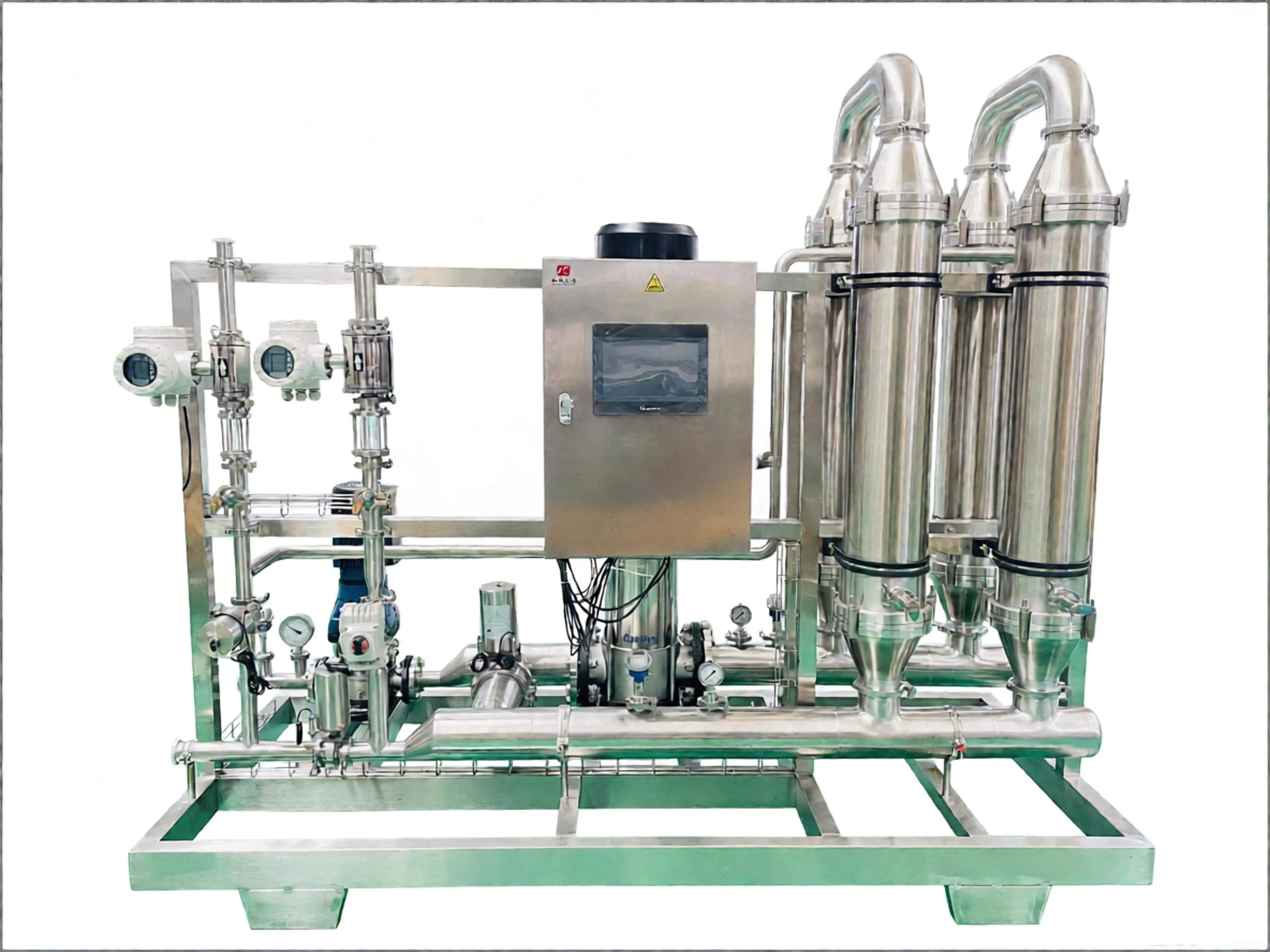
Application of Membrane Separation Technology in Starch Sugar Production
With years of practical experience serving starch deep processing manufacturers and proprietary strengths in membrane separation technology, BluewavBio has successfully integrated membrane separation technology into starch sugar production workflows. Leveraging the precise molecular interception performance of ultrafiltration membranes, the system achieves effective separation and purification of sugar liquor to upgrade syrup quality. Meanwhile, it reduces activated carbon dosage in the subsequent ion exchange section and extends the service life of ion exchange resins.
Process Flow Chart & Technical Description
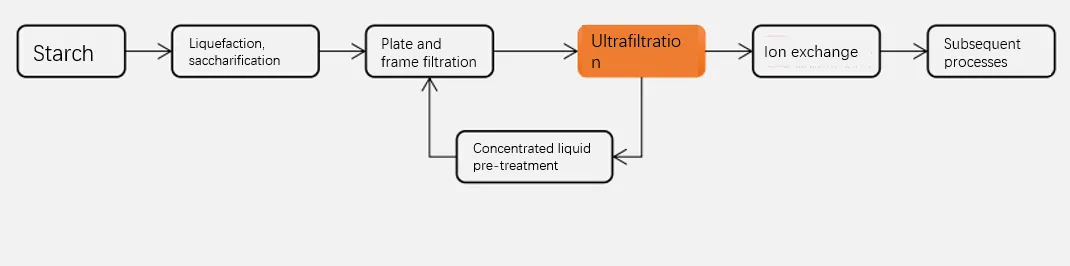
Process Brief Introduction
Starch is hydrolyzed into starch sugars under the catalytic effect of amylase and glucoamylase. After saccharification treatment, saccharified liquid first undergoes plate-and-frame filtration to remove most visible impurities. The filtrate then flows into ultrafiltration membranes to intercept macromolecular impurities including proteins, fibers, fats and colloids, yielding high-quality refined sugar liquor.
High-purity sugar liquor entering the downstream ion exchange section drastically cuts activated carbon consumption. The concentrated retentate generated from ultrafiltration can be recycled back to the plate-and-frame filtration procedure to minimize raw material loss.
Advantages of Membrane Separation Technology for Starch Sugar Production
- Driven by precise interception performance of ultrafiltration membranes, the interception rate of insoluble suspended solids and impurities in sugar liquor reaches over 99%;
- The ultrafiltration section improves syrup clarity and quality, lowering activated carbon consumption and extending the service cycle of ion exchange resins;
- Ultrafiltration retentate can be circulated back to plate-and-frame filtration to reduce raw material loss and pollutant discharge, delivering prominent technical and economic benefits;
- Equipped with online regeneration cleaning and sewage discharge assemblies to reduce labor intensity, cut production costs and boost overall production efficiency;
- The complete set of equipment is constructed from sanitary-grade materials and complies with GMP certification standards.
Typical Applications
Maltose, glucose, high fructose syrup, etc.