Upgrading and Retrofitting Membrane Separation Equipment to Enhance Printer Toner Powder Production Efficiency and Quality
In the highly competitive printer toner industry, where product precision, production efficiency, and environmental compliance are the core of enterprise competition, the upgrade of production equipment has become a key breakthrough for manufacturers to gain an advantage. Membrane separation technology, as a high-efficiency, energy-saving, and precision separation solution, has gradually replaced traditional separation processes (such as centrifugation, filter press, and ordinary filtration) and become a core driving force for upgrading toner production lines. This article will detail how membrane separation equipment upgrades optimize toner production processes, solve industry pain points, and help enterprises achieve high-quality and low-cost development, while complying to provide valuable industry insights for practitioners and decision-makers.
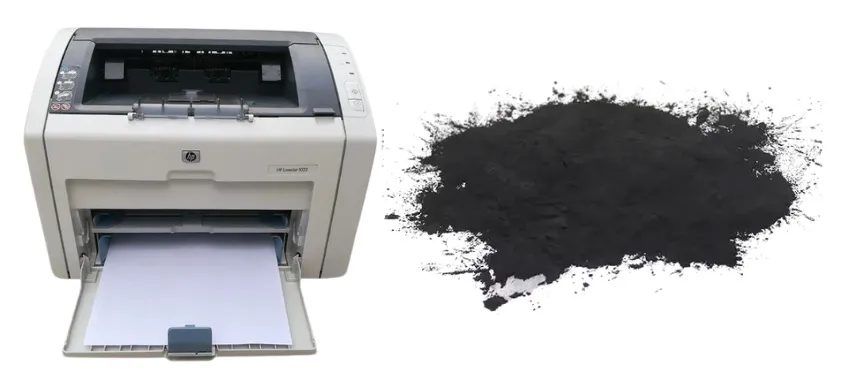
Why Do Printer Toner Production Lines Need Membrane Separation Equipment Upgrades?
Printer toner, as the core consumable of laser printers and copiers, has extremely high requirements for particle size distribution, purity, and uniformity—even tiny impurities or particle deviations can lead to print blurring, toner leakage, and shortened printer service life. Traditional toner production lines mostly adopt centrifugation and filter bag filtration technologies, which have long been unable to meet the upgrading needs of the industry due to inherent defects, and membrane separation equipment upgrades have become an inevitable choice.
1. Pain Points of Traditional Toner Separation Processes
- Low Separation Precision: Traditional centrifugal separation cannot completely intercept nano-level impurities (such as residual catalysts, unreacted monomers, and fine particle agglomerates), resulting in unstable toner quality, high defective rates, and difficulty in meeting the requirements of high-end toner products (such as medical-grade, industrial-grade high-precision printing).
- High Energy Consumption & High Costs: Centrifuges and filter presses require high power input during operation, and filter bags, filter elements, and other consumables need frequent replacement—according to industry data, consumable replacement costs account for 15%-20% of the total production costs of toner enterprises each year. At the same time, the low separation efficiency leads to long production cycles and increased labor costs.
- Serious Environmental Pollution: The waste liquid and waste residue generated by traditional separation processes contain a large amount of organic solvents and toner particles, which are difficult to treat and easily cause environmental pollution. With the increasingly strict global environmental protection policies (such as EU RoHS, China’s “Double Carbon” strategy), enterprises face severe environmental protection pressure and even production suspension risks.
- Unstable Production Efficiency: Traditional equipment is prone to blockage during long-term operation—for example, filter bags are easily blocked by toner particles, requiring frequent shutdowns for cleaning and maintenance, which seriously affects the continuity of the production line. Some toner manufacturers even need to arrange 2-3 shifts of personnel to maintain equipment operation, further increasing labor costs.
2. Core Advantages of Membrane Separation Equipment in Toner Production
Membrane separation equipment, based on the selective permeability of membrane materials, can achieve precise separation of toner particles, impurities, and solvents at the molecular level. Compared with traditional equipment, it has obvious advantages in adapting to toner production characteristics, which can perfectly solve the above pain points:
- Ultra-High Separation Precision: Advanced membrane materials (such as PTFE PM membrane, nano-scale rotating titanium alloy membrane) have a filtration precision of 5nm-200nm, which can intercept 99.9999% of nano-level impurities, ensuring the uniformity and purity of toner particles. This enables the produced toner to have better fluidity and transfer performance, reducing print defects and improving product qualification rate to more than 99%.
- Energy Saving & Cost Reduction: Membrane separation equipment operates at normal temperature and pressure, with low power consumption—only 30%-50% of that of centrifuges. At the same time, membrane elements have a long service life (usually 5-10 years, and the longest service life in existing projects has reached 9 years), which can greatly reduce the cost of consumables replacement. In addition, the automatic operation design of the equipment can reduce the number of operators by 40%-60%, further reducing labor costs.
- Green & Environmental Protection: The membrane separation process is a physical separation method without adding any chemical agents, avoiding secondary pollution. The separated solvents and residual toner particles can be recycled and reused—for example, the recycled organic solvents can be re-invested in the production process, and the recovered toner particles can be reprocessed, realizing the recycling of resources. This not only reduces environmental pollution but also further reduces raw material costs for enterprises, in line with the global “green production” trend and relevant environmental protection policies.
- Stable & Efficient Operation: Membrane separation equipment adopts automatic control systems (PLC/DCS), which can realize continuous operation for 24 hours without frequent shutdowns for maintenance. The unique anti-blocking design (such as variable pore instantaneous backwashing, high-frequency vibration, high-speed rotation) can effectively avoid membrane blockage—for example, the elastic variable pore characteristics of PM membrane can make the membrane pore size increase by more than 100% during backwashing, and the filter cake can be completely removed in 2-3 seconds, ensuring stable filtration flux. This greatly improves the continuity and efficiency of the toner production line, and the production capacity can be increased by 20%-50% after upgrading.
Key Links of Membrane Separation Equipment Upgrading Toner Production Lines
The upgrade of membrane separation equipment in toner production lines is not a simple replacement of equipment, but a systematic optimization combining the characteristics of toner production (such as emulsification, polymerization, crushing, separation, drying) to achieve the best upgrading effect. The key application links mainly include the following aspects:
1. Pre-Treatment of Toner Emulsion
In the toner production process, the emulsification link will generate a large amount of emulsion containing toner precursor particles, emulsifiers, and solvents. The traditional pre-treatment method has low efficiency and cannot completely remove impurities, which affects the subsequent polymerization reaction. After upgrading with membrane separation equipment, the emulsion can be precisely filtered—the membrane can intercept the emulsifier and large-particle impurities while retaining the toner precursor particles, ensuring the purity of the emulsion. This not only improves the stability of the polymerization reaction but also reduces the generation of by-products, laying a foundation for the production of high-quality toner.
2. Separation & Purification of Polymerized Toner Particles
The polymerization reaction is the core link of toner production, and the separation and purification of polymerized toner particles directly determine the quality of the final product. Membrane separation equipment can achieve precise separation of toner particles and reaction solvents—according to the particle size of toner (usually 5-15μm), select a membrane with matching precision to intercept toner particles, and the separated solvent can be recycled and reused. Compared with traditional centrifugal separation, membrane separation can avoid the problem of toner particle damage caused by high-speed centrifugation, ensure the integrity and uniformity of toner particles, and at the same time reduce solvent loss by 30%-40%.
3. Post-Treatment of Toner (Drying Auxiliary)
After separation and purification, toner particles still contain a small amount of moisture and residual solvents, which need to be dried to meet the use requirements. Traditional drying equipment has high energy consumption and uneven drying, which may lead to toner agglomeration. Membrane separation equipment can be used as an auxiliary link for drying—before drying, the moisture and residual solvents in toner particles are further separated by membrane separation, reducing the load of drying equipment. This not only shortens the drying time but also reduces the energy consumption of drying equipment by 20%-30%, and at the same time avoids toner agglomeration, ensuring the fluidity of toner particles.
4. Treatment of Production Wastewater & Waste Residue
The wastewater and waste residue generated in the toner production process contain a large amount of toner particles and organic solvents, which are difficult to treat by traditional methods. Membrane separation equipment can intercept the toner particles in the wastewater, and the treated wastewater can be recycled for production (such as equipment cleaning) or discharged up to the standard; the intercepted toner particles can be reprocessed and reused. For waste residue, membrane separation can also separate the residual organic solvents and toner particles, realizing the resource utilization of waste residue and reducing environmental pollution and waste of resources.
Actual Case: Membrane Separation Upgrade Helps Toner Enterprises Achieve Double Growth in Efficiency & Quality
To more intuitively reflect the effect of membrane separation equipment upgrading toner production lines, we take a well-known domestic toner manufacturer (annual output of 7,000 tons) as an example to show the specific upgrading effect. The enterprise originally adopted the traditional centrifugal + filter bag filtration process, which had problems such as low product qualification rate (about 92%), high energy consumption, and frequent equipment failures. In 2025, the enterprise upgraded the production line with PM membrane precision filtration equipment and nano-scale rotating titanium alloy membrane equipment, and the production effect was significantly improved after 3 months of debugging and operation:
- Product Quality Upgrade: The product qualification rate increased from 92% to 99.5%, the uniformity of toner particles was significantly improved, and the print clarity and fluency were greatly enhanced. The enterprise successfully entered the high-end toner market and achieved a 15% increase in product pricing.
- Production Efficiency Improvement: The 24-hour continuous operation of membrane separation equipment reduced the production cycle by 30%, and the annual production capacity increased from 7,000 tons to 9,500 tons. At the same time, the number of operators was reduced from 60 to 30, and the annual labor cost was saved by about 1.2 million yuan.
- Cost Reduction & Efficiency Increase: The power consumption of the production line was reduced by 45%, the cost of consumables was saved by 800,000 yuan per year, and the solvent recycling rate was increased by 35%, saving 1.5 million yuan per year in raw material costs. The total annual cost saving was about 3.5 million yuan, and the investment return period of membrane separation equipment was only 8 months.
- Environmental Compliance Upgrade: The treated wastewater and waste residue all met the national discharge standards, and the enterprise successfully passed the EU RoHS certification, breaking the technical barrier of overseas markets and realizing a 20% increase in export volume.
This case fully shows that the upgrade of membrane separation equipment can not only solve the pain points of traditional toner production lines but also help enterprises achieve the dual improvement of efficiency and quality, enhance core competitiveness, and lay a foundation for expanding the market and realizing sustainable development.
Key Considerations for Membrane Separation Equipment Upgrade in Toner Production Lines (2026)
When upgrading membrane separation equipment, toner enterprises need to combine their own production scale, product positioning, and existing process characteristics to avoid blind upgrade and ensure the upgrading effect and investment return. The key considerations are as follows:
1. Selection of Membrane Materials & Equipment Type
Different toner products (such as ordinary toner, high-end precision toner, medical-grade toner) have different requirements for separation precision and process. Enterprises need to select suitable membrane materials and equipment types according to their own product positioning: for example, high-end precision toner can select PM membrane (filtration precision 5nm-200nm) or nano-scale rotating titanium alloy membrane, which has ultra-high precision and stable operation; for ordinary toner, membrane separation equipment with moderate precision can be selected to control investment costs. At the same time, attention should be paid to the compatibility of membrane materials with toner production solvents to avoid membrane damage caused by chemical corrosion.
2. Matching with Existing Production Processes
The upgrade of membrane separation equipment should be closely matched with the existing emulsification, polymerization, crushing, and drying processes of the enterprise to avoid process conflicts. It is recommended that enterprises cooperate with professional membrane separation equipment manufacturers to conduct on-site investigation and process design, and realize the seamless connection between membrane separation equipment and existing production lines, ensuring the continuity and stability of production after upgrading. For example, some enterprises independently design automatic control systems according to their own production experience, integrating membrane separation equipment into the whole production line, which not only saves investment but also improves operation efficiency.
3. Selection of Manufacturers with After-Sales Service Capabilities
Membrane separation equipment has high technical content, and its later maintenance and debugging directly affect the operation effect and service life. Enterprises should select manufacturers with rich industry experience, mature technology, and perfect after-sales service—such manufacturers can provide professional installation, debugging, and maintenance services, and timely solve the problems encountered in the operation process. At the same time, they can provide technical upgrading services according to the development of the enterprise and the upgrading of product requirements, ensuring that the membrane separation equipment can meet the long-term development needs of the enterprise.
4. Consideration of Investment Return Cycle
When upgrading membrane separation equipment, enterprises need to reasonably calculate the investment return cycle according to their own production scale and cost structure. Generally speaking, the investment return cycle of membrane separation equipment for toner production lines is 8-18 months—for large-scale enterprises with an annual output of more than 5,000 tons, the investment return cycle is shorter (about 8-12 months) due to the obvious effect of cost reduction and efficiency increase. Enterprises can choose suitable equipment specifications and models according to their own financial situation to balance investment and return.
Future Trend: Membrane Separation Technology Will Lead the Intelligent Upgrade of Toner Production
With the continuous development of the printer toner industry and the continuous progress of membrane separation technology, the application of membrane separation equipment in toner production lines will become more and more extensive, and will gradually develop towards intelligence, integration, and high efficiency. In the future, membrane separation equipment will be combined with intelligent technologies (such as Internet of Things, big data, artificial intelligence) to realize real-time monitoring and intelligent adjustment of equipment operation parameters—for example, real-time monitoring of membrane flux, pollution degree, and other indicators, automatic adjustment of backwashing time and frequency, and early warning of equipment failures, further improving the stability and intelligence of production lines.
At the same time, with the continuous breakthrough of membrane material technology, the performance of membrane separation equipment will be further improved—for example, the service life of membrane elements will be extended to more than 10 years, the separation precision will be further improved, and the application scope will be expanded to more high-end toner production fields (such as 3D printing toner, special functional toner). In addition, under the background of global “double carbon” strategy, membrane separation technology, as an energy-saving and environmental protection technology, will be more valued by toner enterprises and become an important support for enterprises to achieve green development and sustainable development.
Conclusion
The upgrade of membrane separation equipment is an inevitable choice for toner enterprises to solve traditional process pain points, improve product quality, reduce production costs, and achieve green development. By virtue of ultra-high separation precision, energy saving and environmental protection, stable and efficient operation, and other advantages, membrane separation equipment can help toner enterprises break through the bottleneck of development, enhance core competitiveness, and gain an advantage in the fierce market competition. For toner enterprises that are planning to upgrade their production lines, they should combine their own actual situation, select suitable membrane separation equipment and upgrade schemes, and with the help of professional technical support, realize the high-quality upgrading of production lines.
In the future, with the continuous integration of membrane separation technology and intelligent technology, it will surely lead the toner production industry to develop in a more efficient, green, and high-quality direction, creating greater value for enterprises and the industry.
FAQs
Q1: How much can the production efficiency of toner production lines be improved after upgrading with membrane separation equipment?
A1: After upgrading with membrane separation equipment, the production efficiency of toner production lines can be improved by 20%-50%, and the production cycle can be shortened by 30% due to 24-hour continuous operation. For large-scale enterprises, the production capacity can even be increased by more than 50%.
Q2: What is the service life of membrane elements in membrane separation equipment for toner production?
A2: The service life of membrane elements is usually 5-10 years, and the longest service life in existing projects has reached 9 years. The specific service life is related to membrane materials, toner production process, and daily maintenance. Choosing high-quality membrane materials (such as PTFE PM membrane, nano-scale rotating titanium alloy membrane) can effectively extend the service life.
Q3: Can membrane separation equipment help toner enterprises save costs? How much can be saved?
A3: Yes. Membrane separation equipment can save costs in three aspects: ① Energy saving: power consumption is reduced by 30%-50%; ② Consumables saving: the cost of consumables is reduced by more than 70%; ③ Labor saving: the number of operators is reduced by 40%-60%. On average, toner enterprises can save 20%-30% of the total production costs per year after upgrading.
Q4: Is the upgrade of membrane separation equipment suitable for small and medium-sized toner enterprises?
A4: Yes. Membrane separation equipment has a variety of specifications and models, which can be customized according to the production scale of small and medium-sized enterprises. For small and medium-sized enterprises with an annual output of 1,000-5,000 tons, the investment return cycle is about 12-18 months, which can effectively solve the problems of low efficiency and poor quality of traditional production lines and help enterprises achieve transformation and upgrading.
Q5: Can membrane separation equipment help toner enterprises pass environmental protection certification?
A5: Yes. The membrane separation process does not add chemical agents, and the treated wastewater and waste residue can meet the national discharge standards. At the same time, the recycling of solvents and toner particles can reduce environmental pollution, helping enterprises pass EU RoHS, ISO14001 and other environmental protection certifications and break overseas market barriers.