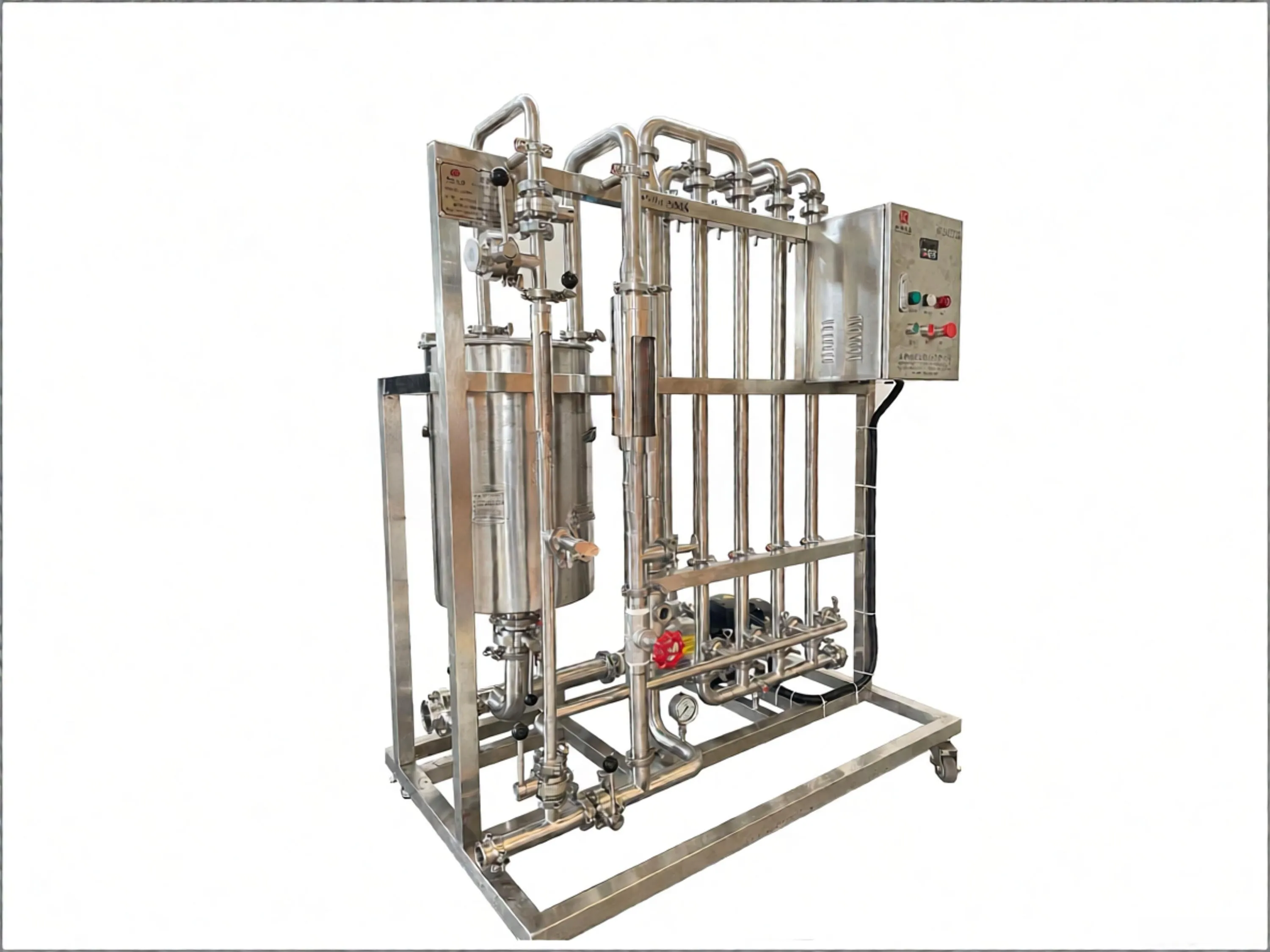
Ceramic & Special Membrane System for Homogeneous Catalyst Recovery
Background Introduction
Homogeneous catalysis refers to catalytic reactions where catalysts and reactants exist in the same phase without phase boundaries. Catalysts that perform homogeneous catalysis are defined as homogeneous catalysts. Most homogeneous catalysts are soluble transition metal compounds including salts and coordination complexes. These catalysts function independently in molecular or ionic forms with uniform active centers, delivering high catalytic activity and selectivity.
Homogeneous catalysts are widely adopted in petrochemical catalytic reactions. Since the whole reaction system consists of organic solvents and the catalysts are fully soluble, it is extremely difficult to recover homogeneous catalysts upon reaction completion for cyclic reuse.
Disadvantages of Traditional Catalyst Separation Methods
- Severe catalyst loss and low utilization efficiency;
- Excessive residual catalyst in finished products impairs product quality;
- Incomplete catalyst regeneration leads to short service life;
- Low automation level, heavy labor workload, and mostly batch-type discontinuous reactions.
Application of Membrane Separation Technology for Homogeneous Catalyst Recovery
To solve the above drawbacks, BluewavBio applies advanced membrane separation technology to homogeneous catalyst recycling based on years of membrane engineering application experience. The entire organic solvent and homogeneous catalyst system can operate within a fully closed circulation loop. Membranes with appropriate molecular weight cut-off effectively intercept and concentrate dissolved homogeneous catalysts in solvent media to realize catalyst recovery. The system supports full automatic control, minimizing staff exposure to hazardous organic solvents and preventing catalyst deactivation caused by contact with air.
Advantages of Membrane Separation Technology for Homogeneous Catalyst Recovery
① Ceramic membranes feature outstanding resistance to high temperature, organic solvents, strong acids and strong alkalis, applicable to most catalytic reactions with long service life;
② Minimal residual catalyst remains in final products to greatly upgrade product quality;
③ Special separation membranes operate at ambient or low temperature without damaging catalyst activity;
④ Low catalyst loss rate; recovered homogeneous catalysts can be recycled repeatedly to reduce raw material investment and production costs;
⑤ Long service life of special membranes lowers overall operation cost;
⑥ Support fully closed, automatic and continuous production workflows.
BluewavBio is a professional manufacturer of membrane separation equipment with a team of senior engineers specializing in membrane engineering applications. After years of technical research and industrial practice, we have mastered advanced ultrafiltration, nanofiltration, reverse osmosis and ceramic membrane technologies. We focus on custom-designing and manufacturing lab-scale, pilot-scale and industrial membrane separation equipment for global clients. If you encounter any technical obstacles in membrane filtration, please feel free to contact us, and our professional technical team will provide dedicated technical support and solutions.