Black garlic wine membrane clarification and filtration system
1. Project Background & Customer Pain Points
The client is a leading Chinese manufacturer specializing in deep‑processed black garlic products, including black garlic fortified wine and fermented beverages. In their original production line, the fermented wine contained large amounts of colloidal macromolecular impurities – mainly black garlic polysaccharide‑protein complexes and yeast autolysis residues.
The previous process relied on plate‑and‑frame filtration with diatomaceous earth as a filter aid, which caused several critical issues:
- Insufficient filtration precision: Only coarse suspended solids were removed; soluble colloids passed through, leaving the wine dark and turbid with light transmittance below 70%.
- Severe secondary sedimentation: Within 15–30 days of bottling, grey‑black flocculent precipitates appeared at the bottom, leading to massive customer returns and brand image damage.
- Significant flavour loss: The process required high‑temperature sterilisation, which degraded the characteristic sweet‑aromatic notes of black garlic and reduced total polyphenol bioactives by up to 20%.
- Filter aid contamination: Residual diatomaceous earth conflicted with the clean‑label trend, and spent filter aid disposal added high environmental costs.
Core customer requirements: Achieve thorough removal of turbidity‑causing macromolecules without heat treatment or chemical flocculants, ensure optical clarity for ≥12 months of shelf life, and maximise retention of nutritional actives.
2. Feedstock Characteristics & Process Design Parameters
Our technical team conducted a full analysis of the raw black garlic wine and customised the membrane separation parameters accordingly:
- Feed material: Fermented black garlic wine (alcohol 12% vol, pH 3.8–4.2).
- Primary foulants: Polysaccharide‑protein complexes (MW 100–500 kDa), colloidal silica, and yeast cell debris.
- Batch capacity: 5 tons/batch (daily throughput 15 tons).
- Process temperature: Ambient (18–25°C) to protect thermolabile components.
- Separation target: 50 nm ceramic ultrafiltration membrane (MWCO). Required reduction of turbidity from raw 15 NTU to ≤ 0.5 NTU, total polyphenol retention > 98%, and overall yield > 96%.
3. Technical Solution and Membrane System Configuration
After comparing polymeric spiral‑wound vs. ceramic membranes, we selected a multi‑channel large‑pore ceramic UF cross‑flow filtration system due to the high viscosity and fouling tendency of black garlic wine. Cross‑flow technology uses high‑velocity fluid to scour the membrane surface, significantly delaying cake layer build‑up.
Key system modules:
- Pre‑filtration unit: Removes coarse solids (peel, seeds, fibre).
- Ceramic membrane recirculation/concentration loop: Utilises alumina‑zirconia composite membranes with excellent acid‑, alcohol‑, and fouling‑resistance. Designed for 5‑8× concentration factor.
- Permeate collection & UV cold‑sterilisation: The clear filtrate is filled without pasteurisation, preserving freshness.
- CIP (Clean‑in‑Place) automatic system: Alkaline and acidic cleaning protocols restore flux to ≥98% of initial, extending membrane service life to ≥5 years.
Process flow (P&ID summary):
Raw black garlic wine → Feed tank (coarse screen) → Ceramic membrane circulation pump → Ceramic membrane skid (cross‑flow filtration) → Clear permeate tank → UV cold‑sterilisation → Aseptic bottling. The retentate (containing macromolecular impurities) is returned to the concentrate tank for periodic discharge.
4. Core Equipment and Visual Filtration Results
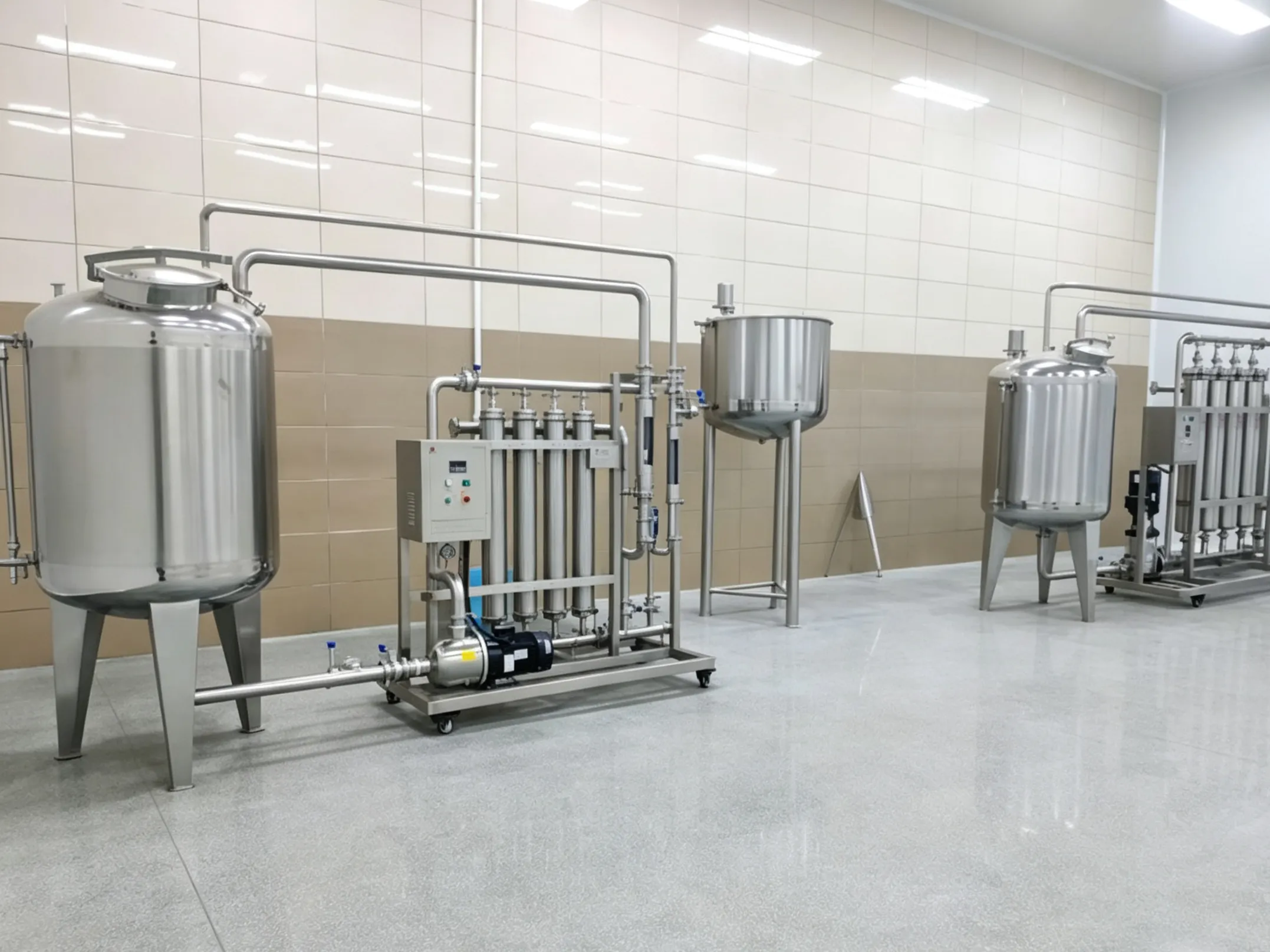
The system is fabricated in 304/316L sanitary stainless steel, equipped with Siemens PLC‑based automatic control that monitors inlet/outlet pressures, trans‑membrane pressure (TMP), and instantaneous flux, enabling fully unattended operation.
※ Visual comparison (laboratory retention samples):
❌ Before filtration: Dark brown, cloudy, with visible suspended flocs.
✅ After filtration: Brilliant amber colour, crystal clear, no visible particles even under strong light – meeting premium liqueur appearance standards.
5. Operational Data and Membrane Separation Performance Validation
The system was tested over 72 hours of continuous operation plus 6‑month accelerated shelf‑life tests (38°C incubator). Key performance improvements are summarised below:
| Parameter | Conventional Plate‑Frame (Before) | Ceramic UF System (After) | Improvement |
|---|---|---|---|
| Turbidity (NTU) | 15.2 | 0.4 | ↓ 97.4% |
| Total polyphenol retention | 79.5% | 99.2% | ↑ 19.7% |
| Overall yield | 85.0% | 97.8% | ↑ 12.8% |
| Secondary sedimentation | Visible within 30 days | None after 12 months at ambient | Completely eliminated |
| CIP cleaning time per batch | 4 h (manual disassembly) | 40 min (automatic CIP) | 6× faster |
Flux stability: Initial clean‑water flux ~350 LMH; during black garlic wine processing, stable operating flux maintained at 85–95 LMH over 8‑hour runs, with flux decline ≤15%; CIP recovery ≥98%.
6. Customer Value and Project Acceptance Feedback
- Quality leap: Clarity now meets international spirits standards, enabling the client to enter high‑end domestic and duty‑free channels with a 40% price premium.
- Zero quality complaints: Over 14 months of operation, no returns or claims related to turbidity or sedimentation – online negative feedback on e‑commerce platforms dropped to zero.
- Cost savings: Elimination of diatomaceous earth and associated waste disposal saves approximately RMB 280,000 per year in consumables and labour; higher polysaccharide retention also improves raw material utilisation.
- Client testimonial (Production Director): “BluewavBio’s ceramic membrane system has completely transformed our perception of filtration. We’ve moved from passive impurity removal to active ingredient selection. The equipment runs flawlessly, and their after‑sales support is exceptionally responsive – it’s one of the best investments we’ve made in our upgrading journey.”
The project passed final factory acceptance in November 2025, and the second‑phase expansion (50 tons/day) is already in the design stage.