Application of Membrane Separation Equipment in Enzyme Production
As efficient and specific biocatalysts, enzymes are widely used in various fields such as food processing, pharmaceutical manufacturing, biochemical engineering, and environmental protection. Their production efficiency and product purity directly determine the application effect and economic benefits of the industry. In the traditional enzyme production process, the separation and purification link has pain points such as high energy consumption, high enzyme activity loss, and incomplete impurity removal, which seriously restrict the industrial upgrading of enzyme preparations. With its core advantages of low-temperature operation, high-efficiency interception, environmental friendliness, and low energy consumption, membrane separation equipment has gradually replaced traditional processes such as filtration, centrifugation, and evaporation, becoming a key core equipment in the entire enzyme production process. It promotes the transformation of enzyme production towards high efficiency, refinement, and greenization, while meeting the sustainable development needs of the current biomanufacturing industry.
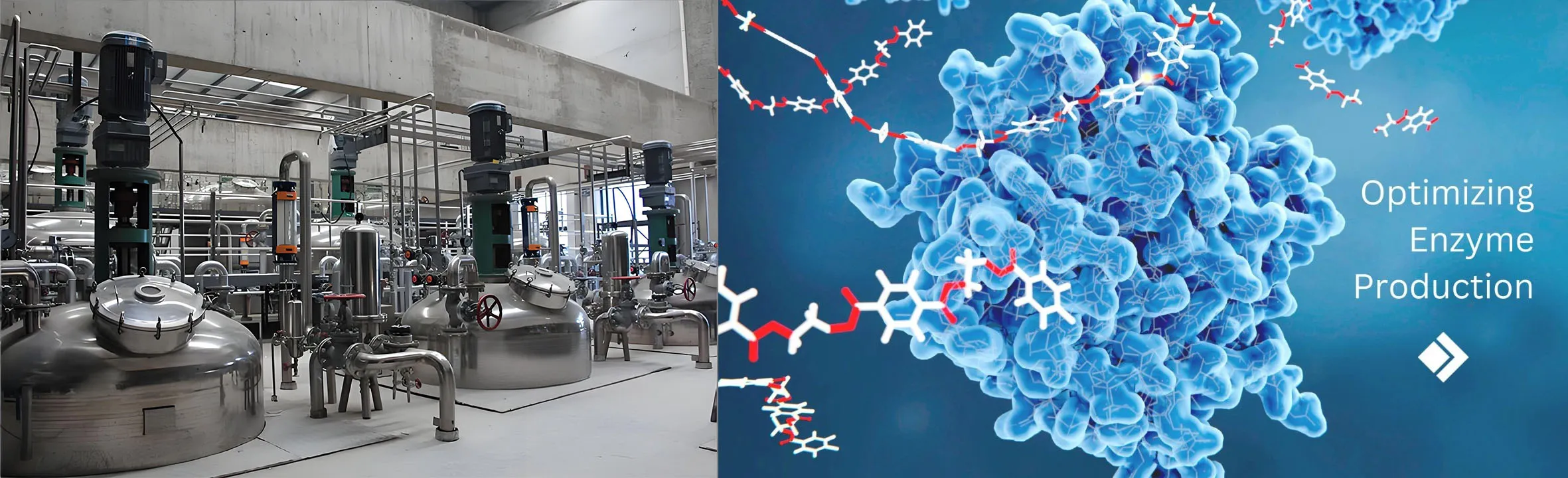
Core Principle of Membrane Separation Technology and Its Adaptability to Enzyme Production
Graded Interception Characteristic
Membrane separation technology is based on the selective permeability of membranes. Under the action of driving forces such as pressure and concentration difference, it realizes the efficient separation and purification of substances with different molecular weights (enzyme molecules, bacterial cells, impurities, small-molecule by-products, etc.). Its core advantages are highly compatible with the process requirements of enzyme production, fundamentally solving the pain points of traditional processes.
Temperature Control Advantage
As heat-sensitive biological macromolecules, enzymes are prone to conformational damage and activity loss under traditional high-temperature concentration and chemical precipitation processes. The enzyme activity loss rate of traditional evaporation concentration can reach 30%-50%, while membrane separation equipment can achieve full-process low-temperature operation (temperature controllable at 5-40℃), controlling the enzyme activity loss rate below 5% and maximizing the retention of enzyme catalytic activity. At the same time, membrane separation equipment can achieve graded interception by precisely adjusting the membrane pore size: microfiltration membranes (about 0.2μm) can remove large-particle impurities such as bacterial cells and cell debris in the enzyme fermentation broth; ultrafiltration membranes (10-100kDa) can intercept target enzyme molecules and remove macromolecular impurities such asimpure proteins; nanofiltration membranes (1-10kDa) can further concentrate the enzyme solution, remove small-molecule salts, sugars and other by-products, realizing the integration of deep purification and concentration of enzymes without multi-step process connection, which greatly simplifies the production process.
Chemical-free, non-polluting, energy-efficient.
Compared with traditional separation processes, membrane separation equipment does not require the addition of chemical reagents, has no secondary pollution, and its energy consumption is only 1/10-1/5 of that of traditional evaporation processes. The energy consumption for dehydrating 1 ton is only about 10 yuan, which not only reduces production costs but also meets the requirements of green manufacturing and environmental protection policies, becoming the preferred technical solution in the current enzyme production industry.
Specific Applications of Membrane Separation Equipment in Each Link of Enzyme Production
The enzyme production process mainly includes strain culture, fermentation, separation and purification, concentration, drying and other links. Membrane separation equipment can be deeply integrated into the entire process except strain culture. According to the process requirements of different links, appropriate membrane types and equipment models are selected to achieve dual improvement of efficiency and quality. The following is a detailed explanation combined with the latest research results and industrial cases.
1. Fermentation Broth Clarification: Removing Bacterial Cells and Large-Particle Impurities to Reduce the Load of Subsequent Processes
After the completion of enzyme fermentation, the fermentation broth contains a large number of impurities such as bacterial cells, cell debris, colloids, and suspended particles. If it directly enters the purification link, it will block subsequent equipment and increase the difficulty and energy consumption of purification. This link mainly uses microfiltration membrane equipment (pore size 0.1-0.5μm). Through cross-flow filtration, it can efficiently intercept large-particle impurities in the fermentation broth, increase the light transmittance of the enzyme solution to more than 98%, and retain the target enzyme molecules and small-molecule nutrients in the fermentation broth, laying a foundation for the subsequent purification link.
In the process of producing amylase by Bacillus subtilis fermentation, ceramic microfiltration membranes, with their high temperature and acid-base resistance, can operate stably under harsh conditions of 80℃ and pH 10, running continuously for hundreds of hours without performance attenuation, and the flux is stable above 100 LMH. They can effectively remove bacterial cell impurities in the fermentation broth, greatly reduce the load of subsequent ultrafiltration purification, and improve the overall production efficiency. Compared with traditional centrifugal filtration, the membrane separation clarification link can reduce wastewater discharge by more than 30%, and there is no need to clean the equipment frequently, reducing the operation and maintenance cost by 25%-30%.
2. Enzyme Purification and Refining: Removing Impurity Proteins to Improve Product Purity
Purification is the core link of enzyme production, which directly determines the quality and application value of enzyme preparations. Traditional purification processes (salting-out, chromatography) have problems such as cumbersome steps, high enzyme activity loss, and limited purity. This link mainly uses ultrafiltration membrane equipment. According to the molecular weight of the target enzyme, an ultrafiltration membrane with an appropriate pore size (10-100kDa) is selected. Using the sieving effect of the membrane, it can intercept enzyme molecules, remove impurities such as impurity proteins, polypeptides, and small-molecule organics in the fermentation broth, and realize the preliminary purification of enzymes. If a higher purity enzyme preparation (such as pharmaceutical grade, food grade) is required, nanofiltration membranes can be used for deep purification to further remove small-molecule impurities and improve the purity and activity of enzymes.
Recent studies have shown that membrane surface modification technology can further improve the purification effect: in the process of lipase purification, the ultrafiltration membrane modified by polydopamine/polyethyleneimine (PDA/PEI) layers can selectively adsorb target enzyme molecules through electrostatic interaction, increasing the enzyme activity recovery rate to more than 95% and controlling the impurity protein removal rate to more than 90%. In the production of papain, the ultrafiltration-nanofiltration combined process can increase the purity of papain from 65% to 98%, the activity recovery rate reaches 92%, the production cost is reduced by 40%, and the product meets international food grade standards. In addition, an Australian research team has developed a continuous flow system based on nanoporous membranes for partitioned loading of proteases and ω-transaminases. Through a "sandwich" membrane structure, it realizes the spatial isolation of enzymes, avoids the mutual degradation of incompatible enzymes, and at the same time increases the enzyme activity retention rate to 3.2 times that of the batch process.
3. Enzyme Solution Concentration: Increasing Enzyme Concentration to Reduce Drying Energy Consumption
After clarification and purification, the enzyme concentration in the fermentation broth is relatively low (usually 0.1%-1%), which needs to be concentrated to increase the enzyme concentration to 15%-20% solid content to meet the needs of subsequent drying and formulation molding. Traditional concentration processes (evaporation, freeze-drying) have high energy consumption, complex operation, and are prone to enzyme activity loss. Nanofiltration membrane equipment can realize low-temperature concentration of enzyme solution, efficiently remove water and small-molecule salts while retaining enzyme activity, and greatly reduce the energy consumption of the drying link.
In the production of β-glucosidase, the combined process of ceramic membrane ultrafiltration and organic membrane nanofiltration not only realizes the efficient concentration of enzyme solution but also increases the enzyme purity to 99%, and the activity loss rate is controlled within 3%, meeting the requirements of pharmaceutical grade raw materials. The high interception rate of nanofiltration membranes (the interception rate of enzyme molecules can reach more than 99%) can avoid the loss of enzyme molecules, and its selective permeability can remove more than 90% of inorganic salts, improving the stability and shelf life of enzyme preparations. In addition, the nanofiltration membrane modified by PEI layer can realize the electrostatic capture of cofactor PLP, with an interception rate of 92%, realizing 3 cycles of cofactor reuse and significantly reducing production costs.
4. Enzyme Immobilization and Continuous Production: Improving Catalytic Efficiency and Realizing Reuse
With the advancement of enzyme production industrialization, continuous production has become the key to improving efficiency and reducing costs. Membrane separation equipment can be combined with enzyme immobilization technology to construct enzyme membrane bioreactors (EMBRs), realizing enzyme immobilization and continuous catalysis, and solving the problems of poor stability and difficulty in recycling free enzymes.
In the latest research, researchers used CRISPR-Cas9 technology to enhance the biofilm formation ability of Escherichia coli, and fixed uridine kinase and pyruvate carboxylase on the membrane surface through the dual anchoring strategy of ice nucleation protein and autotransporter protein, constructing a cell-enzyme co-immobilized biocatalytic platform to realize the continuous production of 5′-cytidine monophosphate (5′-CMP). Its catalytic efficiency is 5.98 times higher than that of free enzymes, and it still maintains 73.79% substrate conversion rate and 59.26% product yield after 10 consecutive cycles. In addition, the gradient pore polysulfone hollow fiber enzyme membrane reactor fixes lipase through the combination of dynamic filtration and chemical cross-linking. After bionic modification with amphoteric surfactants, the immobilized enzyme activity can be increased by 41.8% and the catalytic efficiency by 77.6%, providing a new paradigm for the continuous production of enzymes.
Application Advantages and Industry Trends of Membrane Separation Equipment in Enzyme Production
Core Application Advantages
- Green and Efficient: No chemical reagents are needed, no secondary pollution is caused, and the energy consumption is only 1/5-1/10 of that of traditional processes, which is in line with the concept of green manufacturing. At the same time, it can save more than 30% of water and reduce environmental pressure;
- Activity Retention: Full-process low-temperature operation (5-40℃), the enzyme activity loss rate is controlled below 5%, which is far better than traditional processes, maximizing the retention of enzyme catalytic performance;
- High-Efficiency Purification: The graded interception characteristics can realize the precise separation of enzymes and impurities, the product purity can reach more than 95%, and the purity of some pharmaceutical grade enzyme preparations can be increased to 99%, meeting the application needs of different industries;
- Simplified Process: Integrate clarification, purification, concentration and other links, reduce process steps, shorten production cycle, reduce operation and maintenance costs, and realize the recycling of cofactors and enzymes, further reducing production costs;
- Stable and Reliable: Materials such as ceramic membranes are high temperature and acid-base resistant, can operate continuously for hundreds of hours under harsh conditions, have stable performance, and reduce the frequency of equipment maintenance and replacement.
Industry Application Trends
With the rapid development of the biomanufacturing industry, the demand for enzyme preparations is increasing, and the requirements for production efficiency and product purity are also rising. The application of membrane separation equipment in enzyme production will show three major trends:
First, the high performance of membrane materials: Develop membrane materials with higher selectivity, longer service life, and better corrosion resistance (such as gradient pore polysulfone, modified ceramic membranes). At the same time, through membrane surface bionic modification, layer-by-layer self-assembly and other technologies, further improve the enzyme interception rate and activity recovery rate, adapting to the production needs of more types of enzymes;
Second, the integration and intelligence of processes: Integrate membrane separation equipment with fermentation, drying, formulation and other equipment to realize automatic control of the entire enzyme production process. By precisely adjusting parameters such as membrane pore size, operating pressure, and flow rate, improve production efficiency and product stability. For example, the large-scale application of continuous flow biocatalytic systems realizes the continuous and intelligent upgrading of enzyme production;
Third, the expansion of application scenarios: Extend from traditional food and pharmaceutical fields to emerging fields such as environmental protection, new energy, and biopharmaceuticals. For example, in the enzymatic synthesis of high-end products such as chiral amines and nucleotides, membrane separation equipment can solve the bottleneck of multi-enzyme synergistic catalysis and provide support for the large-scale production of high-end biological products.
Conclusion
With its core advantages of low temperature, high efficiency, greenness, and energy saving, membrane separation equipment has become the core equipment in the enzyme production process, completely changing the traditional enzyme production mode, and realizing the multiple goals of enzyme activity retention, purity improvement, and cost reduction. From fermentation broth clarification to enzyme purification and concentration, and then to continuous production, the in-depth application of membrane separation technology not only improves the industrialization level of enzyme production but also promotes the transformation of the biomanufacturing industry towards greenization, high efficiency, and refinement.
With the continuous innovation of membrane material technology and processes, and the continuous expansion of the application field of enzyme preparations, membrane separation equipment will play a more important role in enzyme production and inject new vitality into the development of the industry. For enzyme production enterprises, reasonably selecting appropriate membrane separation equipment and processes can effectively improve product competitiveness, realize sustainable development, and at the same time conform to the global development trend of green manufacturing.

