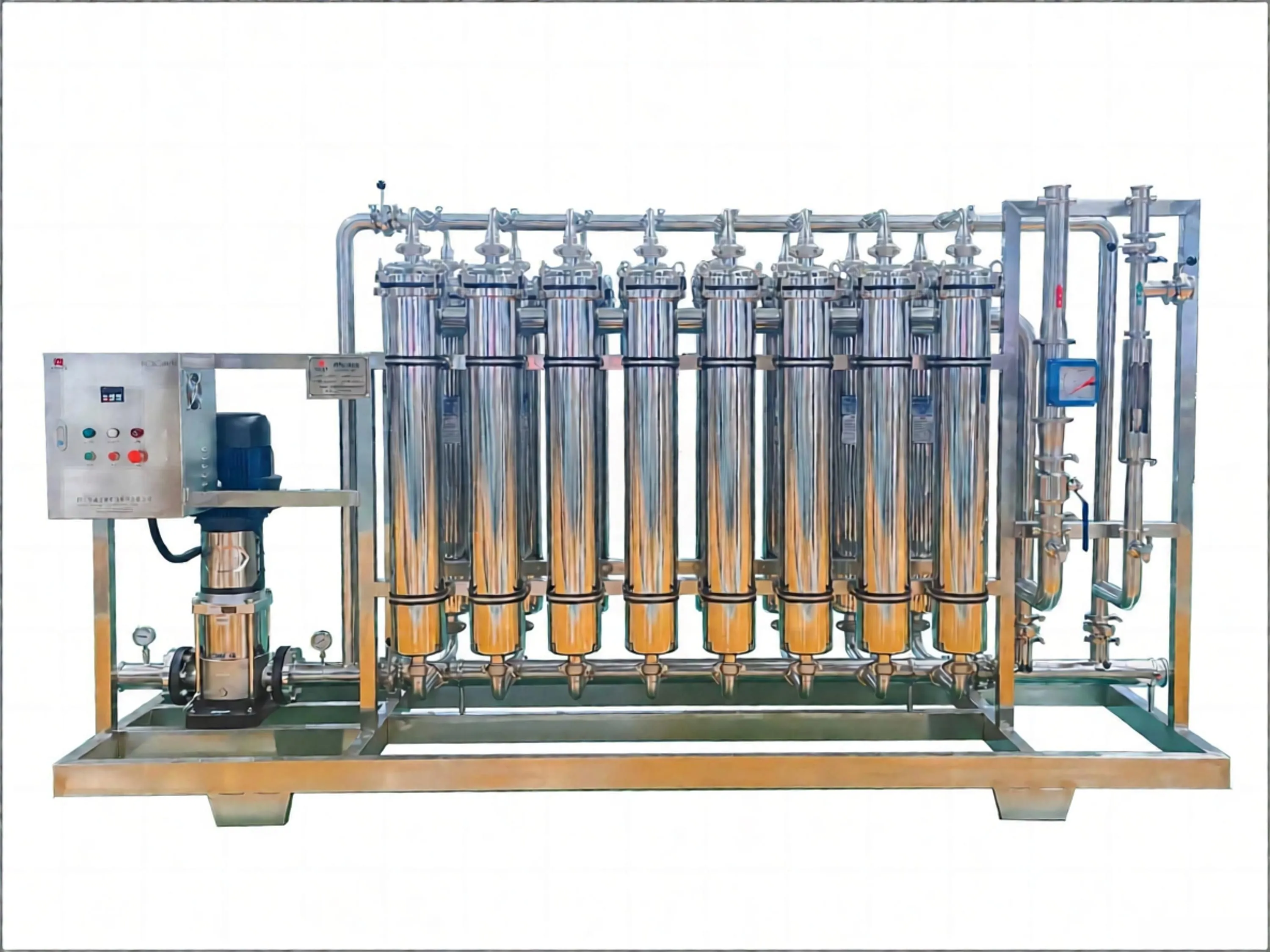
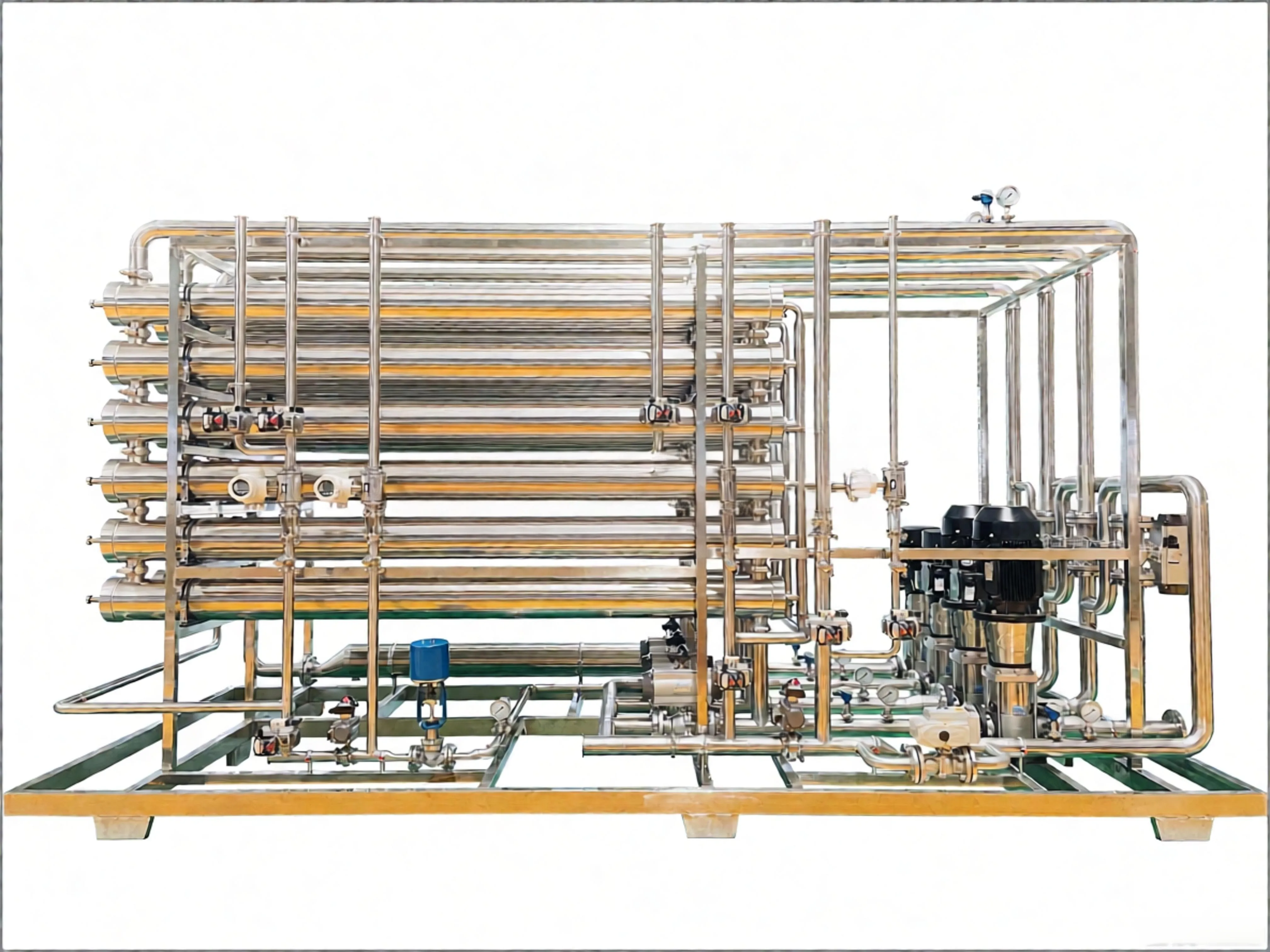
Fruit & Vegetable Juice Membrane Filtration & Concentration Technology
Background Introduction
Fruit and vegetable juices are basically produced by pressing for juice extraction. The raw juice contains a large number of impurities such as plant fibers, fruit pulp, starch, microorganisms, bacteria and pectin. Traditional purification of fruit and vegetable juices adopts rough filtration followed by filtration with plate-and-frame filter presses, centrifuges or diatomaceous earth. However, due to the low filtration precision, impurities in fruit and vegetable juices cannot be thoroughly removed, resulting in poor light transmittance of final products, short shelf life and easy generation of secondary precipitation. In addition, fruit and vegetable juices have high sugar content, so microorganisms and bacteria can easily multiply and cause fermentation and deterioration of fruit and vegetable juices. Thermal concentration is mostly adopted for traditional concentration of fruit and vegetable juices. The high temperature extremely easily causes deterioration or volatilization of heat-sensitive components in fruit and vegetable juices, thus leading to degraded product flavor.
Disadvantages of Traditional Fruit and Vegetable Juice Beverage Processing Technology
(1) The clarity of fruit and vegetable juice is poor, and precipitation is easy to generate after long-term storage;
(2) During the production of concentrated fruit and vegetable juice, the heating time is long, and the loss of original aromatic components in fruit and vegetable juice is large;
(3) Thermal concentration is adopted in the concentration process, resulting in high energy consumption;
(4) Large consumption of consumables leads to high production cost;
(5) The equipment is complicated to operate with high labor intensity.
Services We Can Provide for Customers
- Free small-batch process verification experiments for incoming materials.
- Free provision of process improvement suggestions and design basis for existing fruit and vegetable juice beverage production lines.
Advantages of Membrane Separation Technology in Clarification and Filtration of Fruit and Vegetable Juices
(1) The membrane boasts high filtration precision, which can effectively remove macromolecular or semi-soluble impurities such as plant fibers, pectin, microorganisms and bacteria in fruit and vegetable juices, and the fruit and vegetable juice after filtration features good clarity;
(2) Aroma and flavor substances of finished products are fully retained with high finished product quality;
(3) Low-temperature physical concentration process (membrane concentration) is adopted in the concentration process. The energy consumption of membrane concentration for one ton of water is about 1/5 of that of thermal concentration, which greatly reduces production costs;
(4) The membrane system features a high degree of automation, controlled by PLC and frequency converters with simple operation;
(5) Imported membrane elements are adopted, which can be regenerated and cleaned, featuring long service life and low production cost;
(6) The whole equipment is made of sanitary-grade materials, complying with QS and GMP certifications.
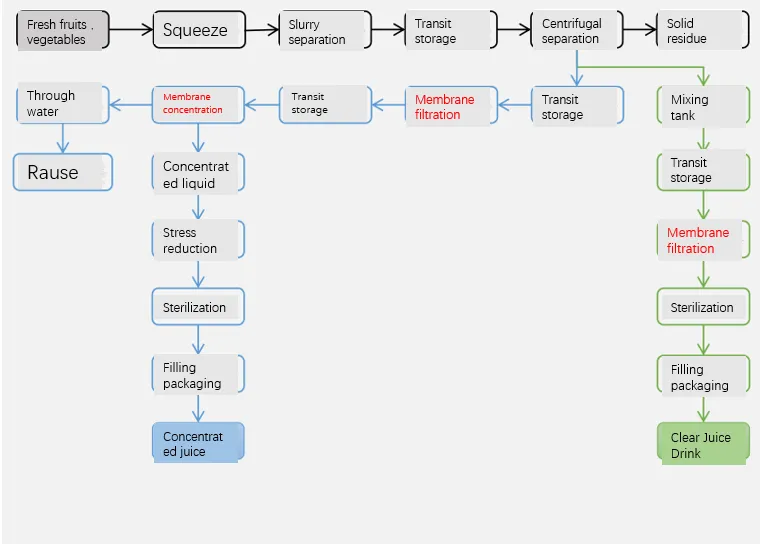
Membrane Production Process Flow Chart of Fruit and Vegetable Juice Beverages
Typical Applications
Fruit juices: Apple juice, lemon juice, pear juice, roxburgh rose juice, tamarind juice, blueberry juice, prune juice, mulberry juice, tomato juice, water chestnut juice, strawberry juice, grapefruit juice, orange juice, grape juice, sugarcane juice, etc.
Vegetable juices: Celery juice, winter melon juice, bitter melon juice, cucumber juice, spinach juice, carrot juice, corn juice, etc.