Fermentation Broth Membrane Separation & Concentration Technology
Background Introduction
Biological fermentation broth is a mixed liquid formed after the metabolism of microbial cells in liquid culture medium. It has a complex composition, containing microbial cells, colloids, viruses, proteins, polysaccharides, enzymes, monosaccharides, organic acids, inorganic ions and other substances. Due to the high content of solid and colloidal components, biological fermentation broth features high viscosity, making filtration, separation and impurity removal relatively difficult.
To facilitate the separation of fermentation broth, various filter aids and flocculants are often added in traditional processes to improve broth properties. However, this method introduces new impurities, reducing the efficiency of subsequent purification processes such as resin treatment and extraction, lowering the purification efficiency and deteriorating final product quality. In addition, fermentation broth is usually produced in large volumes. Traditional thermal concentration methods including vacuum jacketed concentration and thin-film concentration require long processing time at high temperatures, resulting in extremely high production costs and deterioration of heat-sensitive substances, thus reducing product market competitiveness. Moreover, these conventional methods cannot effectively remove inorganic salts and organic antibodies, and residual substances seriously affect subsequent crystallization, finished product quality and yield.
Application of Membrane Separation Technology in Biological Fermentation Broth Production
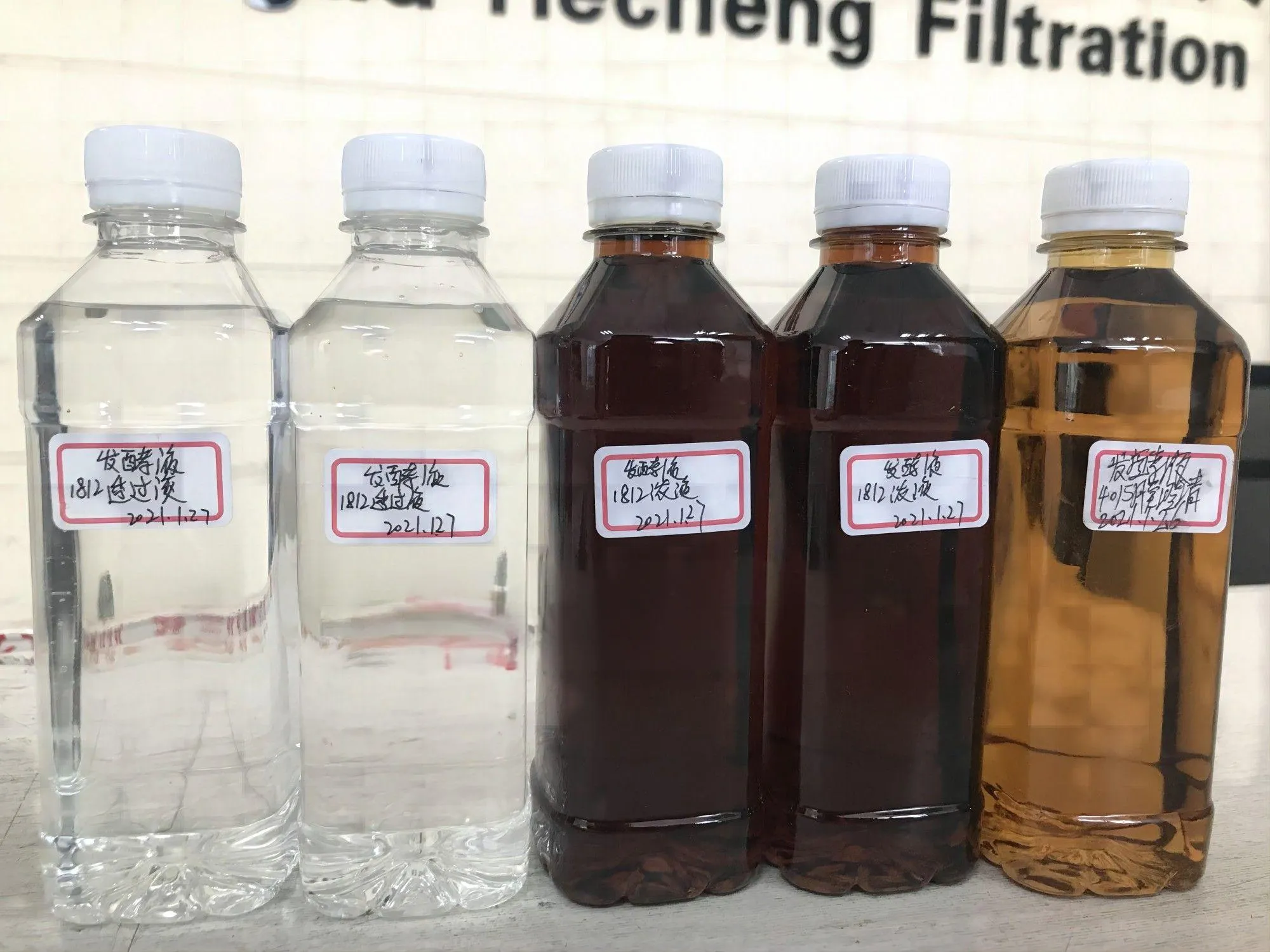
With years of practical experience serving the fermentation industry and professional advantages in membrane separation technology, BluewavBio has successfully applied membrane separation technology to the production process of biological fermentation broth. Ultrafiltration membrane technology is adopted to effectively remove impurities such as bacteria, colloids and proteins from the feed liquid, improving the clarity and reducing the impurity content of fermentation broth. Nanofiltration membrane technology is further used for normal-temperature concentration and solvent removal of fermentation broth, which protects heat-sensitive components from damage, removes salts and small-molecule impurities, and improves the yield and quality of products in subsequent processes.
Biological Fermentation Broth Production Process Flow Chart

Advantages of Membrane Separation Technology in Refining and Concentration of Biological Fermentation Broth
(1) The membrane features high filtration precision, which can effectively remove bacteria, colloids, proteins and other impurities in the feed liquid, improving the clarity and reducing the impurity content of fermentation broth;
(2) The concentration membrane can effectively retain target components and achieve concentration by dehydration, desalination and removal of small-molecule impurities;
(3) Membrane concentration is conducted at normal temperature, minimizing the loss of active ingredients caused by high-temperature deterioration and ensuring stable product yield;
(4) Membrane concentration delivers high efficiency, with production costs only about 1/5 of thermal concentration, greatly reducing enterprise operating costs;
(5) It is a pure physical separation process with no auxiliary agents added, solving the problem of resin pore blockage in subsequent processes and optimizing resin adsorption performance;
(6) Equipped with automatic control system and online regeneration cleaning and sewage discharge functions, it reduces labor intensity and realizes clean production;
(7) The entire equipment is made of sanitary-grade 304/316 stainless steel, complying with GMP certification standards.
Typical Applications
Antibiotics:Erythromycin, Penicillin, Oxytetracycline, Lincomycin, Cephalosporin, Spectinomycin, Vancomycin, Tobramycin, Rapamycin, etc.
Vitamins:Vitamin C, Vitamin B1, Vitamin B2, Beta-carotene, etc.
Amino Acids:Lysine, Glutamic acid, Serine, Proline, Threonine, Arginine, Glutamine, L-Phenylalanine, etc.
Organic Acids:L-Lactic acid, Citric acid, Dibasic acid, Itaconic acid, Malic acid, etc.
Experimental Effect Pictures