Enzyme Preparation Membrane Purification & Concentration Technology
Background Introduction
Enzymes are biologically active proteins produced by microbial metabolism, featuring poor thermal sensitivity and intolerance to high temperatures. The traditional production process of enzyme preparations includes fermentation, flocculation precipitation, filtration, solvent extraction, vacuum evaporation and drying. This process is characterized by high energy consumption, high enzyme inactivation rate and low product yield.
Application of Membrane Separation Technology in Enzyme Preparation Production
With years of practical experience in membrane separation technology application, BluewavBio Filtration applies advanced membrane separation technology to the production process of enzyme preparations. The molecular weight of enzyme preparations generally ranges from 10,000 to 200,000 Daltons, which falls exactly within the application scope of microfiltration and ultrafiltration technology. Microfiltration and ultrafiltration membrane technologies are adopted to purify and concentrate enzyme fermentation broth at room temperature, eliminating the influence of temperature on enzyme activity and solving the high energy consumption problem caused by traditional evaporation and concentration. The ultrafiltration equipment features simple operation with no or little solvent consumption during the process, reducing solvent usage and solvent recovery costs.
Membrane Purification and Concentration Process for Enzyme Preparations
Enzyme Fermentation Broth → Plate-and-Frame Filtration → Microfiltration → Ultrafiltration → Subsequent Processes
Advantages of Membrane Separation Technology in Enzyme Preparation Purification and Concentration
(1) Microfiltration boasts high filtration precision with excellent clarification and sterilization effects, delivering high clarity filtrate;
(2) Ultrafiltration achieves outstanding concentration and purification effects, while greatly reducing energy consumption and water usage;
(3) Separation and concentration are carried out at room temperature without damaging heat-sensitive components, and the enzyme activity yield can reach over 95%;
(4) The membrane features high and stable flux with reliable performance, reusable after regeneration cleaning and long service life;
(5) The system is applicable to the treatment of materials with high viscosity and high solid content;
(6) The continuous cross-flow operation solves membrane fouling and blockage problems, shortens operation time and maintains high enzyme activity;
(7) Equipped with automatic design and online regeneration cleaning and sewage discharge functions, it reduces labor intensity and realizes clean production.
Typical Applications
Glucose isomerase, glucoamylase, pectinase, α-amylase, α-glucosidase, cellulase, pancreatic protease, pepsin, garlic enzyme, etc.
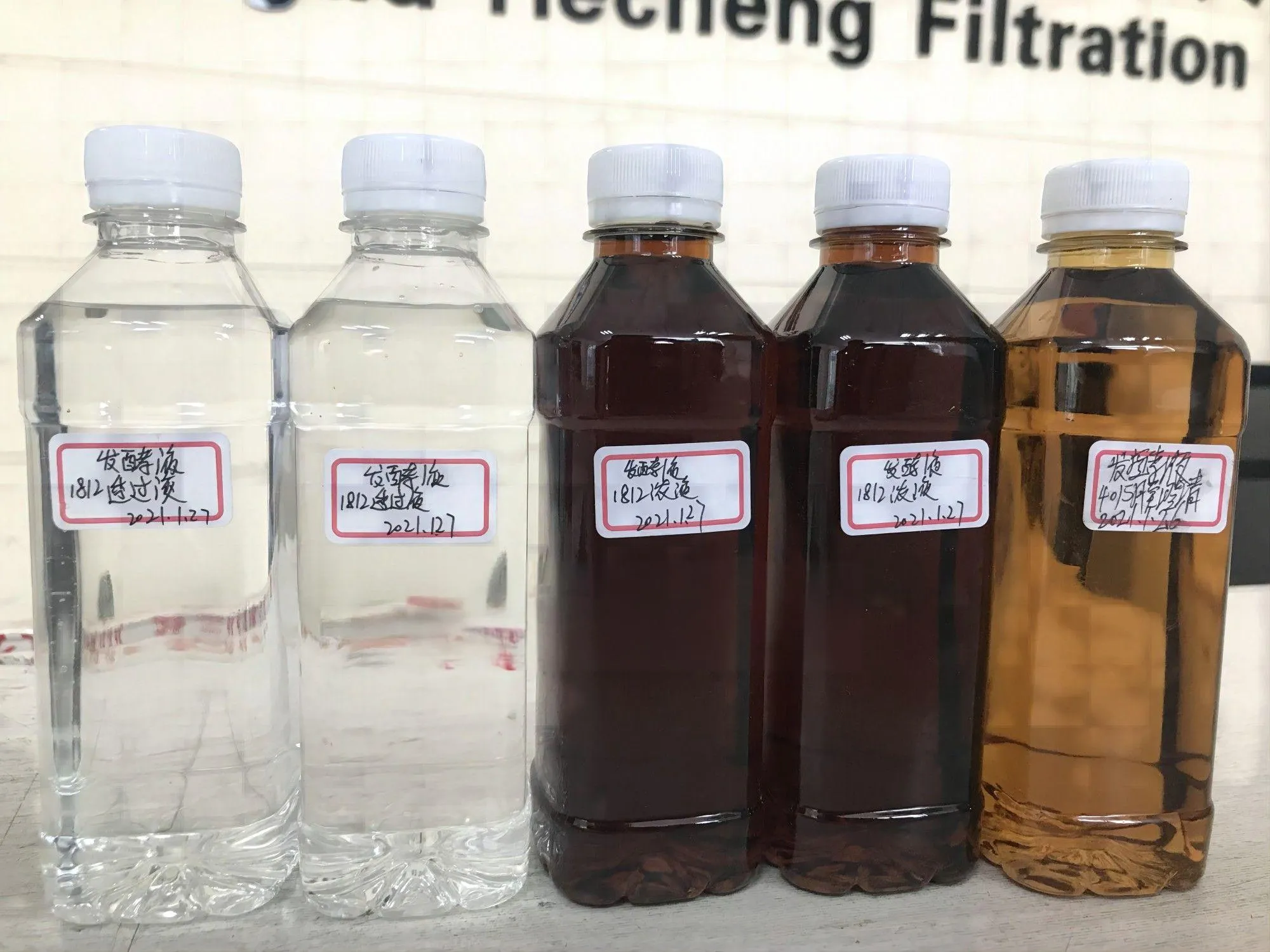
Experimental Effect Pictures