TCM Injection Membrane Filtration & Pyrogen Removal Technology
Background Introduction
Traditional Chinese Medicine (TCM) injections are sterile preparations made by extracting active substances from Chinese medicinal materials or natural medicines using modern scientific technologies and methods under the guidance of traditional Chinese medicine theories.
Due to the complex components of Chinese medicinal materials, it is difficult to efficiently extract effective medicinal ingredients and completely remove ineffective and harmful impurities during the preparation of TCM injections, which increases the risk of adverse reactions. For example, TCM contains antigenic or haptenic plant proteins and macromolecular substances that are difficult to eliminate thoroughly in production. Once entering the human body, they will stimulate pathological immune responses. In addition, tannins are the main cause of pain, redness and induration at the injection site. Semi-soluble and insoluble substances can also trigger antigen reactions and cause fever.
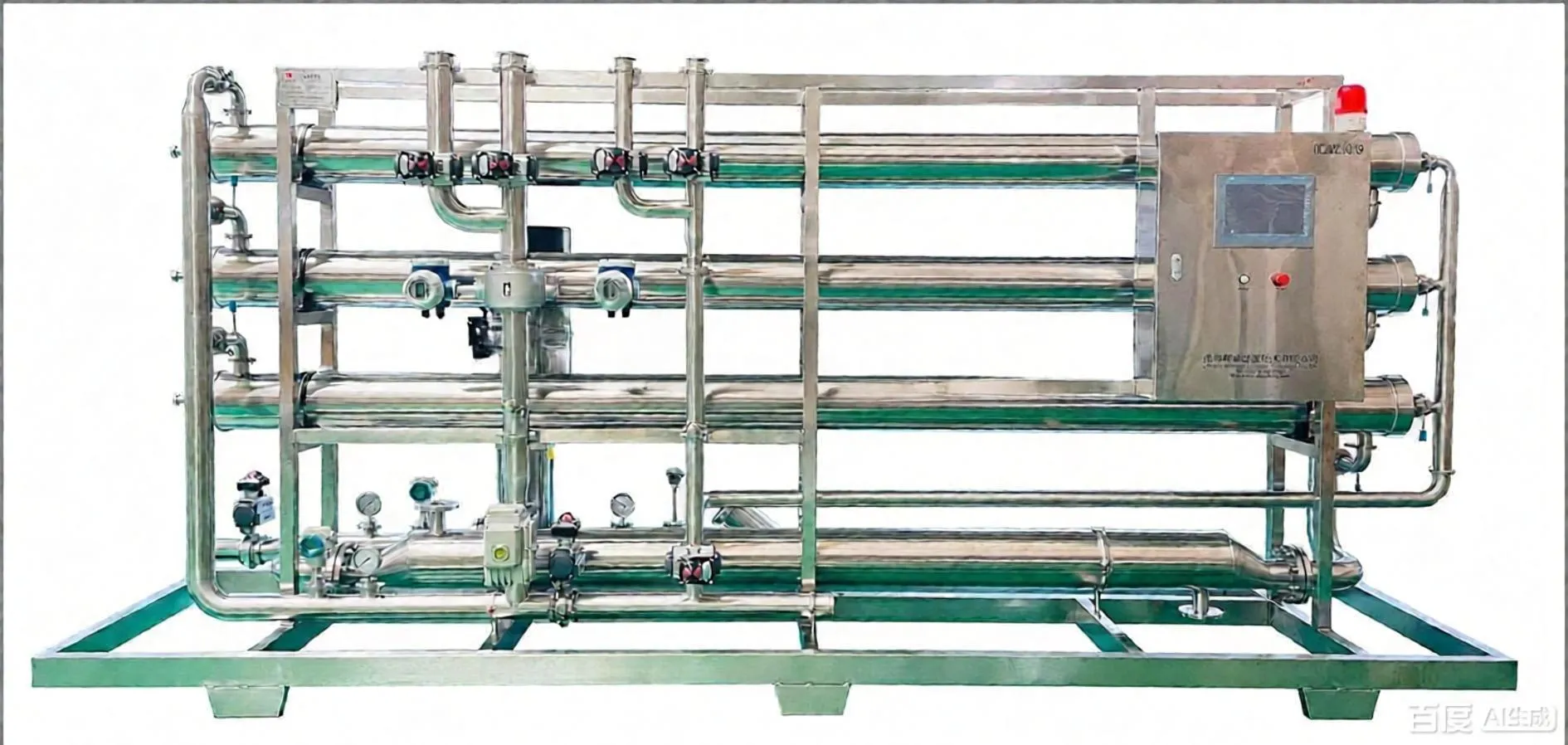
Problems of Traditional TCM Injection Production Technology
Traditional impurity removal for injections mainly adopts activated carbon adsorption, plate-and-frame microporous membrane filtration and filter cartridge filtration, combined with alcohol precipitation and water precipitation processes. Such processes are cumbersome with high impurity removal costs, high labor intensity and long production cycles. Although the filtrate shows no turbidity in the short term, macromolecular impurities that are not completely removed will re-aggregate under charge effects after long-term storage or high-temperature sterilization, forming visible turbidity and precipitation. Due to the low filtration precision of traditional technologies, tannins, starch, resins, proteins and other impurities in TCM extracts cannot be thoroughly removed. The residual impurities bring huge potential risks to finished injections and easily cause adverse drug reactions.
Application of Membrane Separation Technology in TCM Injection Production
With years of practical experience serving pharmaceutical enterprises and professional advantages in membrane separation technology, BluewavBio has successfully applied membrane separation technology to the production process of TCM injections. The molecular weight of various impurities in TCM injections ranges from 1 KDa to 300 KDa. Ultrafiltration membranes with a molecular weight cutoff of 5,000 Da to 30,000 Da can basically allow the active ingredients of injections to pass through while intercepting impurities and pyrogens with molecular weights ranging from tens of thousands to millions of Daltons, thereby removing impurities and retaining effective components.
TCM Injection Production Process Flow Chart
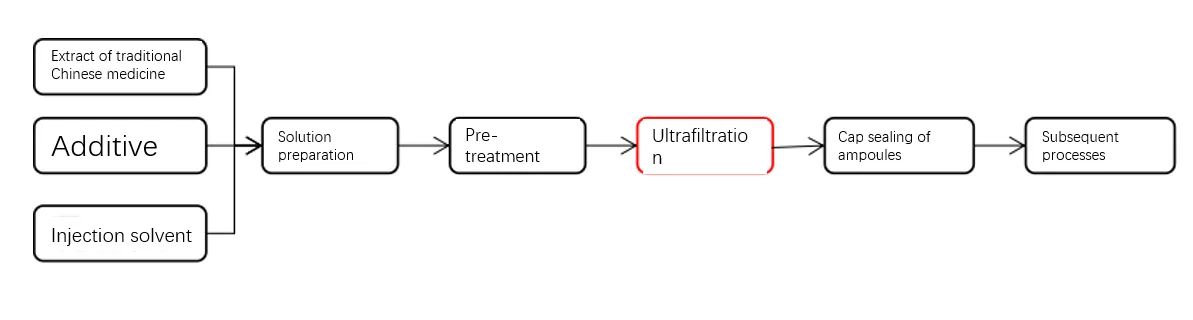
Advantages of Membrane Separation Technology in TCM Injection Production
(1) Ultrafiltration membranes achieve a high interception rate for macromolecular impurities, pyrogens and bacteria, improving medication safety;
(2) Ultrafiltration membrane separation is a pure physical filtration process without chemical reactions and will not change drug efficacy;
(3) Homogeneous filtration is performed at room temperature with low loss of active ingredients;
(4) The membrane system features a high degree of automatic control for convenient operation, cleaning and maintenance;
(5) Imported ultrafiltration membranes are adopted, which meet pharmaceutical factory qualification requirements with long service life and high safety;
(6) The equipment is made of sanitary-grade 304/316 stainless steel, complying with GMP certification standards.
Typical Applications
TCM injections including Shuanghuanglian Injection, Aixiaoping Injection and Shengkang Injection.
Partial Application Cases of Ultrafiltration Membrane Separation for TCM Injections
(1) A pharmaceutical company in Shanghai adopted a spiral ultrafilter with a molecular weight cutoff of 10,000 Da for pyrogen removal tests of dihydrostreptomycin sulfate. The results prove that ultrafiltration is a feasible replacement for traditional activated carbon adsorption for pyrogen removal in dihydrostreptomycin sulfate production.
(2) A pharmaceutical company in Xi’an adopted sulfonated polyethersulfone (SPES) membranes with a molecular weight cutoff of 10,000 Da for ultrafiltration pyrogen removal of Astragalus Injection, followed by activated carbon adsorption. The qualification rate of product pyrogens has been stabilized at 100%, eliminating previous fluctuating quality problems.
Company Introduction
BluewavBio is a professional manufacturer of membrane separation equipment with a team of senior engineers specialized in membrane engineering applications. Through years of technological development and engineering practice, we have mastered advanced ultrafiltration, nanofiltration, reverse osmosis and ceramic membrane technologies. We focus on designing and manufacturing lab-scale, pilot-scale and industrial-scale equipment for customers. If you have any problems with membrane filtration, please feel free to contact us, and our professional technical team will provide targeted solutions.