Membrane Separation Technology for Bacillus Removal in Milk Processing Plants: A Complete Guide
In milk processing, Bacillus contamination poses significant risks to product safety, shelf life, and quality. Spore-forming Bacillus species—such as Bacillus cereus, Bacillus subtilis, and Geobacillus stearothermophilus—are particularly problematic due to their resistance to heat, chemicals, and harsh processing conditions. Traditional thermal pasteurization often fails to eliminate these resilient spores, leading to spoilage, bulging packages, and potential foodborne illness. As dairy plants strive to meet consumer demand for safer, fresher, and more nutrient-dense milk products, membrane separation technology has emerged as a game-changing solution for effective Bacillus removal. This guide explores how membrane separation works, its advantages over conventional methods, and best practices for implementation in milk processing facilities—tailored to align with Google’s 2024-2025 SEO guidelines for helpful, authoritative content.
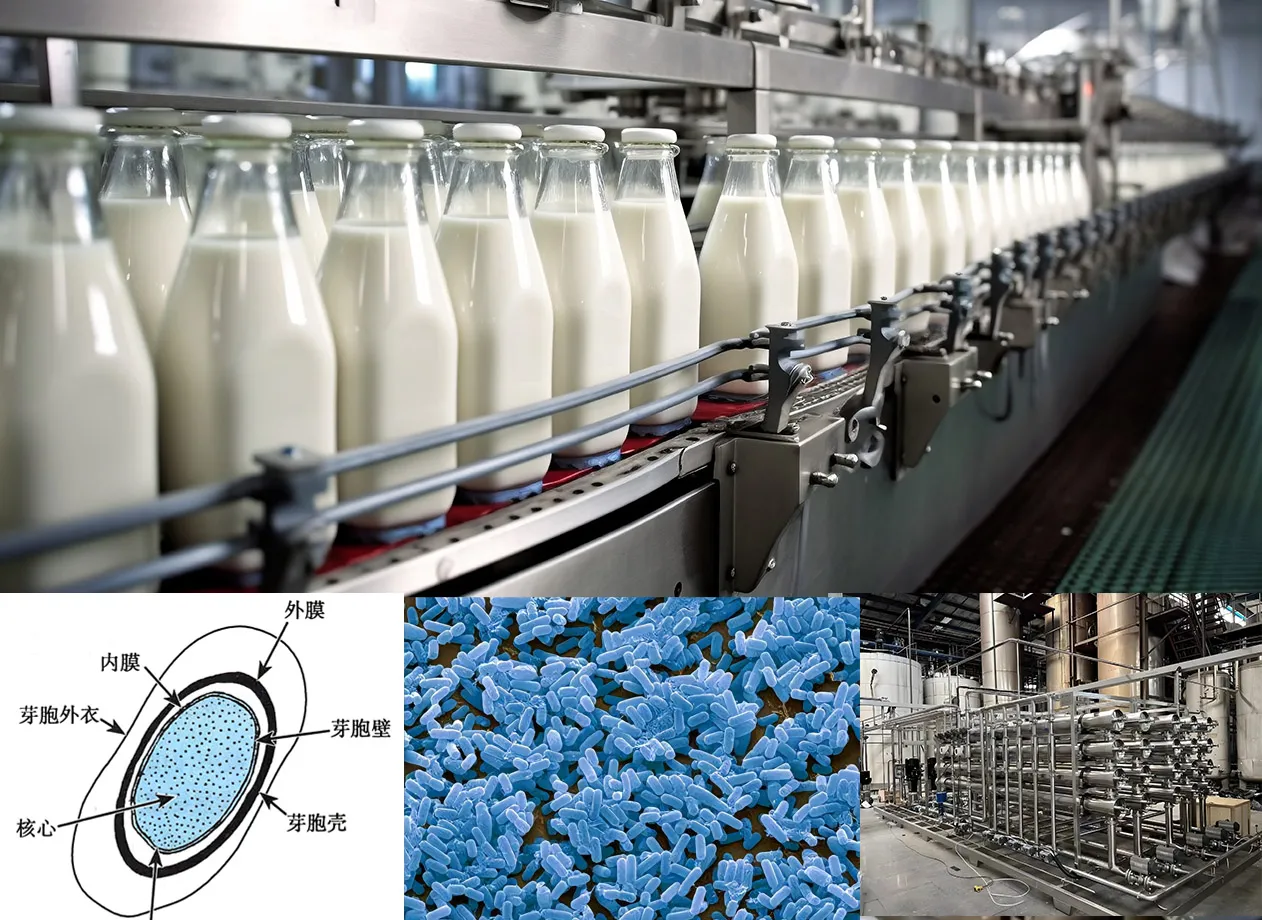
What Is Membrane Separation Technology, and How Does It Remove Bacillus?
Membrane separation is a physical filtration process that uses semi-permeable membranes to separate particles, microorganisms, and molecules based on their size, shape, and surface properties. Unlike thermal or chemical treatments, it operates at low temperatures (typically 5–50°C), preserving the natural flavor, nutrients, and heat-sensitive proteins of milk while effectively removing Bacillus spores and vegetative cells.
The key to reliable Bacillus spore removal is membrane pore size smaller than the spores themselves. Bacillus spores typically range from 0.8 to 1.5 μm in diameter, while vegetative Bacillus cells are slightly smaller (0.5–1.0 μm). To ensure complete physical retention of spores, dairy plants use microfiltration membranes with a pore size of 0.8 μm or smaller (commonly 0.6–0.8 μm). By selecting a membrane with a pore size smaller than these microorganisms, dairy plants can physically retain Bacillus while allowing milk components—such as proteins, lactose, minerals, and fat—to pass through as permeate. The retained microorganisms are collected as retentate, which is either discarded or processed separately.
The Most Effective Membrane Type for Bacillus Removal in Milk Processing
Not all membrane technologies are suitable for Bacillus removal. While ultrafiltration (UF), nanofiltration (NF), and reverse osmosis (RO) are widely used in dairy processing for protein concentration, desalination, and dehydration, they are not optimized for microorganism removal. The only membrane technology specifically designed for Bacillus and spore removal is microfiltration (MF).
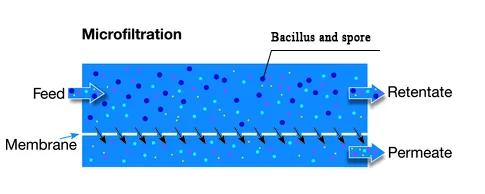
Microfiltration membranes with a pore size of 0.6–0.8 μm are the industry standard for Bacillus removal in milk processing—often referred to as the Bactocatch process in the dairy industry. Ceramic microfiltration membranes are preferred for their durability, precise pore size distribution, and resistance to harsh cleaning chemicals (critical for maintaining membrane performance over time). These membranes operate via cross-flow filtration, where a parallel flow to the membrane surface prevents fouling by sweeping away retained particles, ensuring consistent filtration efficiency. Membranes with a pore size larger than 0.8 μm (e.g., 1.0 μm or above) cannot reliably retain small Bacillus spores (0.8 μm in diameter) and are only suitable for removing somatic cells or larger microorganisms, not as a key step for Bacillus control.
Why Membrane Separation Is Superior to Traditional Bacillus Removal Methods
Dairy plants have long relied on thermal treatments like pasteurization (72°C for 15 seconds) and UHT sterilization (135–140°C for 2–5 seconds) to control microbial contamination. However, these methods have significant limitations when it comes to Bacillus:
- Thermal pasteurization only kills vegetative Bacillus cells, leaving spores intact—these spores can germinate and multiply during storage, leading to spoilage.
- UHT sterilization eliminates most spores but degrades milk’s natural flavor (creating a “cooked” taste) and destroys heat-sensitive nutrients like vitamins and immunoglobulins.
- Chemical disinfection risks residue contamination and alters milk’s composition, which is unacceptable for clean-label products.
Membrane separation (microfiltration) addresses these limitations with several key advantages, making it a preferred choice for modern dairy facilities:
1. Low-Temperature Operation: Operates at 5–50°C, preserving milk’s natural flavor, color, and nutrients. This is especially critical for premium milk products, ESL (Extended Shelf Life) milk, and organic dairy items where freshness is a key selling point.
2. High Bacillus Removal Efficiency: Achieves a 3–5 log reduction (99.9%–99.999%) of Bacillus spores and vegetative cells. For example, 0.8 μm pore size membranes have been shown to reduceBacillus licheniformis spores by 4.57 log, while 0.6 μm membranes achieve an even higher reduction (up to 5.2 log)—with almost complete removal of Geobacillus spores regardless of pore size in the 0.6–0.8 μm range.
3. Pure Physical Process: No chemicals or heat are used, eliminating the risk of residue or nutrient degradation. This aligns with consumer demand for clean-label, natural dairy products.
4. Reduced Processing Costs: While initial membrane investment is higher, it lowers long-term costs by reducing the need for excessive thermal treatment, minimizing product waste from spoilage, and extending shelf life (ESL milk processed with MF can have a shelf life of 45–60 days).
5. Versatility: Compatible with various milk types (raw milk, skim milk, whole milk) and can be integrated with existing processing lines (e.g., MF + pasteurization, MF + UHT) to enhance safety and quality.
Best Practices for Implementing Membrane Separation in Milk Processing Plants
To maximize Bacillus removal efficiency and ensure compliance with food safety standards (e.g., FDA, EU regulations, GB 12693), dairy plants should follow these best practices when implementing membrane separation technology:
1. Pre-Treatment of Raw Milk
Raw milk contains impurities (dust, somatic cells, fat globules) that can foul the membrane and reduce filtration efficiency. Prior to microfiltration, raw milk should undergo:
- Centrifugation to remove somatic cells and large particles.
- Cooling to 4–6°C to prevent Bacillus spore germination during pre-processing.
- Skim milk separation: Since Bacillus cells are similar in size to milk fat globules, separating skim milk from cream (and treating cream with high-temperature processing) ensures more effective filtration.
2. Membrane Selection and Operation Parameters
Choose ceramic microfiltration membranes with a pore size of 0.6–0.8 μm for optimal Bacillus removal. Key operation parameters to control include:
- Cross-Flow Velocity (CFV): Maintain a CFV of 3–6 m/s to prevent membrane fouling and ensure consistent performance. Higher CFV (e.g., 4.1–6 m/s) is recommended for skim milk microfiltration.
- Transmembrane Pressure (TMP): Operate at 69–124 kPa (10–18 psi) to balance filtration efficiency and membrane lifespan. Excess pressure can damage the membrane and reduce selectivity.
- Temperature: For cold microfiltration (ideal for preserving nutrients), operate at 6–15°C; for standard applications, 50°C is optimal to balance efficiency and product quality.
3. Membrane Cleaning and Maintenance
Membrane fouling (caused by proteins, fats, and retained microorganisms) reduces Bacillus removal efficiency over time. Implement a strict CIP (Clean-in-Place) protocol:
- Use alkaline cleaning (1.5–2.5% NaOH at 60–75°C) to remove organic fouling.
- Follow with acid cleaning (1.0–1.5% HNO₃) to remove mineral deposits.
- Use food-grade disinfectants (e.g., 0.1–0.2% peracetic acid) to eliminate any residual Bacillus spores on the membrane surface. Ceramic membranes are resistant to most cleaning chemicals, making them suitable for frequent CIP cycles.
- Conduct regular membrane integrity tests to detect leaks—even small defects can allow Bacillus spores to pass through into the permeate.
4. Post-Filtration Quality Control
Membrane separation is not a replacement for final sterilization (due to the risk of membrane leaks). Implement these quality control steps:
- Test permeate for Bacillus spores using heat shock treatment (80°C for 10 minutes) followed by microbial culture—this differentiates spores from vegetative cells.
- Integrate MF with a mild thermal treatment (e.g., low-temperature pasteurization at 72°C for 15 seconds) to eliminate any residual spores that may have passed through the membrane.
- Monitor retentate disposal: Retentate (containing high levels of Bacillus) should be either discarded or processed separately to avoid cross-contamination.
Real-World Applications of Membrane Separation for Bacillus Removal
Membrane separation (microfiltration) is already widely adopted by leading dairy plants worldwide, with proven success in various applications:
- Premium Pasteurized Milk: MF + low-temperature pasteurization produces milk with a fresh, natural taste and extended shelf life (up to 30 days) without the cooked flavor of UHT milk. The 0.6–0.8 μm MF membrane ensures reliable Bacillus spore removal, reducing spoilage risk.
- UHT Milk: Pre-treatment with 0.8 μm MF reduces the number of heat-resistant Bacillus spores, minimizing the risk of post-UHT spoilage (e.g., bulging packages) and extending shelf life by 2–3 months.
- Skim Milk and Whey Processing: 0.6–0.8 μm MF removes Bacillus spores from skim milk and whey, which is critical for producing high-quality dairy ingredients (e.g., whey protein isolate) that meet strict microbial limits.
- Cheese Production: MF-treated milk (using 0.8 μm membranes) eliminates the need for nitrate preservatives, producing cleaner-label cheese with improved texture and shelf life.
In a pilot-scale study, microfiltration of raw milk inoculated with 4 log CFU/mL Bacillus anthracis spores (attenuated strain) using a 0.8 μm ceramic membrane resulted in no detectable spores in the permeate. Even at 6 log CFU/mL inoculation, only 1 log CFU/mL spores remained in the permeate after 2 hours of MF—demonstrating the technology’s effectiveness for high-contamination scenarios when using the correct membrane pore size.
Challenges and Solutions for Membrane Separation in Dairy Plants
While membrane separation is highly effective, dairy plants may face a few challenges during implementation. Here are common issues and their solutions:
- Membrane Fouling: Use cross-flow filtration, maintain optimal CFV, and implement a strict CIP protocol. Adding food-grade anti-fouling agents (e.g., citrate) can also reduce protein adsorption on the membrane surface.
- Retentate Disposal: Repurpose retentate as animal feed or process it into high-protein ingredients (e.g., milk protein concentrate) to minimize waste and improve sustainability.
- Initial Investment Costs: While membrane systems have higher upfront costs, the long-term savings from reduced spoilage, extended shelf life, and improved product quality offset this investment. Many manufacturers offer rental or pilot units to test the technology before full-scale implementation.
- Spore Surface Properties: Some Bacillus spores (e.g., hydrophilic Bacillus licheniformis) may pass through larger pores (above 0.8 μm), while hydrophobic spores (e.g., Geobacillus) cluster and are easier to截留. Using 0.6–0.8 μm membranes ensures optimal removal of both hydrophilic and hydrophobic spores.
Future Trends in Membrane Separation for Bacillus Removal
As dairy technology advances, membrane separation is becoming even more efficient and cost-effective. Key trends include:
- Advanced Membrane Materials: New ceramic and polymer membranes with improved pore size precision (0.6–0.8 μm range) and anti-fouling properties are being developed to enhance Bacillus removal efficiency and extend membrane lifespan.
- Automated Monitoring: IoT-enabled membrane systems with real-time TMP, CFV, and microbial monitoring allow for proactive maintenance and immediate detection of leaks or fouling.
- Synergistic Processes: Combining MF (0.6–0.8 μm) with other technologies (e.g., high-pressure processing, pulsed electric fields) for even more effective Bacillus removal, especially for heat-sensitive dairy products.
- Sustainability: Membrane systems are becoming more energy-efficient (e.g., low-pressure operation with power consumption <2.5 kWh per ton of milk) and recyclable, aligning with dairy plants’ sustainability goals.
Conclusion
Membrane separation technology—specifically microfiltration with 0.6–0.8 μm ceramic membranes—is a safe, effective, and sustainable solution for removing Bacillus spores and vegetative cells in milk processing plants. Its low-temperature operation preserves milk’s natural quality, while its high removal efficiency (3–5 log reduction) reduces spoilage and safety risks. Critical to its success is selecting a membrane pore size smaller than the smallest Bacillus spores (0.8 μm), ensuring reliable physical retention of these resilient microorganisms. By following best practices for membrane selection, operation, and maintenance, dairy plants can enhance product safety, extend shelf life, and meet consumer demand for clean-label, high-quality milk products.
For dairy plant operators looking to upgrade their Bacillus control processes, membrane separation offers a long-term, cost-effective alternative to traditional thermal and chemical treatments. As the dairy industry continues to prioritize safety and quality, membrane technology—with the correct pore size selection—will remain a cornerstone of modern milk processing.
FAQs (Frequently Asked Questions)
1. Can membrane separation completely remove all Bacillus spores from milk?
Membrane separation (MF with 0.6–0.8 μm membranes) achieves a 3–5 log reduction (99.9%–99.999%) of Bacillus spores, which is sufficient for most dairy applications. However, it is not 100% effective (e.g., membrane leaks or extreme contamination can allow a small amount of spores to pass through). For this reason, it is recommended to combine MF with a mild thermal treatment for final sterilization.
2. Which membrane type is best for Bacillus removal in milk processing?
Ceramic microfiltration (MF) membranes with a pore size of 0.6–0.8 μm are the best choice. They are durable, resistant to cleaning chemicals, and have a precise pore size distribution that effectively retains Bacillus spores (0.8–1.5 μm) while allowing milk components to pass through. Membranes with pore sizes larger than 0.8 μm cannot reliably remove small Bacillus spores.
3. Is membrane separation cost-effective for small to medium dairy plants?
Yes. While initial investment is higher than traditional methods, membrane separation reduces long-term costs by minimizing product waste, extending shelf life, and reducing the need for excessive thermal treatment. Many manufacturers offer scalable systems and pilot units to fit the needs of small to medium facilities.
4. Does membrane separation affect the nutritional value of milk?
No. Membrane separation operates at low temperatures, so it does not destroy heat-sensitive nutrients (e.g., vitamins, immunoglobulins) or denature milk proteins. In fact, it preserves these nutrients better than thermal treatments like UHT sterilization.
5. How often should membrane systems be cleaned?
Membrane systems should be cleaned after each production run (CIP cycle) to prevent fouling. A typical CIP cycle includes alkaline cleaning, acid cleaning, and disinfection. Regular deep cleaning (monthly) is also recommended to maintain membrane performance, especially for 0.6–0.8 μm membranes where pore clogging can impact Bacillus removal efficiency.