Membrane Separation Systems for Instant Tea Powder Production Lines – The Green High-Efficiency Solution for Modern Tea Deep Processing
1. Core Pain Points of Traditional Instant Tea Powder Production
Instant tea powder is a core raw material for bubble tea, ready-to-drink tea, functional food and health supplements. Conventional production workflows relying on plate-frame filtration, centrifugation and thermal evaporation face irreversible drawbacks that limit product competitiveness and factory profit margins:
1. Severe aroma & active ingredient loss
High-temperature vacuum evaporation destroys volatile tea aromatics, oxidizes tea polyphenols and theanine, resulting in bland taste, dark color and low nutritional value.
2. Persistent cold turbidity & poor solubility
Centrifugal separation cannot fully remove macromolecular pectin, protein and fiber colloids. Finished tea powder precipitates when brewed with cold water, restricting cold beverage market applications.
3. Exorbitant energy & operating costs
Traditional thermal dehydration costs 250–350 USD per ton of water, with long continuous heating cycles raising electricity and steam overhead sharply.
4. Chemical additives & low product yield
Coagulants, flocculants and preservatives are required to clarify tea liquor, introducing foreign impurities and cutting the recovery rate of tea effective components by 10–18%.
5. Low automation & high labor input
Discrete filtration and concentration units require frequent manual cleaning, replacement of filter cloths and long production downtime.
2. How Integrated Membrane Separation Systems Transform Instant Tea Powder Production
BluewavBio Technology’s all-membrane instant tea processing workflow adopts a multi-membrane coupling separation system combining tubular ultrafiltration (UF), roll-type nanofiltration (NF) and spiral reverse osmosis (RO) membranes, forming a closed-loop physical separation process without phase change.
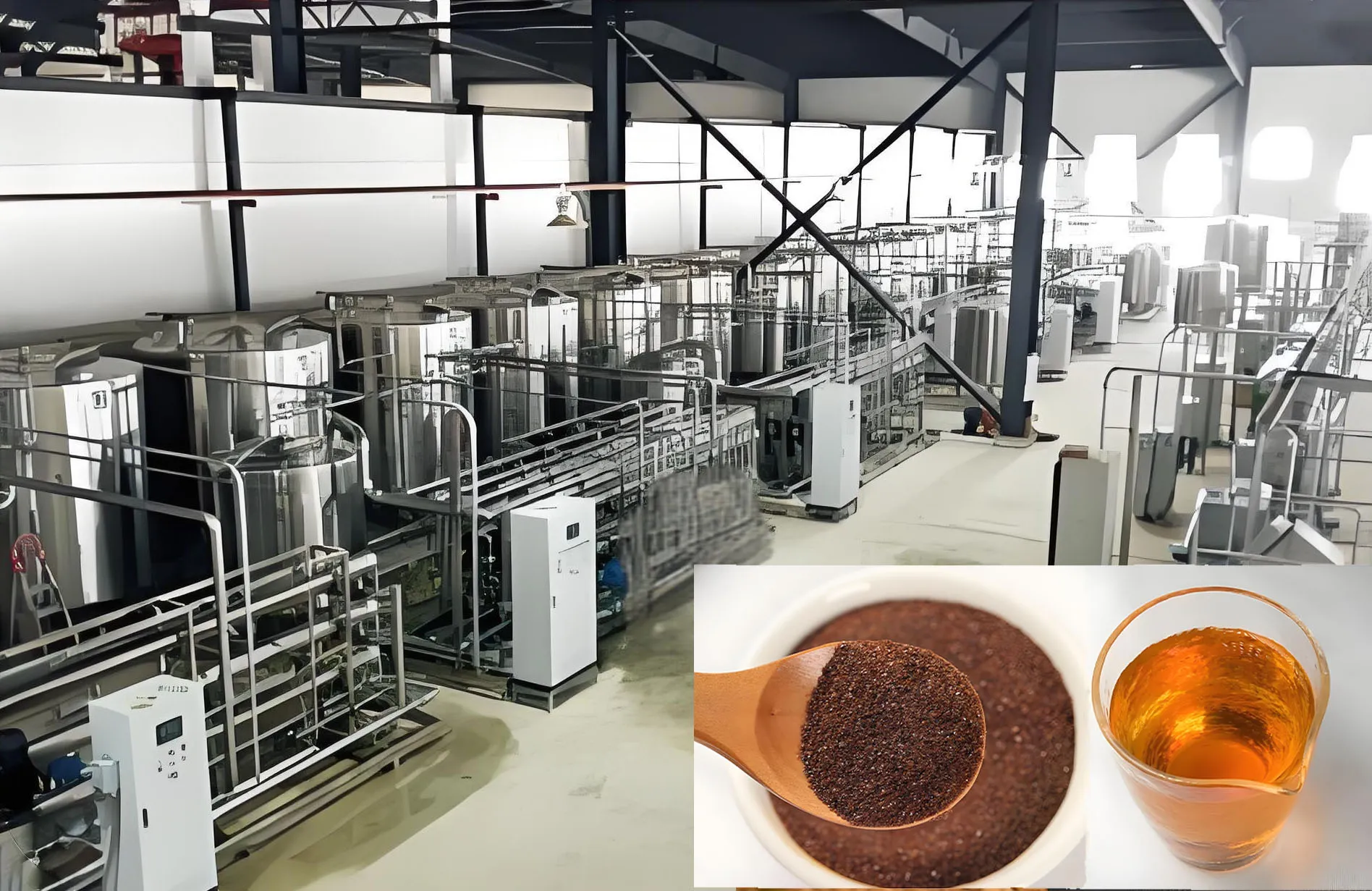
The complete production flow is as follows:
Step 1: Coarse Filtration – Tubular Membrane Clarification
Raw tea water extract (solid content 2–8%) enters tubular organic membrane equipment with wide flow channels (5–10mm). The membrane intercepts tea fiber, coarse particles and macromolecular suspended solids, while small-molecule tea polyphenols, theanine and aromatic substances pass through freely.
- Core benefit: No pre-flocculation required; anti-fouling membrane design supports continuous 24h operation, easy online backwashing and chemical cleaning.
Step 2: Precision Refining – Roll-Type Ultrafiltration Membrane Purification
Clear tea permeate flows into cross-flow UF membrane modules with precise molecular weight cut-off (100–300 kDa). This stage removes residual protein, pectin and microbial impurities, reducing tea liquor turbidity below 2 NTU to eliminate cold brew precipitation fundamentally.
- Core benefit: Filtrate maintains natural tea color; finished instant tea powder achieves 100% cold solubility without secondary haze.
Step 3: Low-Temperature Concentration – Nanofiltration Membrane Dehydration
Refined tea liquor is concentrated via NF membrane under normal temperature (25–35°C), raising solid content from 2–8% to 5–20% before spray drying. Unlike thermal evaporation, membrane concentration consumes only 10–15 USD energy per ton of water, slashing operating costs by over 90%.
- Core benefit: Zero thermal damage; retention rate of tea aroma and functional ingredients exceeds 98%, producing high-aroma premium instant tea powder.
Step 4: Optional Functional Separation – Targeted Extraction of Tea Active Substances
Dual-stage membrane separation can be added to separate tea polyphenols, caffeine and L-theanine separately:
- Nanofiltration intercepts tea polyphenols for high-purity extract production
- Secondary membrane filtration recovers theanine for health food raw materials
- Solvent recycling via RO membrane cuts organic solvent consumption by 70% compared with traditional resin processes
3. Key Advantages of Membrane Separation Systems for Instant Tea Powder Lines
3.1 Superior Product Quality & Market Competitiveness
- Full natural flavor retention: Normal-temperature physical separation avoids oxidation and aroma volatilization; tea powder retains original fresh tea fragrance, no burnt or stale taste.
- Stable cold solubility: Complete removal of colloidal impurities eliminates cold haze, matching global cold beverage market demand.
- High purity & safety: Sanitary 316L stainless steel flow paths, no chemical clarifiers added, fully compliant with FDA, GMP and food export standards.
- Higher functional component yield: Membrane selective separation lifts tea polyphenol/theanine recovery rate by 12–20%.
3.2 Dramatic Energy & Cost Reduction
- Membrane dehydration energy cost is only 1/20 of traditional thermal evaporation, greatly lowering monthly utility expenditure for medium and large tea processing factories.
- Long membrane service life (tubular membrane >4 years), low replacement frequency and simple online cleaning cut maintenance labor costs by over 60%.
- Modular integrated design reduces factory floor space by 40% vs. discrete traditional filtration & concentration equipment.
3.3 Flexible, Automated Industrial Production
- Scalable modular design: Lab experimental membrane equipment (CX-SY series) for formula R&D, medium-scale pilot lines and full industrial mass production lines are fully compatible, seamless process amplification without rework.
- Fully automatic PLC control: Real-time monitoring of pressure, temperature and flux; automatic backwashing reduces manual operation to minimal staffing.
- Wide raw material adaptability: Works for green tea, black tea, oolong tea, pu-erh, chrysanthemum and stevia extracts, supporting multi-product flexible switching.
3.4 Eco-Friendly Clean Production
- No flocculant, neutralizer or preservative dosing, eliminating secondary wastewater pollution.
- Concentrated retentate can be recycled for deep processing; permeate clean water is reusable for workshop washing, lowering overall water consumption.
- Low carbon operation reduces factory carbon emissions, matching global sustainable food manufacturing trends.
4. Main Membrane Equipment Configurations for Instant Tea Powder Production
BluewavBio one-stop membrane separation solution covers full-process equipment for tea deep processing:
- Organic Tubular Membrane Equipment: Primary clarification for high-solid tea extract, anti-blocking, ideal for crude tea liquor pretreatment
- Roll-Type Ultrafiltration Membrane System: Precision purification to remove haze-causing macromolecules, high membrane packing density for large-scale factories
- Roll-Type Nanofiltration Membrane Concentration Unit: Core low-temperature dehydration equipment for tea liquor concentration
- Spiral Reverse Osmosis Equipment: Auxiliary solvent recovery and wastewater reuse
- CX-SY Series Membrane Experimental Equipment: Small test machines for tea factory R&D labs, formula verification before mass production
5. Industrial Application Cases of Membrane Separation in Instant Tea Powder Manufacturing
BluewavBio all-membrane tea processing technology has been deployed in dozens of domestic and overseas instant tea production bases, with typical project outcomes:
- Black Instant Tea Powder Project: After UF+NF membrane coupling treatment, tea theaflavin content increased by 76%, cold solubility passed EU food testing standard, and annual steam & electricity costs reduced by 320,000 USD.
- Green Tea Polyphenol Extraction Line: Membrane separation replaced traditional hot concentration, organic solvent usage cut by 72%, product purity reached 95% for global health food export.
- Stevia & Herbal Extract Co-Production Line: Shared modular membrane system realizes flexible switching between tea powder and plant extract production, improving equipment utilization rate by 55%.
6. Why Choose BluewavBio Membrane Separation System for Instant Tea Powder Lines
As a Henan Provincial Manufacturing Innovation Center specializing in functional polymer film materials, BluewavBio Technology owns over 14 years of membrane separation industrial R&D experience, with unique competitive edges for tea processing clients:
- Customized one-stop solutions: On-site small-scale membrane testing, process flow design, equipment manufacturing, installation and after-sales technical support integrated service.
- Multi-membrane independent R&D capability: Self-developed tubular, roll UF/NF and ceramic membrane components, stable supply chain with cost advantages vs. imported membrane brands.
- Food-grade dedicated membrane formulas: Hydrophilic anti-fouling membrane materials optimized for tea liquor’s high polyphenol viscosity, extending continuous operation cycles.
- Global service network: Complete technical support for overseas tea factories, equipment certification matching export standards of Southeast Asia, Europe and North America.
- Complete case database: Mature mature membrane workflows for instant tea, plant extracts, amino acid and fermentation industries, avoiding trial-and-error production losses for new factories.
7. Conclusion: Membrane Separation Is The Future Standard for Instant Tea Powder Manufacturing
Global consumer demand for natural, low-sugar, cold-soluble instant tea products continues to surge, while environmental regulations on food factory energy consumption and wastewater discharge grow stricter. Traditional thermal concentration and chemical clarification processes can no longer satisfy market and policy requirements.
Integrated membrane separation systems deliver a win-win solution for tea manufacturers: upgrading tea powder product quality to capture high-end market share, cutting long-term production costs, and realizing green, low-carbon automated production. For new instant tea powder factory construction or existing production line renovation, membrane separation technology is the most cost-effective long-term investment choice.
FAQ
Q1: What membrane types are used for instant tea powder production?
A: Tubular ultrafiltration for coarse clarification, roll ultrafiltration for precision dehazing, nanofiltration for low-temperature concentration; RO membranes optional for solvent recovery and water reuse.
Q2: Can membrane separation produce cold-soluble instant tea powder?
A: Yes. Ultrafiltration removes pectin and protein colloids that cause cold turbidity, making finished tea powder fully soluble in cold water without precipitation.
Q3: How much energy can membrane concentration save compared with traditional thermal evaporation?
A: Membrane dehydration energy cost is only 5–10% of thermal evaporation, reducing annual energy expenditure significantly for large-volume tea extract processing.
Q4: Do I need to add chemical additives during membrane filtration of tea liquor?
A: No. Physical cross-flow separation achieves clarification without flocculants, neutralizers or preservatives, ensuring pure natural tea powder.
Q5: Can small tea factories afford membrane separation equipment?
A: BluewavBio provides mini experimental membrane machines for lab R&D and skid-mounted small-scale production lines, with flexible installment plans and customized equipment matching factory output capacity.