Membrane Filtration Technology for Tea Beverage Production Process
Background Introduction
The tea beverage industry refers to the industry that takes tea as the raw material to produce various tea drinks and provide them to consumers. In recent years, driven by the trend of healthy tea drinks, the tea beverage industry has developed rapidly with diversified product categories, mainly including sugar-free pure tea, scented tea, fruit tea, milk tea and other types.
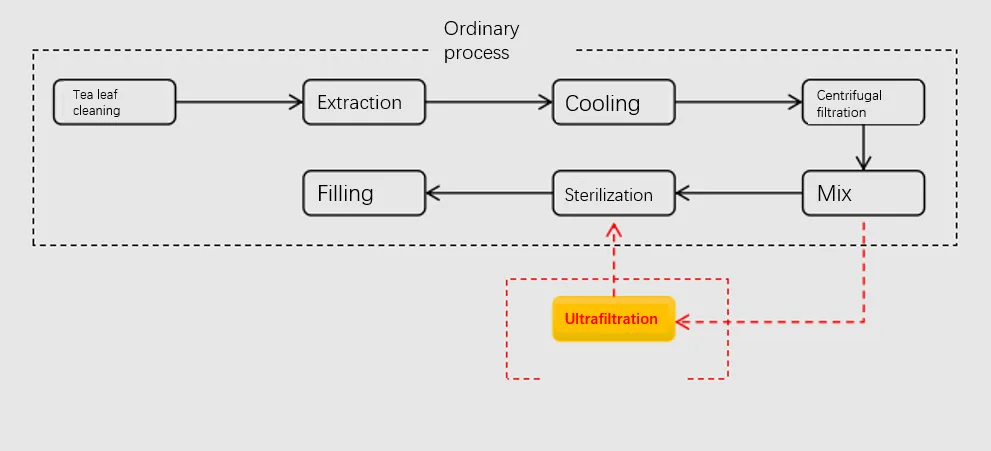
The traditional production process of tea beverages generally includes tea cleaning, extraction, cooling, filtration, blending, sterilization and filling.
Traditional filtration methods for tea beverages usually adopt centrifuges, diatomaceous earth filtration, plate and frame filtration and other equipment. Due to the low filtration accuracy, impurities such as protein, pectin, tannins and bacteria cannot be completely filtered out. These impurities will re-aggregate under the action of time, temperature and charge, resulting in turbidity and precipitation of tea beverages. Therefore, improving the quality and extending the shelf life of tea beverages have become key problems to be solved in the tea beverage industry.
Application of Membrane Filtration Technology in Tea Beverage Production Process
With years of practical experience in serving tea deep-processing enterprises and independent advantages in membrane filtration technology, Hecheng Filtration has successfully applied membrane filtration technology to the tea beverage production process. Relying on the precision interception effect of ultrafiltration membranes, it can effectively separate insoluble substances in tea soup and achieve excellent clarification and sterilization effects.
Hecheng Filtration has numerous successful application cases in the tea beverage industry, covering Sichuan, Yunnan, Guizhou, Hubei, Jiangxi and other provinces across China.
Process Flow Chart
Process Introduction
Although most insoluble substances are separated from tea juice after centrifugal filtration, a small amount of impurities with relatively low molecular weight still remain. In addition, a certain amount of blending agents are added in the subsequent blending section, which will also produce a small number of insoluble substances during the blending process. To improve the quality of tea beverages, ultrafiltration membrane filtration technology is added after the blending section. The pore size of ultrafiltration membranes ranges from 1000Da to 50nm, while the molecular weight of precipitation-prone substances in tea beverages such as protein, colloid, fiber and bacteria is generally tens of thousands or even hundreds of thousands. The ultrafiltration membrane can effectively intercept these impurities to achieve superior clarification and sterilization effects. The filtered products are clear and transparent without precipitation after long-term storage.
Advantages of Membrane Filtration Technology for Tea Beverages
(1) Ultrafiltration membranes feature high interception accuracy, which can effectively remove insoluble impurities in tea beverages, delivering visibly clear and transparent filtrate;
(2) Adopts advanced modular design with convenient filter material replacement and simple operation;
(3) Equipped with on-line regeneration cleaning and sewage discharge devices to reduce labor intensity and production costs, and improve production efficiency;
(4) Imported foreign membrane elements with complete qualification certificates, featuring long service life and high safety performance;
(5) The whole set of equipment is made of sanitary-grade materials and complies with GMP certification standards.
Typical Applications
Pure Tea Beverages: black tea beverage, green tea beverage, dark tea beverage, Pu'er tea beverage, oolong tea beverage, scented tea beverage, etc.
Flavored Tea Beverages: iced black tea, fruit-flavored tea beverage, carbonated tea beverage, etc.
Functional Tea Beverages: ginseng tea, lotus leaf tea, wolfberry tea, herbal tea, etc.
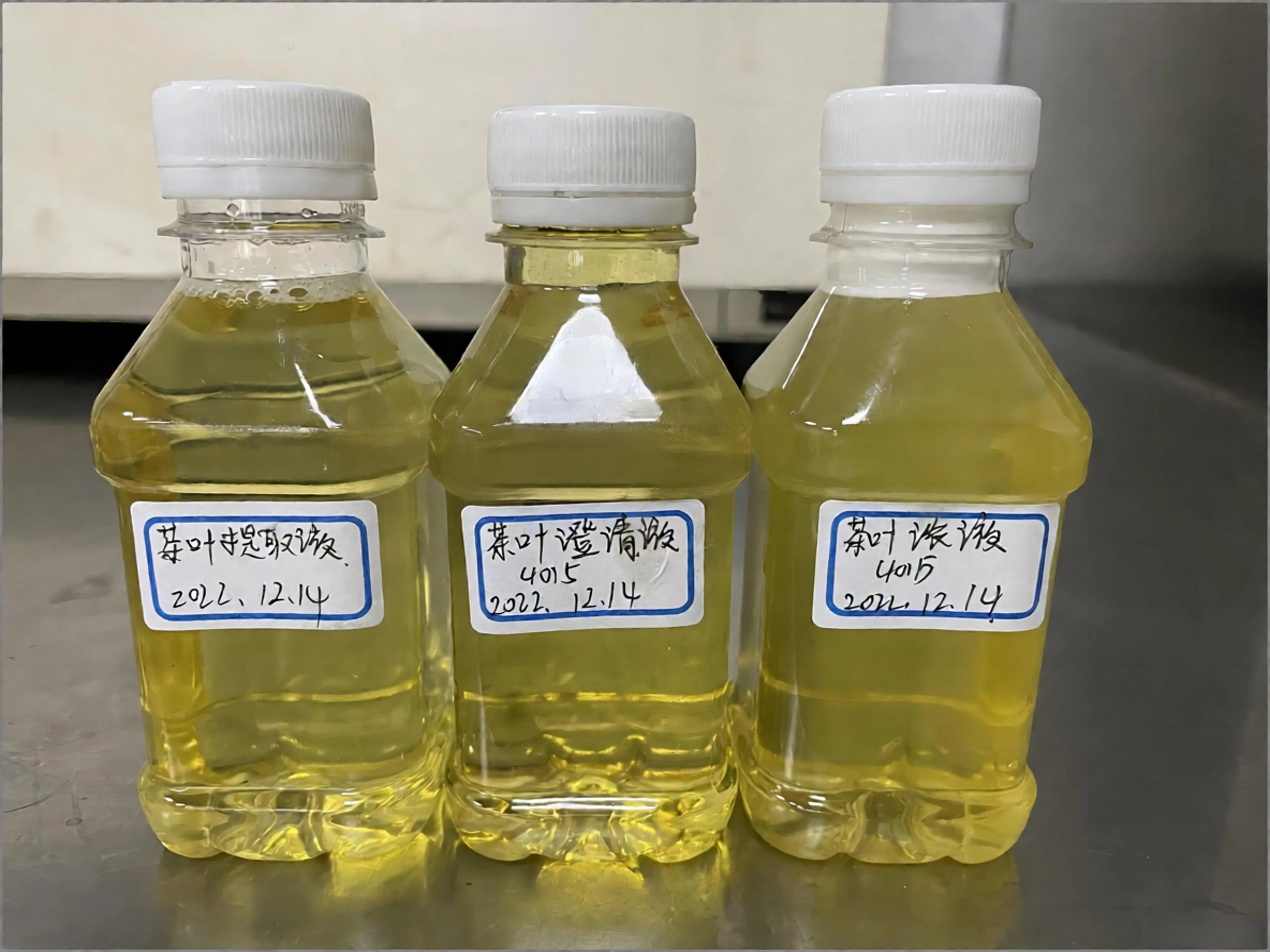
Experimental Effect Comparison Pictures