Forage Leaf Protein Membrane Separation & Low-Temperature Concentration Equipment
Background Introduction
With the rapid development of animal husbandry and feed industry, the shortage of protein feed has become increasingly prominent. Developing and utilizing new high-yield, high-quality protein feed resources is an urgent and arduous task. At present, the post-harvest intensive processing of forage grass severely restricts the development of the forage industry. The fundamental solution is to extract high-quality leaf protein concentrate (LPC) from fresh forage as high-protein feed for pigs and poultry, while the residual grass residues are processed into roughage for ruminants. This intensive processing greatly improves the added value of the forage industry.
There are multiple traditional extraction methods for forage leaf protein, yet all carry obvious drawbacks:
- Direct heating method yields low protein recovery, and excessive temperature easily triggers protein denaturation;
- Acid-base precipitation is hard to control in terms of pH value. Massive consumption of acid and alkali generates waste liquid that causes severe environmental pollution;
- Ammonium sulfate salting-out requires additional desalination treatment, complicating the whole extraction workflow of leaf protein;
- Organic solvent extraction consumes large volumes of organic solvents, accompanied by difficult solvent recovery and excessive solvent residue risks.
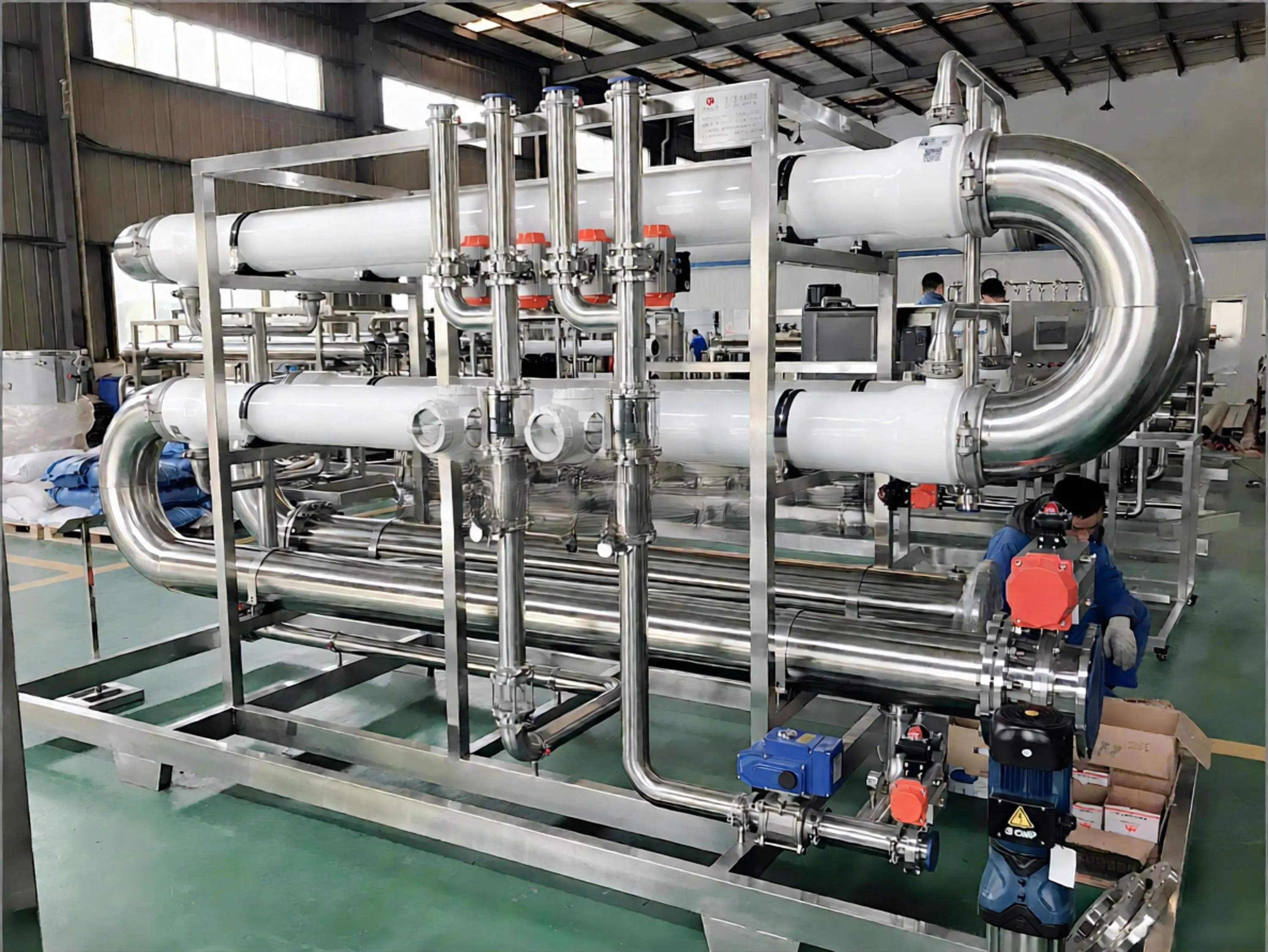
Application of Membrane Separation Technology in Forage Leaf Protein Extraction
With years of practical experience serving animal extract manufacturers and proprietary advantages in membrane separation technology, BluewavBio has successfully applied membrane separation technology to the filtration and concentration workflow of forage leaf protein. Relying on precise molecular sieving performance of membrane elements, the system thoroughly removes macromolecular impurities and upgrades protein quality. The protein solution is concentrated under ambient temperature to remove around 70% of water, while eliminating small-molecule impurities in the protein liquid. This shortens the subsequent drying cycle and further optimizes finished product quality. The obtained forage leaf protein features excellent sensory properties, high protein content and superior solubility.
Membrane Separation & Concentration Process for Forage Leaf Protein
Forage juicing & pretreatment → Membrane filtration → Membrane decolorization → Membrane dehydration concentration → Purification & downstream processes
Advantages of Membrane Separation Technology for Forage Leaf Protein
- High-precision membrane filtration completely removes macromolecular tannins, pectin, pigments, foreign matter and various microorganisms that degrade product quality, delivering stable finished product performance;
- Filtration, decolorization and concentration are all operated at room temperature, with almost no loss of protein biological activity;
- Membrane dehydration concentration simultaneously eliminates small-molecule inorganic salts to reduce the ash content of final products;
- Membrane concentration consumes merely 30% energy of traditional thermal concentration, significantly cutting production costs for manufacturers;
- Membrane-concentrated protein liquid has drastically reduced volume, lowering energy consumption of the subsequent drying process;
- Automatic and modular design reduces labor intensity, enables seamless integration into existing production lines and supports large-scale scaled-up production;
- The whole equipment system is fabricated from sanitary-grade materials and fully complies with GMP standards.
Typical Applications
Mulberry leaf protein, forage leaf protein, soybean protein, pea protein, etc.