Membrane Separation Technology for Commercial Beer Dealcoholization – Preserve Original Flavor Without Thermal Damage
1. Why Membrane Separation Outperforms Traditional Thermal Beer Dealcoholization
The global market demand for low-alcohol and non-alcohol beer has grown exponentially in North America, Europe and Oceania. Breweries, cider manufacturers and mobile beverage service operators are abandoning conventional thermal distillation for beer alcohol removal, largely due to irreversible flavor loss caused by high-temperature heating.
Traditional thermal dealcoholization heats finished beer to evaporate ethanol, which simultaneously strips volatile aromatic compounds including malt sweetness, hop fragrance and fruit esters. Final low-alcohol beer often presents thin, cooked, burnt sensory defects that hurt consumer acceptance.
Membrane separation beer dealcoholization delivers a non-thermal alternative that operates under mild low-temperature conditions (≤ 25°C). Cross-flow nanofiltration (NF) / reverse osmosis (RO) membrane modules selectively separate ethanol molecules from water, sugars, polyphenols, hop oils and malt flavor substances. The whole process avoids boiling or high-temperature exposure, locking in the original beer taste, body and aroma profile.
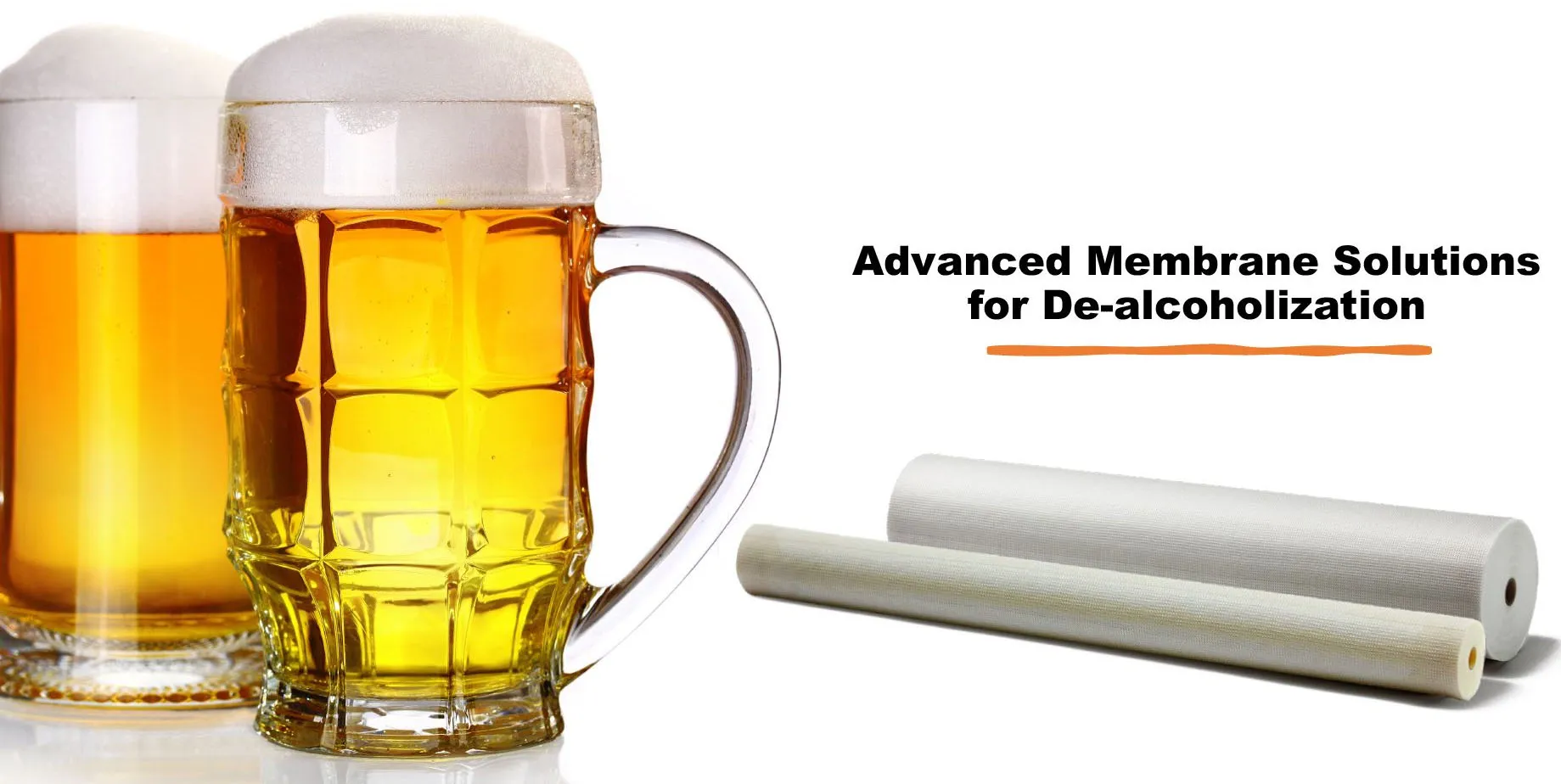
For mobile filter service companies running batch processing for multiple craft breweries, membrane-based alcohol removal technology becomes a core competitive advantage to provide premium non-alcohol beer processing services.
2. Working Principle of Cross-Flow Membrane Separation for Beer Dealcoholization
Commercial beer dealcoholization membrane systems adopt cross-flow separation architecture, the industry standard for food-grade beverage processing.
1. Raw beer with original ABV ranging from 4%–6% is pumped into the membrane circulation tank under controlled low temperature.
2. Pressurized feed flows parallel along the surface of food-grade spiral-wound membrane elements. Small ethanol molecules permeate through the membrane barrier to form alcohol permeate liquid, while large flavor, sugar and protein molecules are intercepted as retentate (low-alcohol beer).
3. The retentate circulates continuously until the target alcohol concentration hits below 0.5% ABV, meeting global non-alcohol beer regulatory standards.
4. Separated ethanol permeate can be collected and recycled for auxiliary industrial use to reduce raw material waste.
All membrane contact components adopt 304/316L stainless steel with food-grade PTFE gaskets, fully compliant with food safety standards in Canada, the United States and EU regions. Integrated CIP automatic cleaning pipelines eliminate cross-contamination risks between beer batches and different beverage varieties.
3. Core Advantages of Automated Membrane Dealcoholization Equipment for Batch Beer Production
3.1 Full Automation Reduces Labor Input for Batch Processing
Industrial membrane beer dealcoholization units are equipped with PLC touchscreen automatic control systems. Operators preset original beer ABV, target alcohol content, batch volume and operating temperature parameters. The system automatically adjusts circulation pressure, flow rate and separation cycle without continuous manual monitoring.
Typical batch capacity ranges from 20 hl to 100 hl, matching the production scale of small craft breweries and mobile beverage service providers. A standard 20,000-liter beer feedstock can complete alcohol reduction within 5–8 hour continuous shifts, supporting high-throughput daily batch processing.
3.2 Low-Temperature Operation Maximizes Beer Sensory Quality
The entire membrane separation process runs at ambient cold temperature without heat treatment. Key beer characteristic substances—dextrins, bitter hop acids, malt volatile aromas and natural colorants—remain intact. Compared with thermally dealcoholized beer, membrane-processed low-alcohol beer maintains richer mouthfeel, balanced bitterness and authentic malt flavor, which greatly improves market sales competitiveness for breweries.
3.3 Flexible Dual-Scenario Deployment: Fixed Factory & Mobile Service Skid
Membrane separation dealcoholization equipment can be manufactured as integrated compact skid-mounted units, perfectly matching mobile filter service business models. The compact framework supports flatbed truck transportation, enabling on-site beer alcohol removal service for scattered wineries and breweries across regional beverage production zones.
Electrical systems support customized voltage adaptation, including 480V/60Hz and 230V/60Hz industrial power supply specifications widely used in Canadian beverage processing sites.
3.4 Low Operating Cost & Long Service Life of Membrane Modules
Cross-flow membrane elements feature high alcohol separation efficiency and stable long-term performance. With standardized daily CIP acid-alkaline automatic cleaning, membrane service life reaches 12–24 months under normal batch production loads. The system consumes low electricity and cooling water, bringing lower per-liter processing cost than thermal distillation devices for long-term mass production.
4. Standard Processing Workflow for Membrane Beer Dealcoholization Systems
1. Pre-filtration: Raw beer passes through precision bag filters to remove yeast and suspended solids, preventing membrane element blockage.
2. Feed circulation: Pre-treated beer enters the membrane circulation tank, temperature locked at 10–25°C.
3. Automatic membrane separation: PLC system operates cross-flow circulation to intercept flavor components and permeate ethanol.
4. ABV real-time monitoring: Built-in online alcohol detectors track retentate concentration; the system stops circulation automatically once target ≤0.5% ABV is achieved.
5. CIP automatic cleaning: After each batch, the unit triggers self-cleaning cycles with food-grade cleaning agents to remove residual proteins and sugars.
6. Finished low-alcohol beer storage: Processed beer is directly delivered to sterile storage tanks for filling and packaging.
5. Dual-Purpose Membrane System: Compatible with Beer & Wine Dealcoholization
Most commercial membrane separation dealcoholization platforms support switching between beer and grape wine processing without hardware replacement. For mobile beverage service enterprises that handle both brewery and winery clients, one set of membrane equipment can process 5% ABV beer and 12%–14% ABV wine, cutting equipment investment cost by half.
Adjustable membrane circulation pressure and separation cycles adapt to different initial alcohol contents of raw materials, consistently delivering finished products below 0.5% ABV for both malt and grape beverages.
6. Suitable Buyers for Membrane Beer Dealcoholization Equipment
1. Craft breweries planning to launch low-alcohol and non-alcohol beer product lines
2. Mobile beverage filtration service companies providing third-party batch processing
3. Co-pack beverage manufacturers with multi-client beer & wine processing demands
4. Medium-sized wineries and cider factories expanding alcohol-free product portfolios
5. Beverage processing plants seeking low-flavor-loss alcohol removal technology
7. Conclusion
Membrane separation technology has become the mainstream sustainable solution for commercial beer dealcoholization in the global beverage industry. Its core strengths of low-temperature flavor retention, full automatic batch operation, flexible mobile skid layout and dual beer-wine compatibility create clear profit margins for breweries and mobile beverage service operators.
For enterprises targeting North American beverage markets with 480V/60Hz industrial power environments, customized membrane separation dealcoholization systems deliver stable, efficient and food-safe alcohol removal performance, supporting long-term low-alcohol beverage business expansion.